
Global Organizations
Money Makes the World Go 'Round

MINDS ON
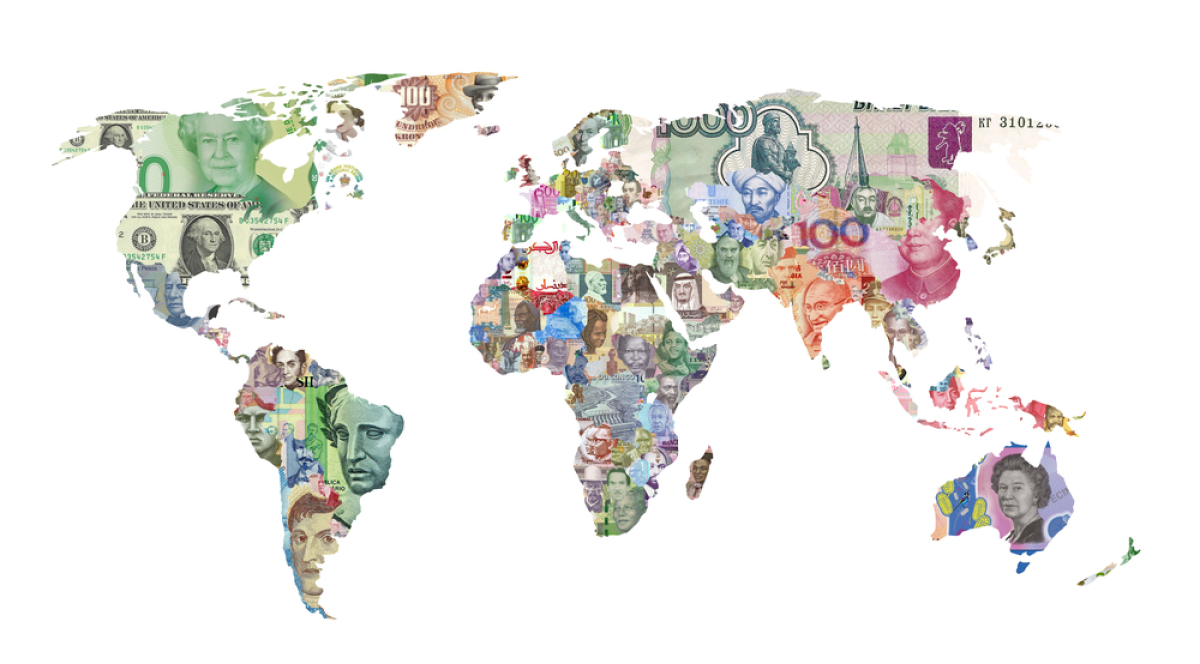
From Dollars to Dinars….Do You Know Your World Currency?
currency
euro

ACTION
The Foreign Exchange Market
Foreign currency is really just another commodity to be bought and sold. Just like any commodities that are traded, there are people that want to buy it and people that are willing to sell it.
These are the main reasons that people might buy foreign currency:
- For travel
- For trade, to buy goods and services
- For investment purposes (direct or indirect).
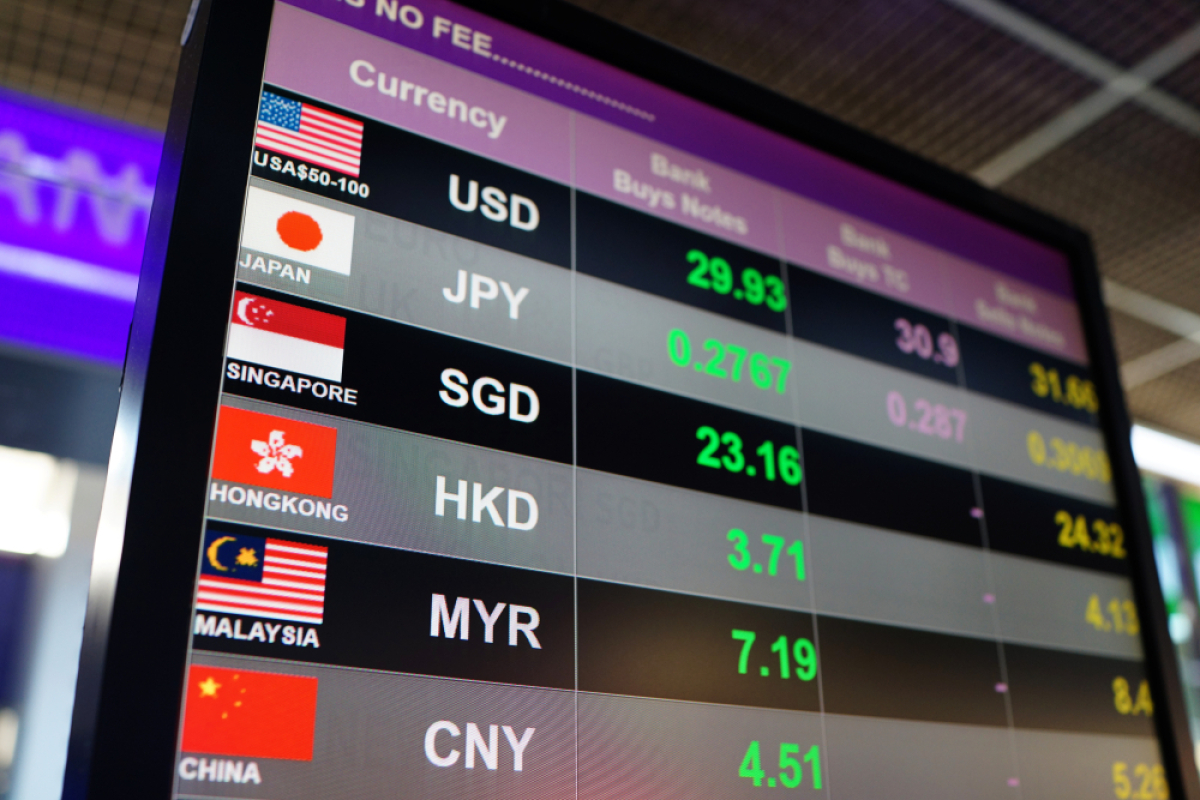
The foreign exchange market operates around the clock. It opens on a Monday morning in Hong Kong, while it is still Sunday in San Francisco. Throughout the day, markets begin trading in Tokyo, Zurich, Frankfurt, Paris, London, New York, Chicago, and finally the west coast of the United States.
A change in any one of these markets will affect the demand for foreign currency, and thus the exchange rate.
But the exchange rate can also be affected by the supply of foreign currency, which governments control. If a country wanted to drive the value of its foreign currency up, it could decrease the supply of the currency; if it wanted to drive the value of its foreign currency down, it could increase the supply of the currency. The reason why a country might want to manipulate its currency is related to the fact that imports will increase and exports will decrease when a country’s currency appreciates relative to its trading partners’ currency.
Likewise, exports will decrease and imports will increase when a country’s currency depreciates relative to its trading partners’ currencies. If a country can keep its currency cheap, then it keeps its products cheap and foreign products expensive.
Hard versus Soft
The value of a country’s currency is important for success in international business. If trading partners do not accept a country’s currency, the company may have to make payment in another currency.
Hard Currency - a currency that is easy to exchange. It is freely converted into other currencies (e.g., U.S dollar, British pound, Japanese yen, Swiss franc).
Soft Currency - A currency that is not easy to exchange. While it may be a medium of exchange, the monetary units have limited value in the world marketplace (e.g., Honduran lempira, Zimbabwean dollar).
Floating versus Fixed
Countries typically use a system of floating exchange rates. This is when currency values are based on supply and demand. If there is a large demand for a country’s currency, it will rise in value.
A fixed exchange rate is when the government sets and maintains the official exchange rate by pegging it to another country’s currency value.
Between 1870 and 1914, there was a global fixed exchange rate. Currencies were linked to gold, meaning the value of a local currency was fixed at a set exchange rate to gold ounces. This was known as the gold standard, but was abandoned after World War I. In the past, the Canadian dollar has been pegged to the U.S. dollar, but we have used a floating rate system since the 1970s.
 The End of Money?
Bitcoin is a digital currency that was created in 2009. It isn’t backed by governments or banks, and often has no physical presence.
View this video to learn more about it:
Would YOU feel comfortable using this currency instead of cold, hard cash?
Exchange Rates and Purchasing Power Parity
In a system of floating exchange rates, just like the supply and demand of any commodity, there are six main factors that influence exchange rates. This infographic, from Visual Capitalist, provides a good summary of these six factors:
The theory of Purchasing Power Parity is used to predict changes in exchange rates over time. It implies that, over time, goods and services should be able to be purchased at the same price in one country as they are purchased in another country. It is founded on the law of one price, which states that if markets operate efficiently, everything will cost the same if the difference in exchange rates is accounted for.
In practice, true purchasing power parity is impossible. Things like transportation costs, taxes and tariffs differ from country to country. Some things can’t be shipped and not everyone has the same access to international trade. But with the growth in ecommerce and the popularity of online retailers, we are getting closer to real purchasing power parity.
Purchase Power is used to compare prices between countries, taking into account differences in standards of living. The Economist has famously used the price of the Big Mac as the benchmark for comparing purchasing power parity between countries.
According to The Economist, a McDonald’s Big Mac costs $4.66 in Canada but only $2.92 in China. People in China don’t need as much income because it costs less to live. But under purchasing power parity, the value of goods and services are recalculated as if they were sold in U.S. prices, which means that in effect a Big Mac actually costs the same in China and Canada as it does in the U.S. - $5.30 - once the differences in exchange rates are accounted for. This allows us to more accurately compare GDPs of the different countries.
The Role of Government
Government plays a large role in international business. Through its economic and political systems, and the various policies and organizations it runs, it influences economic trade between countries. Governments make decisions about how to balance the need to protect domestic industries with the need to encourage international expansion and foreign investment.
Some of the ways government affects international trade and business include:
- establishing import and export laws
- determining taxation rates, including providing incentives to encourage international trade and investment
- setting tariffs and other trade barriers
- maintaining membership in trade organizations and negotiating trade agreements
- determining monetary policy, including currency exchange rates
- determining fiscal policy, including taxation laws
- coordinating trade missions, intergovernmental contracts and embassy consulate networks
- building infrastructure, including roads and sewer systems.
International Trade Organizations and Agreements
Trade organizations and trade agreements exist to promote and support the growth of trade. They are also crucial in establishing and maintaining peaceful relations. The following lists a number of trade organizations:
Creating Goodwill
The following are examples of initiatives that governments may undertake for the purposes of establishing and maintaining peaceful relations and promoting international trade:
Intergovernmental Contract - when two or more governments agree to cooperate, usually to share resources, create economies of scale, or improve services. Canada has an intergovernmental agreement with the United States governing the sharing of tax-related information.
Embassy - the diplomatic representation of a country’s government in another country. It is responsible for communication occurring between the home and foreign governments and militaries, promoting home culture in the host country, and coordinating international treaties and state visits.
Consulate - the representation of the public adminstration of a country in a foreign city. It is responsible for its own citizens living or travelling in the host country, coordinating passports and visas, and assisting its own citizens in distress or emergency situations.
Trade Mission - a delegation of government and business representatives visiting another country in order to promote business opportunities.
Watch this video which discusses the importance of trade missions to Canada:
Did you know that YOU could participate in a trade mission? Junior Team Canada looks for youth ages 15-25 to join their missions promoting trade and development in countries around the world. To date, the organization has travelled to more than 30 countries, with the latest being a mission to China in the summer of 2017. All you have to do is submit a 3-minute video application and raise the required $6,000 sponsorship!
Corporate Influence
Businesses can have a major impact on government policy and international relations in several key ways:
1. Lobbying allows individuals and organizations to influence government to create legislation or do things that will benefit a particular organization, the environment or the public. Typically, they might focus on a particular issue (e.g., water shortage or financial struggles among Canadian farmers) and inform the government about that issue. For example, General Motors Canada lobbied the Canadian government regarding the Canada-EU trade agreement and research funding. Here’s a video produced by a lobbyist which highlights the issue of plastics in the ocean.
2. Participating in a Trade Mission allows a company to network and learn more about the consumers in their key target markets. For example, in May 2017, companies in the aerospace/defense, agri-food and information and communication technology sectors travelled to Italy to learn about opportunities in this market, as well as benefits that will be realized by CETA.
3. Through the World Economic Forum, business leaders can collaborate with other industry leaders, public figures, activists, government officials, and academic experts on global issues.
For example, ten oil and gas companies came together to address climate change concerns through the Oil and Gas Climate Initiative.

CONSOLIDATION
Canadian Connections
The following interactive will help you develop an understanding of some of Canada's Connections to the U.S. and the world:
canConnections
 Scavenger Hunt Task
Complete the following Scavenger Hunt tasks.
Task 1 - Choose a country. Who is the Canadian ambassador to that country? Find a photo if possible.
Task 2 - Where is the Canadian embassy located in that country?
Task 3 - Identify the country’s currency and find the current Canadian exchange rate for this currency.
Task 4 - Identify two (2) different trade agreements or international organizations that might help to facilitate Canadian trade with this country.
Task 5 - Find three (3) different lobbying groups in this country. For each, identify an issue that the group might be concerned with.
Task 6 - Has Canada ever taken a trade mission to this country? If so, when?
Task 7 - Visit the Jr. Team Canada site. Assume that you are submitting an application. How would you answer the required questions:
- What makes you unique and what skills/attributes could you bring to a mission team?
- If you were selected for a trade mission, how could you use the experience to give back to Global Vision and your community?
- What sectors would you choose to represent and why?
 Learning Goals and Success Criteria
 Learning Skills and Work Habits