
Leading
The Role of Management

MINDS ON
 Sajid Submarine Sandwiches
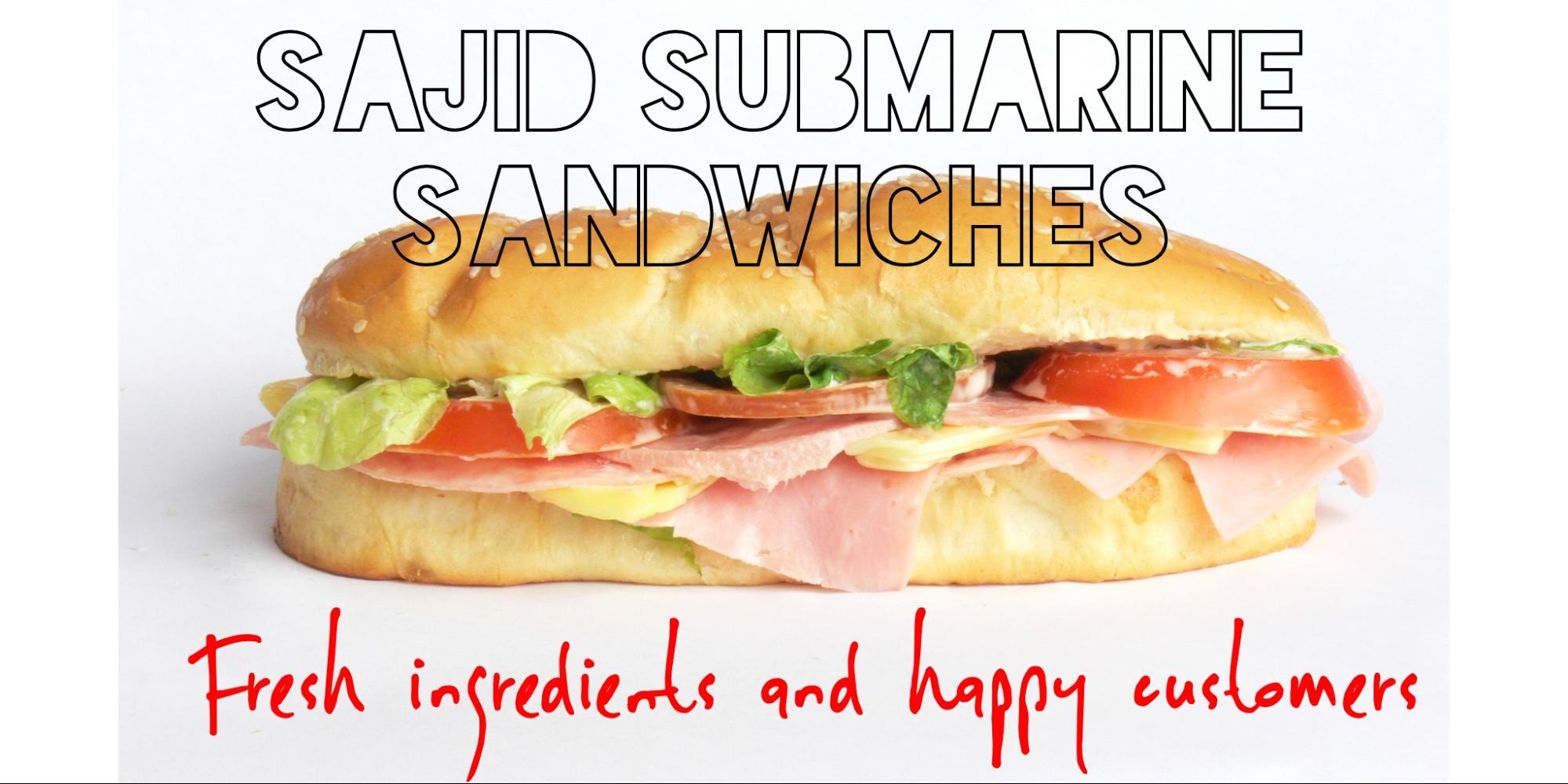
Muhammad Sajid is the owner of a small submarine sandwich shop called Sajid Submarine Sandwiches. He takes pride in making the subs with the freshest ingredients and is always making sure every single one of his customers leaves happy and satisfied. Muhammad frequently hires high school students from the local community to work after school hours and on weekends.
One evening, Muhammad receives a phone call from a business owner, Marie, whose business is located next to his sub shop. Marie informs Muhammad that he needs to get down there as something is not right at his shop. Upon arriving at the restaurant, Muhammad sees a messy dining area with garbage all over the place, one of his student employees arguing with a customer, and other customers waiting for their orders. The two other student employees are in the back area doing something on their cell phones. The call-in order phone is also ringing.
How should Muhammad deal with this situation? What are the specific steps he should take to quickly rectify the situation? Should he stop hiring student employees? Is he putting too much trust in his staff?

ACTION
Organizations
Managers must deal with problems and situations all the time in any organization. This is a major part of keeping organizations successful and achieving their goals. Before we examine how levels of management and management theories can help organizations, let’s first gain a better understanding of what organizations are and the typical characteristics they possess.
What is an organization?
Organizations are, quite simply, groups of people working together to achieve some common outcome or purpose.
Click through the carousel below to learn more about seven organizations.

This is an organization.
by Microsoft
Microsoft is a large multinational corporation with the common goal of creating innovative solutions to meet consumer needs and wants all over the world. It also has a common purpose to earn a profit and benefit shareholders.

This is an organization
by Wikimedia used under CC BY
The Tiger Cats is a professional football team in the Canadian Football League. Its purpose is to provide entertaining and competitive football games to fans in a safe and friendly environment, with an ultimate goal of winning the Grey Cup every season.

This is an organization.
by Wikimedia used under CC BY
Sick Kids Hospital is a children's hospital in Toronto, Ontario. Its purpose is to provide healthcare to children who need it, and to be a world leader in children’s health research.

This is an organization.
by DTAA
DTA and Associates is a small, 3 employee accounting firm in Gravenhurst, Ontario started by Dap Thach - a local entrepreneur. Its purpose is to provide accounting and financial services to individuals and small businesses in the local community.

This is an organization.
by Terry Fox Foundation
The Terry Fox Foundation is a national charity in Canada. Its purpose is to raise money to help fund cancer research and support people living with the disease.

This is an organization.
by Canada Revenue Agency
The Canada Revenue Agency is a Federal Canadian Government agency. Its purpose is to collect taxes from both individuals and businesses, and to regulate the taxation process in our country.


As you can see, organizations can be very big, quite small, and any size in between. Organizations can also be for-profit business, non-profit organizations, or areas of government.
All organizations have some characteristics in common. We have already identified that all organizations work toward their own individual common purpose (or goals and objectives).
Similarities and Differences
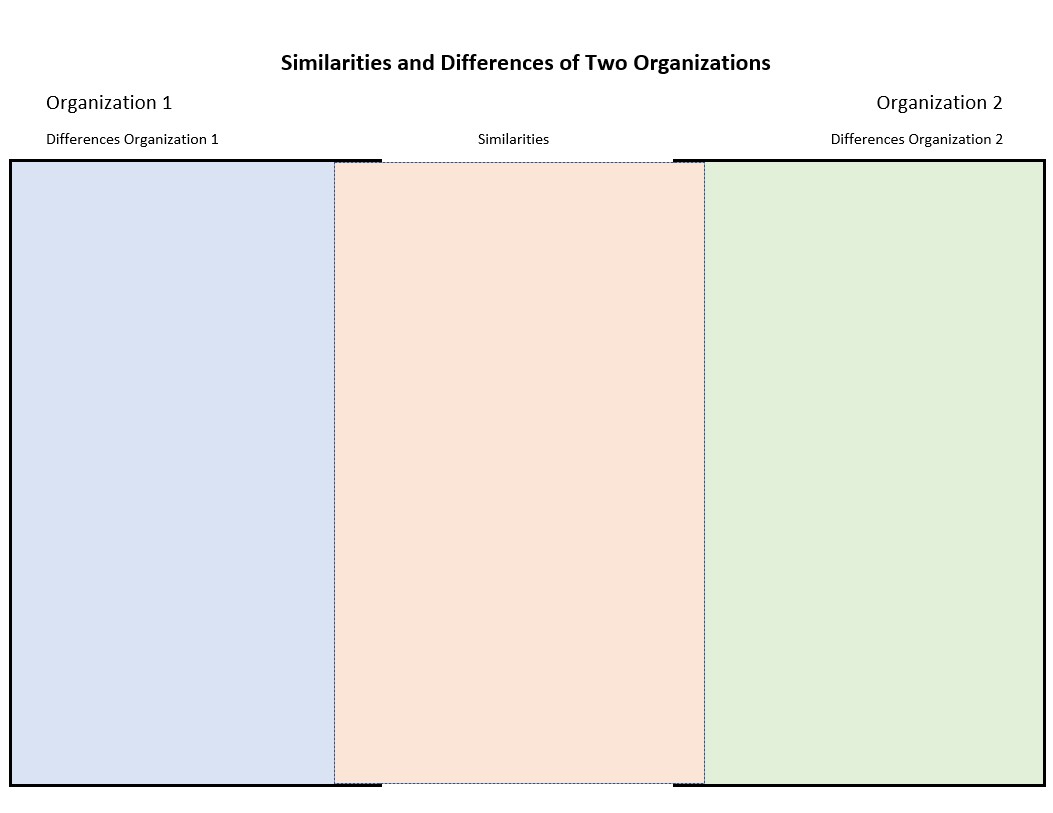
Can you think of other characteristics that are common among organizations? Select any two organizations and complete the Organizations Graphic Organizer by listing the names of your two organizations at the top, and identify as many similarities and differences as you can.
For example, one similarity might be that both organizations have various levels of managers, or different departments. An example of a difference might be that they are different sizes, or reach different geographic areas.
Functions of Management
You can start to see how all four functions of management are connected. All four functions are critical to the success of an effectively managed organization. As you progress through this course you will spend time investigating each of the four functions of management: Leading, Planning, Organizing, and Controlling.
FunctionsofManagement
Let’s take a few minutes to review the four functions of management - watch the following video:
Levels of Managements
Managers exist in all organizations, and they work with a wide variety of job titles across different organizations. Department Manager, Production Supervisor, Team Lead, Principal, CEO, Administrator, Dean - these are all titles used to describe a manager of some sort. Managers are those that supervise, support and direct the work efforts of others within an organization.
Depending on the organization, and how it is organized, or perhaps how big or small it is, there might be various levels of management present. Typical levels of management are:
- Top Level Managers
- Middle Managers
- Front Line Managers
Watch the following video to gain a perspective on the basic differences between the three levels and types of managers:
Skills Required by Different Levels of Managers
Now, let’s consider the different skills each of the different levels of managers require. Watch the following video:
 Questions
- The leading function of management is more about setting performance objectives.
- True
- False
False
- Middle Managers work directly with staff on a day-to-day basis.
- True
- False
True
- A Chief Executive Officer would be an example of a Top Level Manager.
- True
- False
True
- Manager titles vary across industries and organizations.
- True
- False
True
- Measuring performance and taking action to ensure desired results explains which function of management?
- Organizing
- Controlling
- Leading
- Planning
b. Controlling
- Technical skills are more important for which level of manager?
- Middle managers
- Top Level managers
- Front Line managers
- This skill isn't important for any level of management.
c. Front Line managers
- Conceptual skills are most important for:
- Front Line managers
- Top Level managers
- Middle managers
b. Top Level managers
- Technical skills include:
- Setting big goals
- Inspiring an entire organization
- Dealing with people
- Completing specific tasks
d. Completing specific tasks
- Human relational skills are most important for:
- All levels of managers
- Top Line managers
- Middle Managers
- Front Line managers
a. All levels of managers
- Arranging tasks, people, and resources is typical of what managerial function?
- Organizing
- Planning
- Leading
- Controlling
a. Organizing
 Case Study
Cindy has been working for the past year as a computer programmer for a medium- sized video game developer located in southern Ontario. Lately she has been performing her day-to-day duties just well enough to get by and to narrowly avoid being fired.
When Cindy was hired, she was selected over 30 other candidates for the position. She has all the education, qualifications, and experience to make her the perfect candidate for the job. Her performance appraisal at the six month mark was quite exceptional, in fact.
Cindy’s direct manager and supervisor, Michelle, has begun to take notice of Cindy’s lackluster performance. What advice would you give Michelle in order to improve the current situation with Cindy’s poor performance?
Record your thoughts and recommendations. We will revisit this scenario with Cindy and Michelle a little later.
Management Theories
Understanding how managers lead, and how they operate effectively within organizations, can be guided by investigating the classical theories of management. The three classical theories of management are:
- Scientific Management.
- Administrative Principles.
- Bureaucratic Organization.
Each of these three theories are attributed to a management and organizational behaviour expert who was responsible for developing the theory. Examine a summary of each below:
Scientific Management - Frederick Taylor
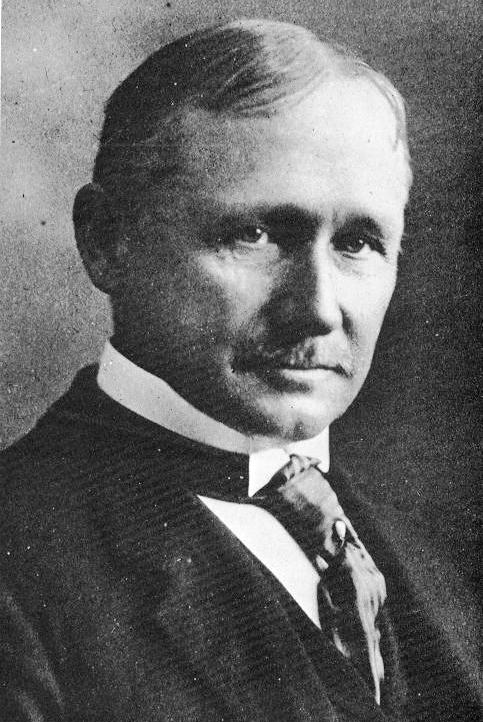
Taylor is known as the father of Scientific Management. The essence of this theory is that the success of an organization comes down to whether workers truly know the fundamentals of their jobs or not - clear and specific specifications and expectations of the work they do. Taylor believed that most workplace issues regarding employees not performing well, were the direct result of workers not knowing clear and set responsibilities.
This theory has four guiding principles:
- Every job should have clear rules and set by set directions to follow.
- Workers should be selected to best fit each job.
- Workers should be properly trained to do that job best.
- Workers should be supported by planning what they do and how to do it.
Administrative Principles - Henri Fayol
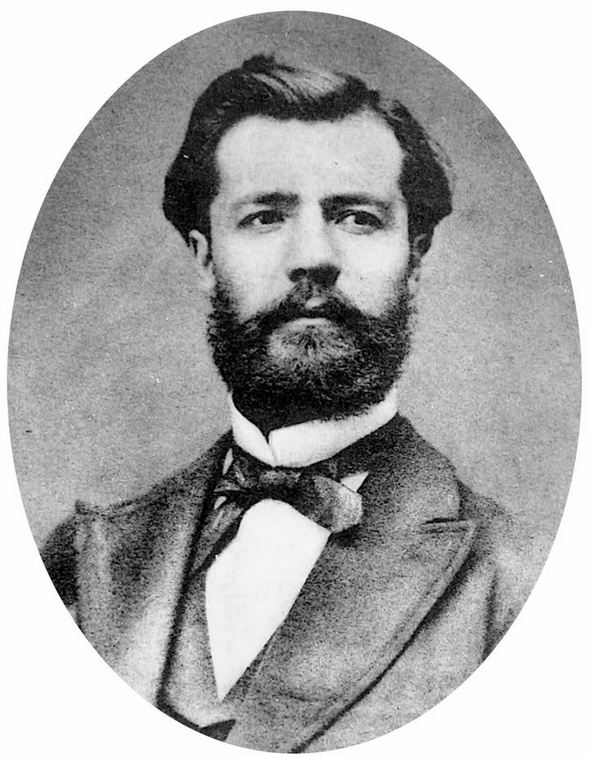
The book outlines Fayol's views on the proper management of organizations and essentially creates the Administrative Principles of Management theory. His book outlines 14 principles Fayol felt were important for any manager to learn. If a worker was not performing, Fayol believed it was because the Manager wasn’t following all 14 guiding principles.
Bureaucratic Organization - Max Weber
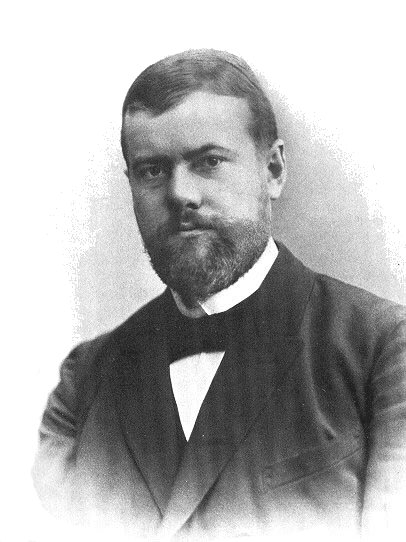
- Division of Labour
- Hierarchy of Authority
- Rules and Procedures
- Impersonality
- Selection Based on Merit, not Social Status.
Now that you have explored and learned about the Classical Management Theories, let’s go back and revisit the Cindy scenario from earlier:
Case Study Revisited
Cindy has been working for the past year as a computer programmer for a medium- sized video game developer located in southern Ontario. Lately she has been performing her day-to-day duties just well enough to get by and to narrowly avoid being fired.
When Cindy was hired, she was selected over 30 other candidates for the position. She has all the education, qualifications, and experience to make her the perfect candidate for the job. Her performance appraisal at the six month mark was quite exceptional, in fact.
Cindy’s direct manager and supervisor, Michelle, has begun to take notice of Cindy’s lackluster performance.
This time examine the problem through the eyes of Taylor, Fayol, and Weber, and suggest how their individual theories of management might respond to the Cindy scenario, and how they might approach dealing with the situation.
Revisit your notes from earlier. Add three more paragraphs outlining how, based on their theory of management, Taylor, Fayol, and Weber would deal with Cindy. Include the following:
- What would each theorist identify as the overall problem?
- What would their recommendation be to potentially fix the problem?
Behavioural Management Theories
The classical management theories view management from a narrow point of view: a production point of view. These approaches are not always the best, as they can tend to forget about work-related satisfaction - a worker's human need to enjoy their work and gain satisfaction from the labour they provide organizations. Behavioural management theories, on the other hand, attempt to incorporate the social aspect of work and the notion that workers, like all people, attempt to reach their full potential.
Organizations as Communities
Mary Follett has been viewed as a substantial contributor to the field of sociology. She viewed organizations as communities where managers and workers should work together, side-by-side, to create a sense of collaboration and unity in the workplace. She felt the main job of a manager was to make sure all workers in organizations cooperated so that the goals of the organization could be met, but also to develop a sense of ownership and collective responsibility.
Read the following article, Management Theory of Mary Parker Follett from Business.com, that makes connections to Follett’s theory of organizations as communities.
If you want to view any links in this pdf, right click and select "Open Link in New Tab" to avoid leaving this page. (View the original article.)
In the previous activity, you learned about how leaders and managers use power to accomplish tasks and to get things done. Think about how Mary Follett might approach leadership power differently? How would she use power to ensure organizational goals are being met?
The Hawthorne Studies

In the 1920s, the Western Electric Company, an American manufacturer, hired Elton Mayo and Fritz Roethlisberger to study and determine how pay-based incentives and worker conditions affected performance.
The study concluded that pay-based incentives (wages, salaries, bonus pay incentives, etc.) and the physical working conditions are somewhat important in increasing organizational productivity, but not nearly as important as ensuring employees feel as though they are a part of a group. The social aspect of work and employee sense of belonging, seems to trump monetary-based incentives when it comes down to a productive workforce.
Think about how managers can increase productivity without simply giving employees more money. How can managers create a feeling of belonging, of being a part of a productive team, and performing work that makes a difference? Is this possible without giving employees more money?
Theory X and Y
Douglas McGregor was another leader in the management theory arena. He argued that there are two types of workers, and as a result there needs to be two types of managers.
TheoryXTheoryY
Read this article, Is Your Boss a Theory X Manager? from Payscale.com, describing how a Theory X Manager typically leads in the workplace:
If you want to view any links in this pdf, right click and select "Open Link in New Tab" to avoid leaving this page. (View the original article.)
Theory X Manager
Think about how assumptions perpetuate employee behaviour. Attempt to recall a situation in which you had a Theory X manager/leader (can be a teacher, coach, boss, etc.).
- How did this approach to managing make you feel?
- How did you respond to this managerial approach?
Personality and Organization
In 1957, Chris Argyris wrote a book called Personality and Organization. He believes that the key to successful organizations and effective leadership is very simple: managers who treat people positively and with respect will in turn create very productive workforces. He also suggests that workplace conflicts are the direct result of managing people using outdated practices (i.e., classical theory approaches, theory x approach, autocratic styles, etc.)
Argyris suggests that effective managers:
- Expand job opportunities and responsibilities.
- Allow for more task variety - let workers do a variety of things, and learn new things.
- Promote positive human relations first and foremost.
- Create an atmosphere to facilitate employee participation.
Have you worked with a manager, or have you experienced a leader that practiced those suggestions? Did that type of environment make you feel a certain way? Did it encourage you to work harder or perform better?
Quantitative Analysis Theory
Another approach to management is known as the quantitative analysis theory. It attempts to guide managerial decision making through the use of data and research. This type of management follows an analytical approach to dealing with workplace issues and problems:
- A problem happens.
- The problem is analyzed through the collection of data.
- Mathematical calculations and models are applied.
- An optimal solution is identified.
Think about the typical workplace problem, and the solution, to help illustrate the quantitative analysis approach.
Quantitative Analysis
Problem:
Muhammad Sajid (the owner of Sajib Submarine Sandwiches) notices that the restaurant often runs out of various fresh ingredients every month, and loses business as a result.
Quantitative Analysis Approach Solution:
A mathematical inventory management software application is purchased. It tracks inventory levels, sales by ingredients, and identifies key reorder times for each week of the month to avoid running out of product.
Think about other potential workplace problems, issues, and dilemmas that could potentially be fixed through a quantitative analysis approach to management and decision making.
Identify and explain a workplace issue, and describe how it could be solved through quantitative analysis.
 Learning Goals and Success Criteria
 Learning Skills and Work Habits