
The Past, Present and Future of Tourism
Being a Tourist in your Own Town

MINDS ON
Canada Has A lot to Offer…

It’s a big world out there! With almost 200 countries, and many options within each one for tourists, the choices for travel are almost endless!
But even with all of these choices, in 2017, Canada was named the top tourist destination by Lonely Planet (the most popular guidebook publisher in Canada).
Watch the video below to see what they chose to highlight about Canada. Have you seen any of these great things for yourself?
Do you consider the sites they showed in the video to be the best parts of Canada? What have they forgotten to highlight?

ACTION
What Makes a Tourist?
How far away from home do you have to travel to be a tourist? Would you be a tourist if you travelled to British Columbia? Michigan? New York State? How about Toronto or Ottawa?
Being a tourist is decided just as much by the activities you undertake as it is by the location you find yourself in. For example, visiting a historic site like a fort in your own hometown may make you a tourist.
According to the Merriam-Webster dictionary, a tourist is someone who “makes a tour for pleasure or culture”. By this definition, you could be a tourist at a cottage very near to your house.
 Off the Beaten Path
Interestingly, the word ‘tourist’ was first used in 1775. What do you think changed at this point in history to all of a sudden ‘start’ the tourism industry?
Tourist Destinations
So if anyone can be a tourist, what makes a good tourist site?
Locations need to fulfill a number of criteria in order to be considered tourist destinations. While they can be either natural or cultural locations, they must each satisfy the same criteria. The list below is adapted from Tourism Excellence.
| Yes | Criteria for Consideration |
|---|---|
|
|
Identity (or Spatial Significance) - What are the unique features of this place that can’t be replicated in other locations? |
|
|
Access - Is the location accessible and cost effective? (i.e., it is not too difficult for people to visit) |
|
|
Quality Product - Does it have sufficiently interesting activities and attractions to make people want to visit? |
|
|
Infrastructure - Are accommodations readily available? |
|
|
Service - Are locals and employees helpful and kind, making tourists feel welcome? Do they value tourists for the positive aspects that they bring to their area? |
|
|
Publicity - Is information on the location readily available to draw people in, to help them plan their visit in advance, and to assist them once they arrive? |
Remember that not all destinations fall within the same category, but they do need to satisfy these criteria. In Unit 1, Activity 1, you looked at different types of tourism, including ecotourism, adventure travel, cultural, medical, religious, agritourism, relaxation and sports tourism. You can revisit this activity in order to refresh your memory on what constitutes these different types of tourism. Some destinations may score lower on some of these criteria because of the type of destination that they are (i.e., An adventure travel activity, such as mountain climbing, might score lower in access, as you may have to hike for days to reach the base of the mountain because there are no other options).
 Destination Criteria
What is your favourite place that you have ever visited? Take a moment to determine if it was a ‘good’ tourist destination (i.e., it fulfilled many or all of the criteria listed above) by completing the template above.
Record in your Travel Journal:
- the name and a photo of your favourite place
- the score that you believe it should receive on the six criteria from above
- 1 out of 3 represents ‘Does not really fulfill criteria’
- 2 out of 3 represents ‘Partially fulfills criteria’
- 3 out of 3 represents ‘Perfectly fulfills criteria’
- your opinion of whether the criteria accurately measured the tourist experience that you had in real life when you visited
Building a Tourist Destination
Sometimes tourist locations have obvious established attractions - like the Grand Canyon or Niagara Falls - and sometimes, they have to do a bit of work to develop as attractions.
Single Track Yukon
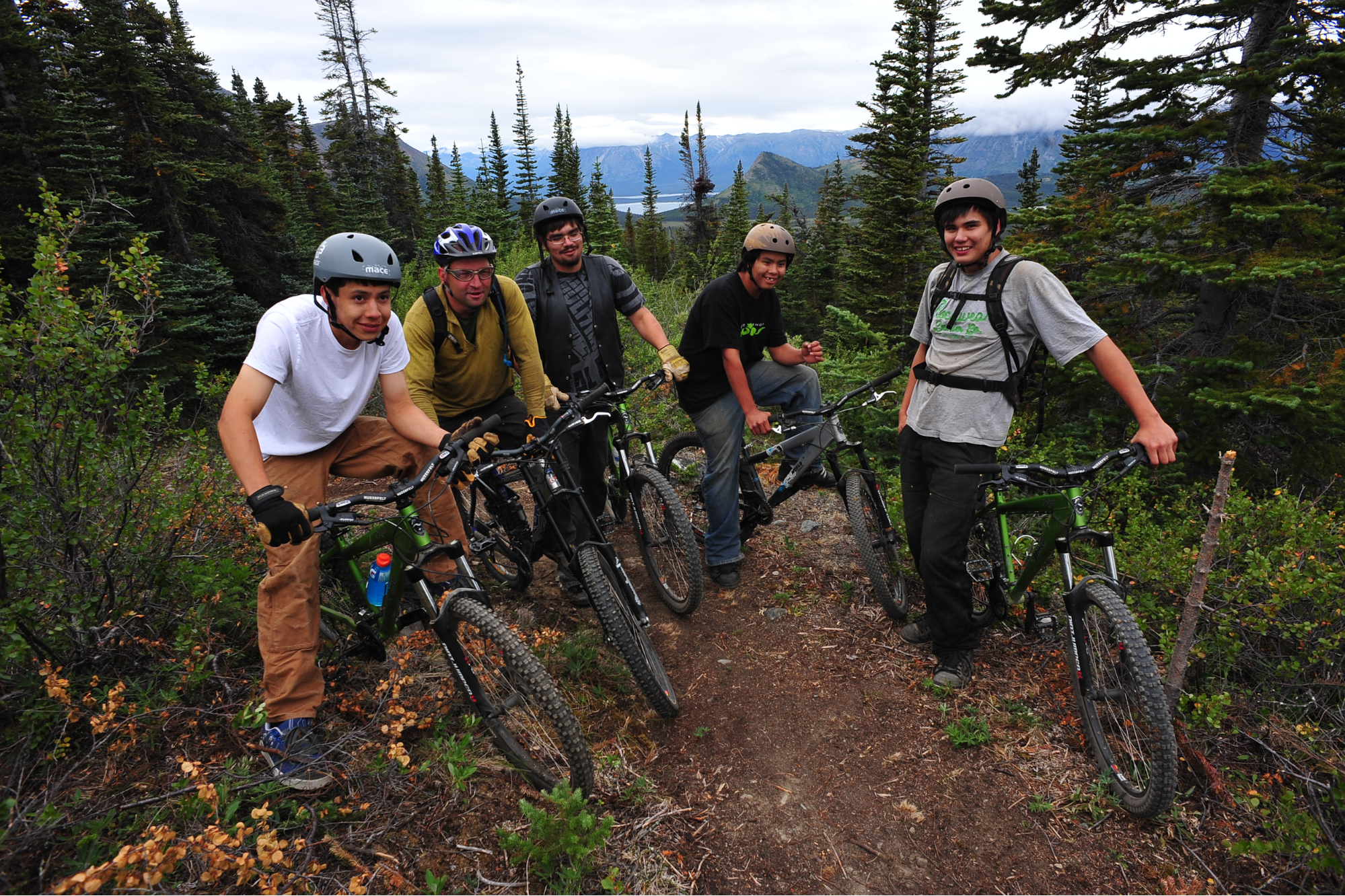
On Montana Mountain in the Yukon, which is owned by the Carcross/Tagish First Nations, the community has manufactured its own attraction.
This community had a vision of how they could attract tourists while respecting and protecting their traditional lands. They considered what activities would have low impact and were suited to the landscape. In 2006, a small group of Carcross/Tagish First Nations teenagers were asked to spend the summer building mountain bike trails on the mountain. This was hard work - moving dirt, shoveling, removing roots, and building bridges - but they loved it. Year after year, new teenagers from the community joined the crew, and as of 2016 there were 65 kilometers of trails criss-crossing the mountain.
To hear from the Carcross/Tagish youth yourself, watch this video:
Mountain bikers from around the world have started visiting this destination because of the world class trails. Now, an estimated 5000 visitors travel to the Yukon annually to ride.
As the number of visitors has grown, the community had to consider things like lodging, transportation, restaurants, bike rentals, and many more needs that the tourists would have when they arrived in order to ensure that they had an enjoyable vacation and to ensure that they promoted the experience to their friends.
As an aside, the project has also contributed to the well-being (economic and psychological) of the community, and has provided meaningful employment for teens who would otherwise be unemployed.
Check out this article, "The New Yukon Gold Rush: Mountain Biking" from outsideonline.com for more info. (Original article)
If you want to view any links in this pdf, right click and select "Open Link in New Tab" to avoid leaving this page. (View the original article.)
Checking out Montana Mountain and the Carcross Trails
Take a moment to see what information is available to those tourists who want to visit Montana Mountain. From a quick internet search, how would you answer these questions?
- What types of tourists would visit this attraction?
- Where do the people who visit come from and why do they pick Montana Mountain as a destination?
- Are there any additional attractions in the area that would also interest visitors?
- How do tourists get to the region and travel within it?
- How can tourists find information about the region?
Consider This: The Next Step
If the Carcross/Tagish First Nations community wanted to grow tourism in their community, what attractions and/or activities should they add next?
Using the information you have learned by researching the questions above, what would you propose to the community as a possible new tourism venture? Explain why you believe this would benefit the community.
Looking at your Local Tourism Situation
The rest of this activity will be spent looking at the tourism situation in your own town/area. You may or may not have spent much time previously thinking about what your town/area looks like to visitors. For some towns/areas in Ontario, it may be obvious. If you live in Niagara Falls, Toronto or Muskoka, you may have a summer job that caters to the tourism industry. If you live in a smaller or more remote location, the tourism sector might be less developed.
Your Town’s Hidden Gem
Every place has a great location or awesome activity that is basically unknown outside of local circles. It might be something like a perfect place for cliff jumping, a hidden beach, your favourite place for a milkshake, or a great local event like a fall fair.
Take a moment to think of a hidden gem in your area. It might be one that is not advertised at all, or something that is advertised but that tourists overlook for some reason.
Add a journal entry about the hidden gem in your area of Ontario.

CONSOLIDATION
After completing the task above, you are well prepared to act as an ambassador for your community!
The Spot Not to be Missed
Select the ‘Spot Not to be Missed’ in your community/area and provide a rationale as to why it is the best stop on your itinerary.
Use THREE of the prompts below to justify why your selection is the best:
- Spatial Significance - What natural or human feature makes this spot unique or attractive?
- Patterns and Trends - Comment on how popular (or under-visited) this site is and talk about the future potential of this site.
- Interrelationships - Are there any threats to this spot? How is this site important to the local economy?
- Explain, using proof, what type of destination this spot represents.
- Share your opinion on the type of tourist that is most likely to visit this destination.
 Learning Goals and Success Criteria
 Learning Skills and Work Habits