
The Challenge and Change of Travel and Tourism
Environmental Challenges

MINDS ON
An Underwater Paradise
Is snorkeling or scuba diving in a coral reef on your bucket list?
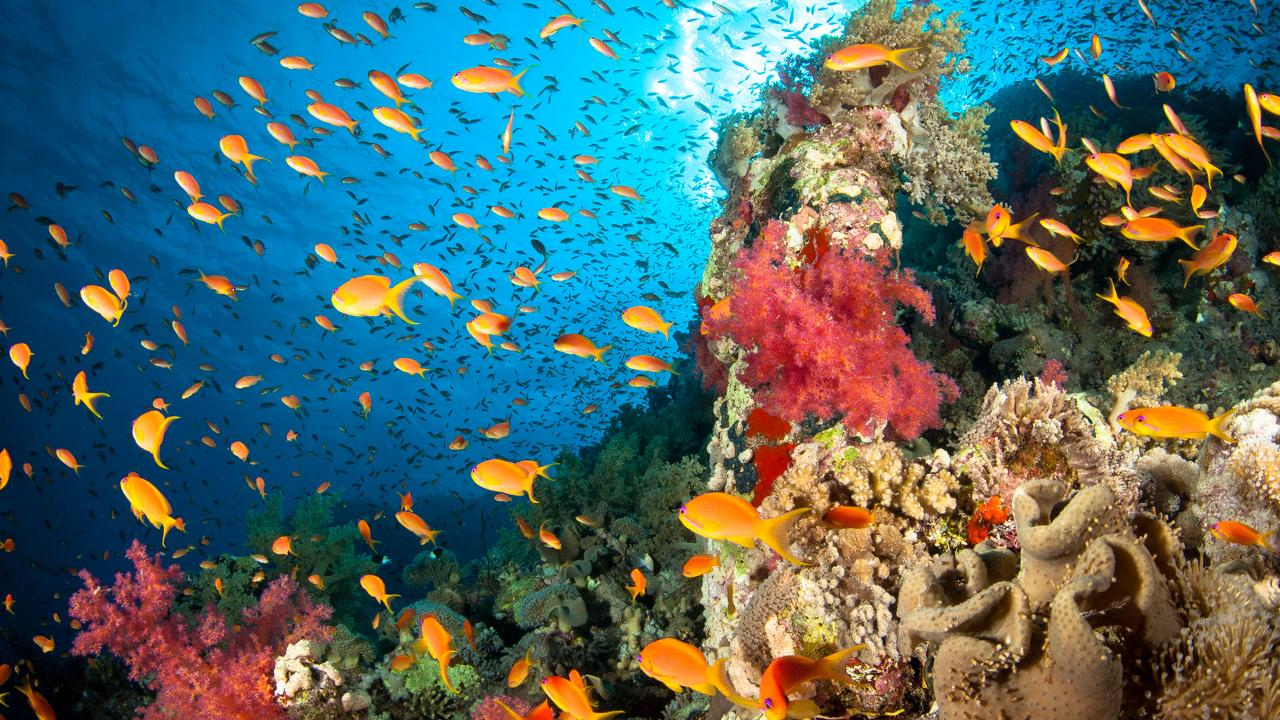
From Hollywood blockbusters like Finding Nemo and The Lorax, and nature documentaries like Planet Earth and Sharkwater, you likely know that coral reefs are areas of the ocean that are rich in biodiversity. (definition:variety of both aquatic animals and plant life.)
What you may not know is that coral reefs take a very long time to become established, with many coral species growing less than 2 mm per year.
As long as tourists are respectful, snorkeling and scuba diving have very little impact on the reefs or the marine life. However, they are still being threatened in other ways, such as through climate change and natural disasters.
Climate Change
The National Geographic video, “The Great Barrier Reef May Be Dying Faster Than We Thought”, demonstrates how climate change is impacting life underwater.
Natural Disasters
Read this article, Natural disasters pose threat to coral reefs from Earth Times, to learn how a natural disaster has impacted the reef in Belize.
If you want to view any links in this pdf, right click and select "Open Link in New Tab" to avoid leaving this page. (View the original article.)
The Extent of the Danger
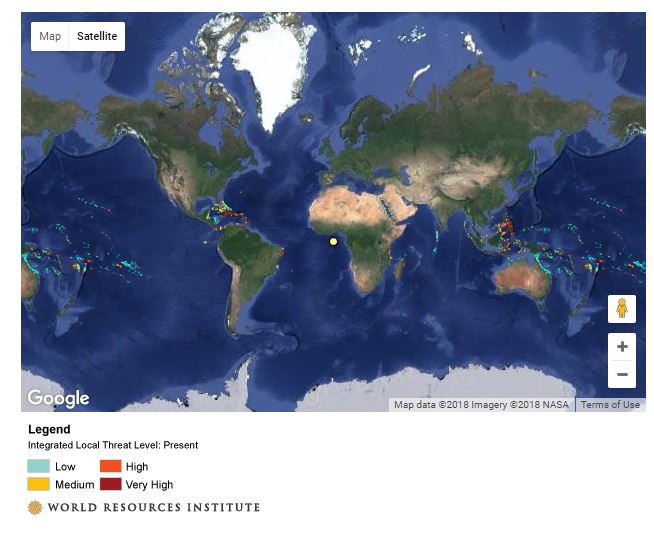
You can likely name a few famous coral reefs, but, in fact, reefs are found around the world.
To determine the extent of the damage and how badly the reefs are threatened, explore this interactive map from The World Resources Institute.
There is hope! Even though the reefs are suffering from both human and natural disasters, there are ways that the beauty and spatial significance of these areas can be preserved. View the video clip from the Coral Restoration Project to witness how one person is making an impact to preserve and repair coral reefs in the Florida area.
From what you have watched and read above, do you believe that we will win the battle to preserve the reefs?

ACTION
Earlier in the course, you looked at different activities that fit into the category of ecotourism. In this activity, you will again look at tourism and its relationship to the natural environment, but this time the examples will specifically look at how the natural environment can be harmed through natural or human influence.
Hurricane Irma
There are certain world events people will always remember. You might be able to recall where you were or who you were with when you heard about them. Chances are that some of these events are natural disasters, like Hurricane Irma, which devastated the Caribbean and Florida in 2017.
Long ago, scientists began to predict that a changing (warming) climate would lead to stronger hurricanes. Warmer water is the perfect fuel for hurricanes, and as long as they have this fuel - which can now be found further from the equator than ever before - they can continue to build and cause more damage.
You may remember these events because of the vivid images that the media shared of them, and the shocking loss that was depicted. Of course, the first concern when a disaster occurs is for human life and safety, but these events also have an impact on the tourism industry and tourist sites.
 Consider This: The Impact of Storms
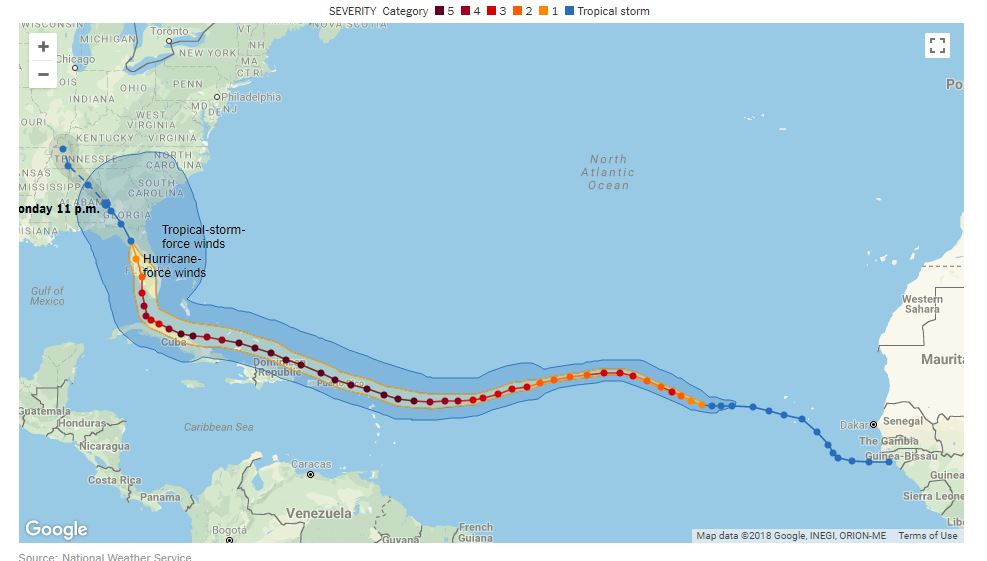
This article, NOAA Historical Hurricane Tracks from National Oceanic and Atmospheric Administration (NOAA), allows you to look at 150 years of the paths of Category 4 and 5 hurricanes.
If you want to view any links in this pdf, right click and select "Open Link in New Tab" to avoid leaving this page. (View the original article.)
It’s not a coincidence that we see the same general path over and over again each hurricane season. Through research, first determine and explain what is causing the recurring ‘boomerang’-shaped path of the hurricanes, and then discuss why this pattern is important to understand for those involved in the tourism industry.
Irma in the Caribbean
Although much of the news coverage of this storm dealt with Florida, a number of Caribbean islands unfortunately found themselves in Irma’s path.
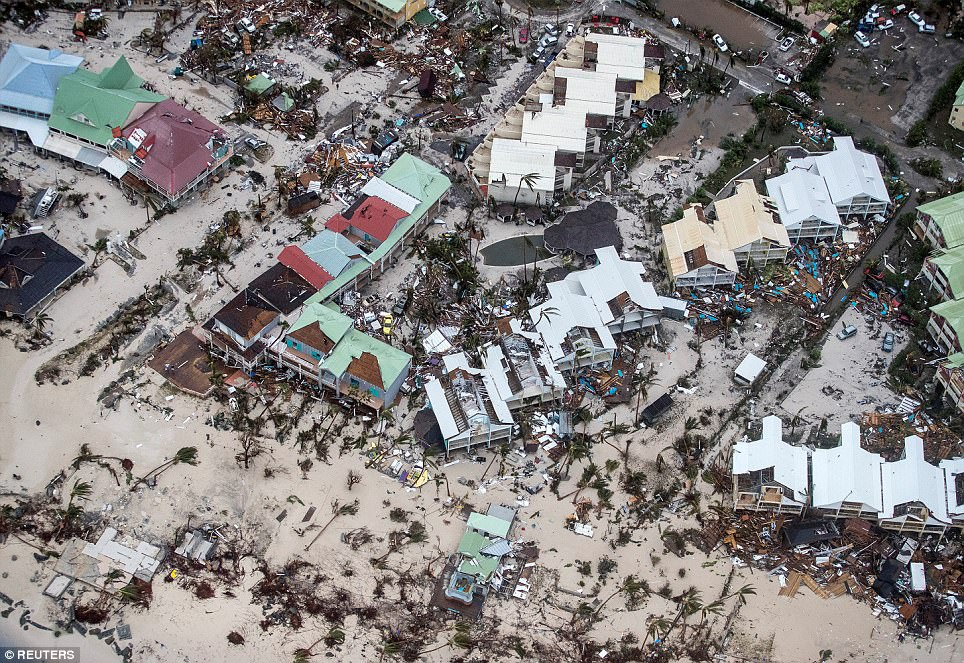
Barbuda, for example, suffered a direct hit. What you may not know about Barbuda is that over 60% of their GDP (definition:Gross Domestic Product - all goods and services produced in a year) comes from tourism, and over 50% of their jobs are in the tourism industry.
This promotional video shows an image of Barbuda before the storm, and the photographs below show the island after the hurricane passed through:
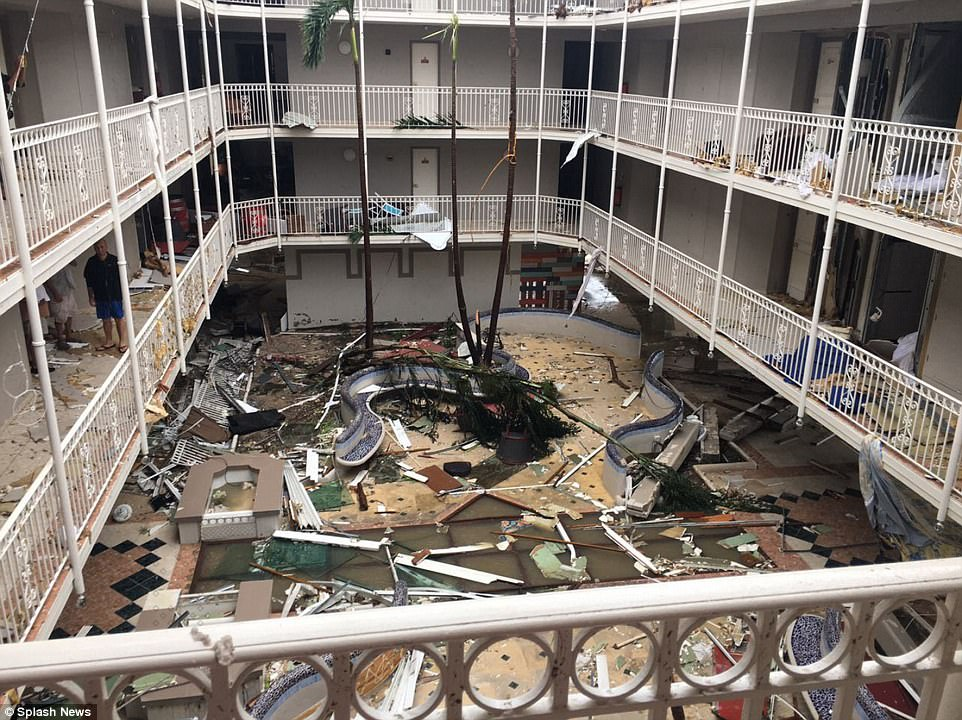
Consider This: How Did Irma Impact Tourism?
Some of the ways that Irma impacted tourism on Barbuda (and other Caribbean Islands that were hit) are obvious, such as cancelled hotel reservations and flights. However, the impacts go well beyond the short term, and run much deeper.
As you learned above, Hurricane Irma impacted the United States (Florida) as well as other countries (Cuba, Dominican Republic and Barbuda).
If two future storms of the same intensity were to make landfall in two different places (one in a developed country (definition:a more industrialized country that has a higher income per person) developed country like the United States, and one in a developing country (definition:a country still improving in areas like manufacturing, healthcare, and education, and working to increase the income per person) like Haiti), what impacts on the tourism industry would be the same and what impacts would be different?
Identify at least SEVEN impacts on tourist destinations from a major hurricane, and indicate for each one whether the impact would be felt both in a developed country (e.g., United States) and in a developing country (e.g., Haiti), or how the impacts would differ in the two settings. You might find this template helpful as you begin your list.
Animals and Tourism
We already know from previous activities that animal welfare can be impacted by human action and the resulting consequences from phenomena like climate change. Sometimes, however, animals can also play a large role in tourism. These roles can range from people looking at wildlife from a bus on a nature safari, to feeding wildlife in a petting zoo at a resort.
When the animals are treated well, or there is a Code of Conduct to govern the behaviour of tourists, the tourist activity can be a win-win for both the environment and the travellers. However, in some cases, the treatment of the animals can be questionable, and there are often environmental and/or ethical concerns.
Big Game Trophy Hunting
One very controversial example of tourism involving animals is big game trophy hunting. This involves wealthy hunters paying guides in various countries around the world to help them shoot large animals in their natural habitat (e.g., polar bears in Canada, and rhinos in South Africa). The hunters also have to pay for the right to hunt, and this money often goes towards conservation efforts in that country.
Watch the video, “Does Hunting Exotic Animals Help Conservation?”, to learn more.
As you can see, big game trophy hunting is a complicated issue that impacts not only the ecology and economy of a place, but also tourists from around the world and the local tourism industry in these countries.
Off the Beaten Path
How much do you think the life of a wild animal is worth? Take a look at this sample tourism price list compiled by the Trophy Hunting Industry and Conservation Projects (a company that specialized in ensuring that hunters are able to locate and kill their desired animal).
If you want to view any links in this pdf, right click and select "Open Link in New Tab" to avoid leaving this page. (View the original article.)
Does your opinion change now that you know the cost of these activities and what the money is used for? Why or why not?
 Tourism Scenario
Select one of the tourism scenarios involving animals listed below, and complete some research to determine if you believe this activity is positive or negative. With the information that you find, create a simple visual that demonstrates your understanding of your findings (poster, infographic, etc.). Your visual should communicate your learning and your ultimate decision on the value of this activity when weighed against the animal’s welfare.
While you may use any software application that you like, or may create your visual by hand, you may wish to consider Google Draw, Canva for a poster, or Piktochart for an infographic.
Possible Topics:
- The Tiger Temple in Lum Sum, Thailand
- Marineland in Niagara Falls
- Dog Sledding in Northern Canada
- Fly Fishing Lodges in Northern Ontario
- Alligator Farms in Florida
- Wild Safaris in Southern Africa
- Swimming with Dolphins at a Caribbean resort
- Polar Bear Tours in Churchill, Manitoba
- Elephant Orphanages in Sri Lanka
- Visiting any Zoo
- African Lion Safari in Hamilton
- Mule Rides in the Grand Canyon
- Whale Watching Tours in B.C. or the East Coast
- Elephant Rides in Thailand
- Deep Sea Fishing Charters
- A topic of your choosing
Visiting the North
Tourism in the Northwest Passage is a topic that we explored previously in this course.
This video clip is from The National, a CBC program that looks more deeply into news events in Canada. They attempt to present an accurate and balanced summary of tourism and cruising in the Northwest Passage of Canada.
While watching this video below, create three inquiry questions about tourism in the Northwest Passage that encourage research beyond the information that is shown in the video.
Note: Make sure that you are creating higher level questions that use the words ‘would’, ‘will’ or ‘might’ for this activity.
Concentrate your questions around future prospects and challenges for tourism in this environmentally-sensitive destination, and/or ways of managing how tourism impacts these sensitive areas from a geographic perspective.
You may wish to use The Question Matrix to help your create your questions.

CONSOLIDATION
In this activity, you have looked at a number of different ways that tourism can be impacted,both through natural disasters and through human exploitation of the environment.
 Impact: Human vs. Natural
Select any two situations below - one from the human category and one from the natural category - and compare and contrast (that is to find the similarities and differences between the two situations) the impact that they have had on both tourism and the tourist sites that they address. While you may chose any format you wish, a Venn diagram might be a good place to start.
Human
- China - Smog pollution
- Mount Everest - Trash left by climbers
- South Pacific - Sea level rising due to climate change
- Ontario’s Great Lakes - High bacteria levels in the water
- Coral Reefs - Decreasing biodiversity due to climate change
- Machu Picchu Peru - Impacts of the high number of visitors
- A topic of your choosing
- Any recent natural disaster that has impacted a tourist destination (earthquake, flood, drought, tornado, hurricane, typhoon, etc.)
Beginning with the Venn diagram below (or another graphic organizer of your choice), identify and explain at least four similarities and four differences between the two events. This will require some research, so be sure to include the URLs that you used in your final product.
SituationVenn
Then, in one well-constructed paragraph, indicate which activity has the most prominent or severe impact. Do human activities or natural disasters cause more damage to tourist destinations? Explain your choice. Use the concepts of geographic thinking to help make deeper connections.
 Learning Goals and Success Criteria
 Learning Skills and Work Habits