
CGW4U
World Issues: A Geographic Analysis
Unit 2: Asia
Activity 7: What is more important money or the environment?

Multinational corporations have grown geographically, economically and they have influenced the lives of many people and the environments in which they live. Globalization has enabled these corporations to make decisions that have had world-wide influences. Governments often make decisions that don’t necessarily benefit its people but rather to secure economic stability through the multinational corporations that operate within their borders. This activity will focus on the environmental impacts of multinational corporations and globalization.
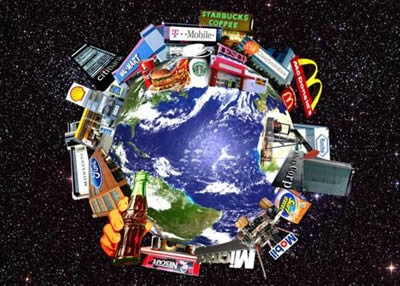
How easily do you recognize the logos of the ten multinational companies represented in the interactive below? Click and drag the name of the multinational onto the correct logo. Time yourself and take note of how long it took you to identify all ten logos correctly.

Coca Cola is one of the world’s largest multinational corporations. It operates in over 200 countries within 6 regions (Eurasia, Africa, Europe, Latin America, North America and Pacific). It is currently employing hundreds of thousands of people through direct and indirect employment.

According to the article “History of Coca Cola in India”, Coca Cola first began to operate in India in 1956. India, at the time, did not have any policies regarding foreign investment which resulted in Coca Cola making huge profits as the initial investment they made was less than $20,000 (USD). (Groovy Ganges)
This changed in 1976 when the Prime Minister of India, Indra Gandhi passed and implemented The Foreign Exchange Act which stipulated that any foreign company selling consumer products must invest 40% of its equity stake in India. Coca Cola agreed to this regulation but insisted on keeping power in technical and administrative areas without local participation which violated the Foreign Exchange Act. The government of India refused to agree to the concession and told Coca Cola to adjust its plan or leave the country which they did in 1977. (Groovy Ganges)
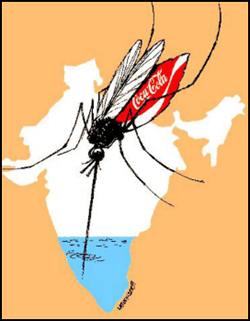
The article “History of Coca Cola in India”, states that Coca Cola returned to India in 1993 after the government modified the Foreign Exchange Act that wanted companies to invest 40% of their equity back into India. The changes to the Act included a policy where any foreign company which exceeded foreign equity by 40% would be treated the same way as an Indian company. In 1999, Coca Cola purchased India’s top soft drink brand, Parle. Prior to Coca Cola’s return, more than 50 Indian soft-drink brands and 200 factories were started. (History of Coca-Cola in India)
The India Resource Center reports that as Coca Cola started to expand its operations in India, many environmental issues began to surface. Many of the bottling plants in India are located in rural areas and the production of the beverages are using excessive amounts of ground-water. The farmers are struggling with securing adequate water resources as ground-water levels have continued to decline since Coca Cola began operations. Many feel Coca Cola has violated the principles of sustainable development. (India Resource Center)
The Resource Center also reported cases of waste water and toxic waste pollution being attributed to Coca Cola operations. Effluent is created in the processing of Coca Cola products and is contaminated with various chemicals used in the production process. This waste-water drains directly into the river Ganges without treatment. (India Resource Center)
The Central Pollution Control Board of India found sludge and toxic waste exceeded allowable levels in nine Coca Cola bottling plants. These plants were in direct violation of the Hazardous Waste Rules and Regulations of India. (India Resource Center)
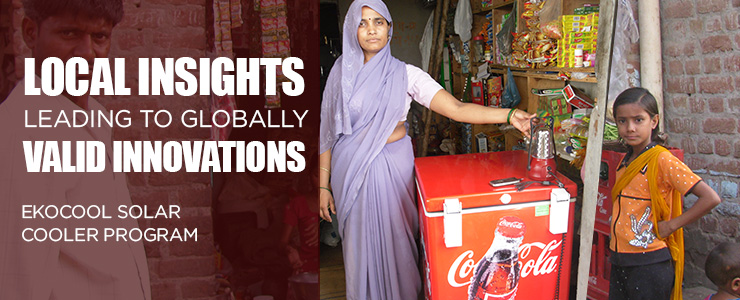
According to Coca Cola, it is making efforts to improve its reputation in India. Environmentally it has initiated a sustainable agriculture project and it has contributed to many projects related to water sustainability with successes in the area of water replenishment projects. Socially, there are many initiatives to empower women entrepreneurs in India through economic empowerment initiatives. (Coca-Cola India)
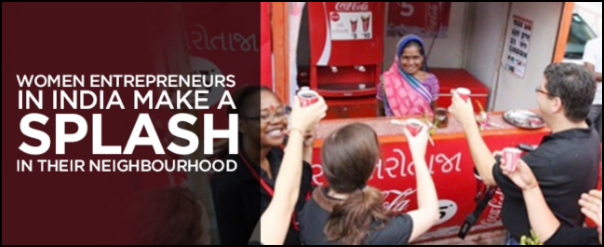
The controversy with respect to both positive and negative impacts of Coca Cola operating in India continues. Most recently, Coca Cola has closed three bottling plants because of water shortages and campaigns are still underway to get Coca Cola to compensate farmers for their financial losses. (Free Speech Radio News) Coca Cola continues to provide economic contribution to the country through job opportunities, investment and sustainability projects.
 Thinking Log
Below is a series of articles depicting both positive and negative implications of a multinational corporation (Coca Cola in India) on a country. Read these articles and compare and contrast the impacts keeping in mind the following:
- The impact of Coca Cola on the sustainability of natural resources.
- How the policies and practices of Coca Cola have impacted India.
- The factors that drive the globalization of Coca Cola (why they chose to return to India; are they choosing to expand?)
- How does/would Coca Cola influence Indian policy?
- How has Coca Cola promoted positive social change?
 Issues Café
Is India better off (politically, socially, environmentally, and economically) with Coca Cola operating in their country than they would be if Coca Cola chose to close operations?

H.O.T. Topic - Branding
Scenario
In 1971, Coca Cola released the iconic song/commercial entitled I’d Like to Buy the World a Coke.
The song lyrics conjure up a different, more innocent world.
I'd like to buy the world a home
And furnish it with love
Grow apple trees and honey bees
And snow white turtle doves
(Chorus)
I'd like to teach the world to sing
In perfect harmony
I'd like to buy the world a Coke
And keep it company
That's the real thing
(Chorus)
(Chorus 2)
What the world wants today
Is the real thing
What the world wants today
Is the real thing
You have read considerable information regarding Coca Cola’s performance in India among other countries. Rewrite the nearly 50 year old jingle so that it reflects the economic, social and environmental issues faced by this multinational corporation in today’s world.
Social Action?
Is there an available Coca Cola executive who might accept a teleconference invitation to listen to your jingles and share some of the company’s present-day challenges?


To demonstrate your learning from this unit of study, you will create an interactive map using Google My Map. This will also allow you some practice for another upcoming assignment where you will require the Google My Maps application. If you don’t have a Google account already please create one; sign into your Google account and then in the Google search type in “Google My Map” to start this application.
View the tutorial video below in order to become more familiar with using Google My Map.
 Multinational Corporation Map
Create a map that has information regarding two different multinational corporations of your choice. Using Google My Map, create a map with the following items:
- Your map should have two different layers, one for each of your chosen multinational corporations, with pins indicating the exact locations for the headquarters of each of the corporations. Also indicate all of the countries where they have factories or production plants. This makes the task more difficult but it will be eye opening for you to see the size of their operations
- On each of the layers include at least three pieces of media (e.g., TEDTalk, political cartoon, song, Facebook page, YouTube clip, etc) that depicts the issue and the logo of your chosen corporation.
- Use the following guiding questions to complete a summary (2 page maximum) to add to the map layers.
Guiding Questions for the Summary
- What is the impact of these multinationals on the sustainability of natural resources?
- How did these multinationals choose their national and international locations?
- How have the policies and practices of these multinational corporations impacted this geographic location and globally?
- Discuss the factors that are driving the globalization of these multinationals including why they chose this location, where are they choosing to expand and why?
- How does/would these multinational corporations influence public policy?
- How have these multinational corporations promoted positive social change?
For tips and tricks on inserting media and written components into Google My Maps and other features view this tutorial video:
 Learning Skills Reflection
 Introduction
 Learning Goals
 Learning Skills
 Rubric 1