
CGW4U
World Issues: A Geographic Analysis
Unit 3: Africa
Activity 5: Why don’t all people have food security?

Why don’t we all have food security? What exactly do we mean by that term ?

Map of average daily dietary energy availability per capita in 2006–2008
Wikipedia
According to the United Nations World Food Programme, food security means that people have availability and adequate access at all times to sufficient, safe, nutritious food to maintain a healthy and active life. Food security analysts look at the combination of the following three main elements:
Food availability:
Food must be available in sufficient quantities and on a consistent basis. It considers stock and production in a given area and the capacity to bring in food from elsewhere, through trade or aid.
Food access:
People must be able to regularly acquire adequate quantities of food, through purchase, home production, barter, gifts, borrowing or food aid.
Food utilization:
Consumed food must have a positive nutritional impact on people. It entails cooking, storage and hygiene practices, individual’s health, water and sanitation, feeding and sharing practices within the household.
How can it be that we don’t all have food security? Why would any group of people settle where they were not assured of a plentiful and safe food supply?
As we go through this activity you will consider the level of food security experienced by different populations around the world and if these patterns are sustainable or not.

Part A - Food insecurity in Our World
We have the knowledge, ability and means to solve the problem -- to tackle the challenges of famine and malnutrition. As we saw earlier in this course, we know that if populations are healthier, family size will decrease and there will be less strain on the natural environment and the global commons.
The challenge is to do it. If we don’t, millions of people could move to the most extreme form of malnutrition, starvation. When the body is at this point, the lack of nutrition causes organ damage, and eventually death.
Read the following two maps to see the pattern of the global food insecurity and the ultimate consequence of death.
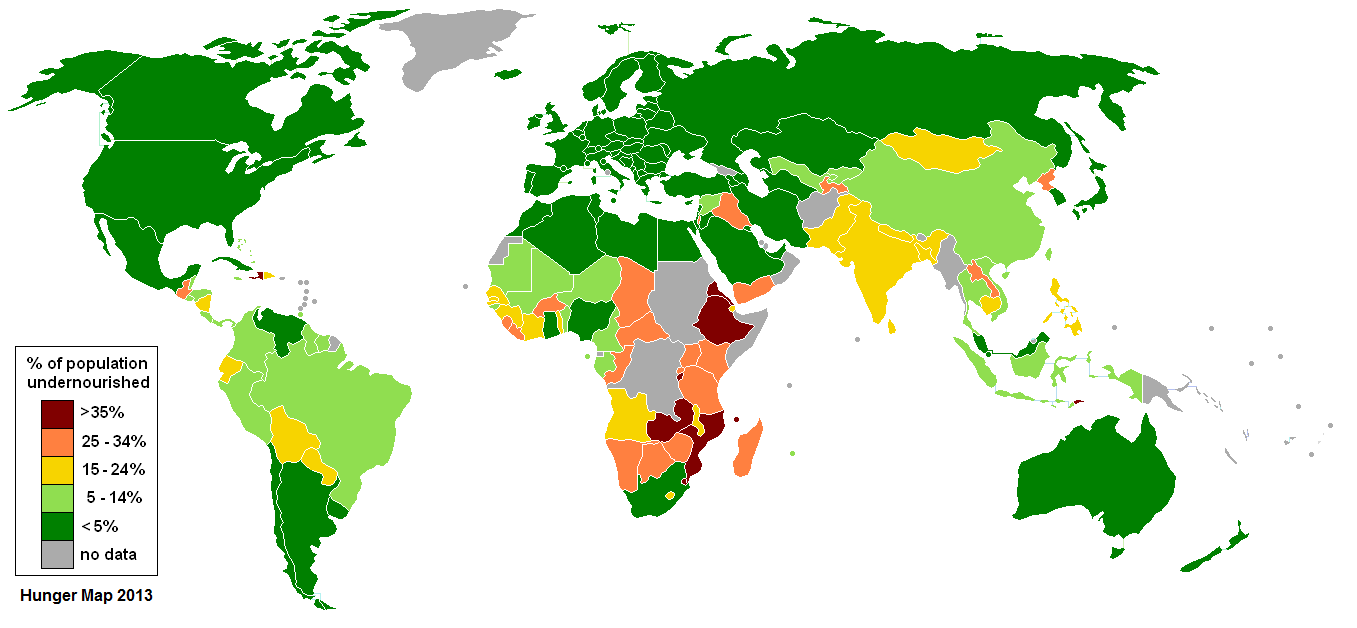
Percentage of Population Undernourished
Wikipedia
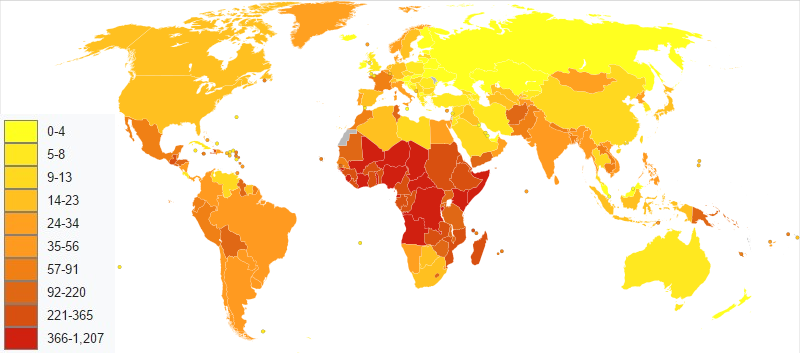
Deaths from Nutritional deficiencies in 2012 per million persons
Wikimedia
 Food Security
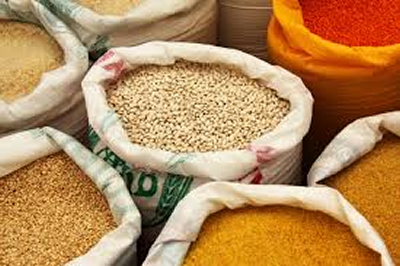
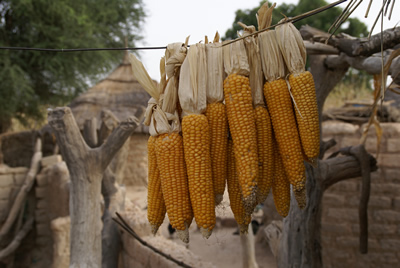
Specifically in Africa, food security is a significant challenge. Think of all the components that need to be in place for every person to have the minimum daily calorie intake. To connect all of these components, make a mind map of the challenges of reaching global food security by 2030. Use 'Ensuring Food Security' as the centre of your image.
Flickr
When you were brainstorming, did you think about the challenge like a geographer? Did your mind map include:
-
Spatial Significance: Why is this happening in some locations, but not all locations?
-
Patterns and trends: Is the challenge growing or declining at the same rate in the same places?
-
Interrelationships: How is climate change connected to the challenge of food security?
- Geographic perspective:
- Environmental challenges: What is the frequency of drought, what is the soil quality?
- Political challenges: How do local policies and/or international food programs support the people of the region?
- Social challenges: Where is the food in relation to the people who need it? Is culturally preferred food readily available? Are local people included in decision making about food security?
- Economic challenges: If infrastructure is a challenge, how will it be paid for?
Mindmap Revised
Hopefully your mind map was able to illustrate the complexity of the challenges associated with food security. If you did not consider each of the four concepts of geographic thinking (Social, Political, Environmental and Economic), add the concepts you missed to your mind map now. This is a great way to deepen your thinking about any issue.
As you saw in the map above, this issue of food security is critical in Africa. Use the following article to add to your mind map by pulling out specific statistics that illustrate the size of the food security challenge in Africa
 Notebook
Through your mind map are you able to see the challenges associated with food security in Africa? Watch Hungry Planet UN Web TV video to see the situation. Again, add new ideas to your mind map.
Hopefully you have a clearer understanding of food security and the causes for food insecurity. What then can be done about this situation? Traditionally we have shipped food as a main form of aid. Like all forms of aid this approach had an impact in the short term, but critics of aid agencies questioned the long term success of this approach. In this situation, building the best systems can be the difference between life and death.
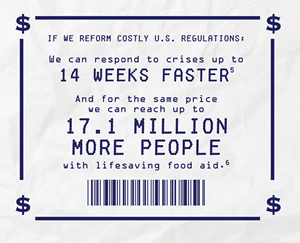
From a donor’s perspective the issues are just as complex. The following article for “The inside story on emergencies” illustrates the role the USA has taken in food aid specifically for Haiti. In a broader context the article, timeline and embedded videos unpack the challenges of finding the best approach to supplying food aid to Haiti and African countries. At least, from the perspective of the USA.
As you visit the IRIN website be sure to take the time to read the article, timeline and watch the video. If you want to visit any links in the following pdf, right click and select "Open Link in New Tab" to avoid leaving this page.
The World Food Programme (WFP) still distributes “food baskets” when they are the best response for the time, place and cause of food insecurity.
WFP have expanded their responses to include approaches that can be more tailored to the people that they are helping. Alternative responses to the problem may be more familiar to you. The cash-based transfer provides cash (like a gift card) with restrictions on where it can be spent. If you want to visit any links in the following pdf, right click and select "Open Link in New Tab" to avoid leaving this page.
Have a look at this WFP video to really see the situation in South Sudan. The video is a collection of clips organized by the WFP for use by media outlets around the world. You will notice there is no narration and only at the end of the clips is there a WFP representative explaining the situation. As you watch think about why WFP would use this approach to getting their situation into the global mainstream media.
Food Aid
Assess the effectiveness of food aid policies and programs in improving the quality of life in LEDCs. What are the risks associated with “cash-based transfers?” What are the benefits? Why might some government and/or some aid organizations oppose or support their use?
Part B - Industrialization... Of Food?
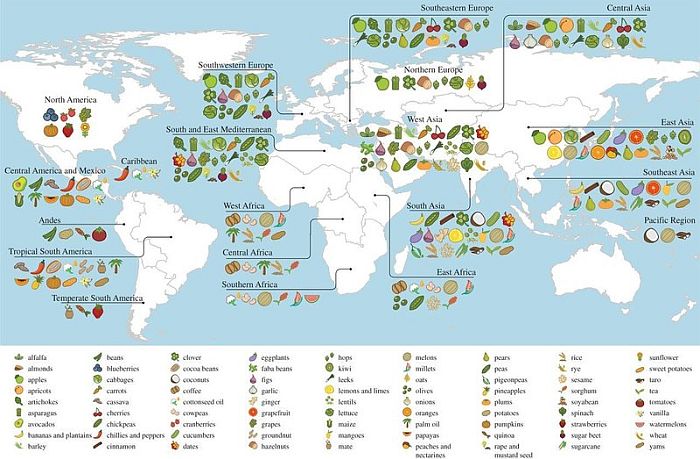
Bananas from Costa Rica, pineapple from Hawaii, cocoa from Ghana, lamb from New Zealand. How much do you know about where your food comes from? Read the article “A Map of Where Your Food Originated May Surprise You.”
Did you expect to find that the globalization of foods and interdependence of distant regions, create the diversity of food we enjoy in Canada year round today? Some of this is not new. We have always brought food back from travels, and the Silk Road (which also carried spices, you will recall) is only one example of trade that was built to provide, among other things, a constant and consistent supply of foreign foodstuffs.
If we look back to the 1950s and 60s we can examine a very intentional attempt to industrialize food supply. Use the five following resources to determine for yourself the sustainability and efficacy of the Green Revolution.
Why would the Ford and Rockefeller Foundations want to participate in the feeding of the people in LEDCs?
The following video is a tribute to Nobel prize winner, Norman Borlaug, a plant breeder who touched over a billion lives with his determination to stop world hunger.
Encyclopedia entry
If you want to visit any links in the following pdf, right click and select "Open Link in New Tab" to avoid leaving this page.
Now meet Vandana Shiva. How sustainable is this industrial approach? Born in India, Shiva came to Canada to pursue an M.A. at the University of Guelph and then a PhD in physics at the University of Western Ontario before shifting to interdisciplinary studies that includes environmental issues.
Manning, an environmental author who has written extensively on the history and future of the American prairie, shares his thoughts on agriculture and poverty.
The following video depicts the amazing engineering feats that have allowed American farmers to alter and control nature and also questions the costs of our insatiable appetite on our health and environment.
Issues Café: Improving Food Security
Assess the effectiveness of Borlaug and others to improve the quality of life by improving food security. Is Borlaug a hero? ...Or do Manning or Shiva have a better understanding of the meaning of the Green Revolution?
Part C - The Challenge of Cash Crops
When you think of a farmer, you likely think they eat whatever food they are producing. In the vast majority of cases, however, they are growing food to sell it; they’re growing cash crops. Farmers that are growing solely for their families’ consumption are “subsistence” farmers and they are increasingly rare.
When farmers are farming to feed their family they grow a variety of crops, and often raise animals too. Conversely, cash or monocropping usually results in an investment into one specific crop. This way the cash crop farmer can, in theory, generate an economy of scale by having equipment and materials suited to that one crop. Economy of scale means more efficiency. More efficiency, means more profit.
The most common cash crops are coffee, tea, cotton, cocoa, rubber and fruit. As well there are also illegal cash crops: marijuana, coca and the opium poppy. As the global marijuana industry becomes legalized, we may well see the economic benefits of this particular cash crop. The Financial Post suggested that legalized marijuana production in Canada alone could become a $5 Billion industry. (Financial Post)
Let’s look back at the Where Does Your Food Come From Map.
In Africa, many countries tried or were forced to reduce national debt by turning private farms into cash crop farms owned and operated by multinational corporations. The World Trade Organization (WTO) Bank and International Monetary Fund (IMF) used a policy of structural adjustments to force this change. If you want to visit any links in the following pdf, right click and select "Open Link in New Tab" to avoid leaving this page.
India and African countries alike, saw the creation of large farms on land that multi-national corporations (MNCs) purchased from national governments. In many cases, violence ensued as farmers were physically forced off their land, only to become a labourer on that same farmland. Not only were African countries unable to grow enough to feed themselves, they were too poor to buy food from abroad.
In summary, the benefits of cash crops can include:
-
Employment opportunities;
-
Government income through taxes and export revenue;
-
Improved transportation infrastructure that form part of the export process;
-
Global competition lowers consumer prices;
-
Diversity of commodities available worldwide and year round.
But the challenges associated with cash crops can also include:
-
Since the goal is profit, sustainable farming practices that reduce crop yield or profit will not be incorporated into regular farming practice;
-
Monocropping causes accelerated soil degradation, increased insects and pests;
-
Contributes to food scarcity as staple food crops are being replaced by cash crops to be exported;
-
Focus on crops for export may mean that local traditional foods are farmed less, creating less diversity;
-
Large scale or industrial farming equipment is too expensive so small farm operations are pushed off the land.
Did you notice the elephant in the room? Its name is Monsanto. Watch “Who are Monsanto and are they really evil?” to see why they have this reputation.
Truthloader says their purpose is to “look deeper into stories, questioning the mainstream narrative and providing context to the news to bring you alternative views and opinions.” Remember that we need to be critical of all information sources. Consider how this video fits with the Huffington Post article “It Is Time India Declared Independence From Monsanto And Big GMO” that you read above. How do these sources complement each other? What do you conclude about Monsanto? They are without question one of the largest driving forces of the industrialization of food around the world today.
Industrialization of food
Record your thinking about the industrialization of food in terms of creating food security or food insecurity in your mind map.
H.O.T. Topic - Cash Crop Industry
Scenario
You are a government advisor. In that role, you have been asked to prepare a list of the Pros and Cons of the Cash Crop Industry. Based on your learning so far, list the 5 greatest benefits (Pros) cash crops can bring to a country. Then prepare a list of 5 challenges (Cons) a country should be aware of before committing to a cash crop industry. Your pros and cons should include economic, social and environmental considerations.
Social Action?
How valid is your Top Ten List in a real world scenario? Who might you consult to obtain feedback on your choices?

Part D - Responding to the challenges of sustainable food security
Alternative Approaches to Food Security
Below are four pairs of resources. Use each resource to understand alternatives to the current approach to food security. As you do, think about the application of these ideas to other parts of the world. Take notes to help you sort your found data into points which support or challenge alternatives for either MEDCs / LEDCs or Asia/ Africa/the west.
Topic 1: Local farms and new approaches to land management
Growing more food locally and developing cost-effective land management and property rights are just two ways farming systems can function more sustainably.
Topic 2: Meat or Bugs?
We know from earlier in this activity that we waste considerable energy eating meat. After all, we have to use lots of energy just growing the food our cattle and pigs eat. Bring on the bugs! If you want to visit any links in the following pdfs, right click and select "Open Link in New Tab" to avoid leaving this page.
Topic 3: Don’t Throw it out!
Food waste is a problem all around the world, but especially in the west. France has a new paradigm about food waste.

Topic 4 : Vertical Farms
As populations grow can we increase local food security inside our cities?

 Improving Food Security
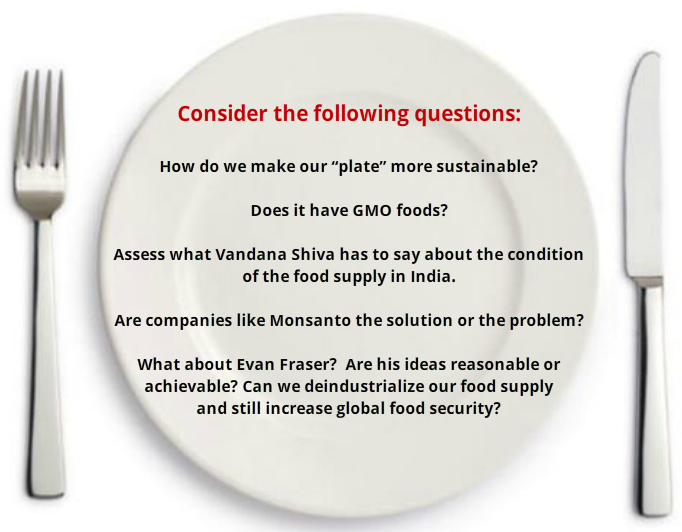
Now, return to your mind map. Are there changes you would like to make?
In 150 to 250 words, answer the question: What is the best strategy to change the current industrial farming practice which would improve the food security in LEDCs?
 Introduction
 Learning Goals
 Learning Skills
 Rubric 1