
CHY4U
World History Since the Fifteenth Century
Unit 2: 1650 - 1789: What's Worth Fighting For?
Activity 5: Intended and Unintended Consequences of Economic and Cultural Exchanges

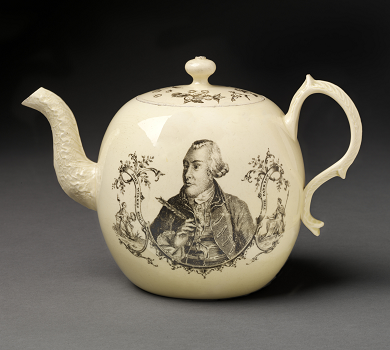
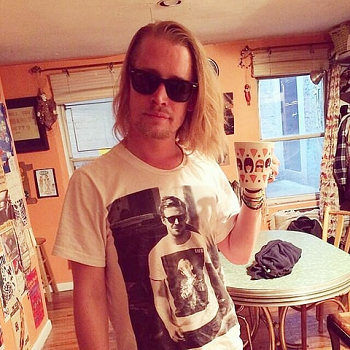
The image on the left is of a Wedgwood teapot showing London mayor John Wilkes holding the Magna Carta, the first great legal document in English history. Wilkes was mayor in the 1770s, but the Magna Carta was created in 1215.
Wedgwood is a fine china, porcelain, and luxury accessories company founded on 1 May 1759 by Josiah Wedgwood. Porcelain is a type of fine pottery, often known as china, because it had to be imported to Europe from China until the 18th century, when Europeans began to manufacture it themselves. It was still an expensive luxury item.
The image on the right is of actor Macaulay Culkin, star of the Home Alone movie series. He is wearing a t-shirt featuring an image of Ryan Gosling; in the picture, Gosling is wearing a t-shirt with a picture of Culkin from his Home Alone days. What does Wedgwood China have in common with celebrity culture? It might be more accurate to ask how did Wedgwood China make celebrity culture possible?
Josiah Wedgwood was not the first potter in Europe to emulate Chinese techniques to make porcelain. He was, however, one of the most successful. Unlike his contemporaries, who tended to copy not only the process but also the designs of Chinese porcelain makers, Wedgwood used images of his contemporaries on his porcelain. These works were popular with not only the elite of European society, who enjoyed seeing their images on their own dinnerware, but also the growing middle class. The middle class had money to spend, and purchased plates with images of nobility as a status symbol.
Thus, Wedgwood was perhaps the first “western” person to use celebrities to sell products. In this activity, you will learn about other consequences--both intended and unintended--of cultural exchanges in the 17th and 18th centuries.
 Wedgwood, Culkin and Celebrity Culture
Is celebrity culture as depicted by the image of Wilkes and then Culkin an intended or unintended consequence of Wedgwood's porcelain industry?
Try to answer this question using your understanding of this historical thinking concept (cause and consequence) and any background knowledge you may have.

In this activity, you will examine some specific cultural interactions of the 18th century and their causes and consequences. As you read about the interactions, think about and make note of which causes were direct and indirect, which consequences were intended and unintended, which consequences were positive and negative and for whom. You may want to set up an organizer to help you take notes. To consolidate your learning you will use a learning object to visually demonstrate your conclusions.
Pirates (Not Just) of the Caribbean
Piracy has existed as long as sea travel. Ancient Egyptian and Greek vessels were raided by pirates, and 21st century crews in some regions of Africa, Asia and South America are on guard against marauders. You can see current attacks as they are happening today at the Live Piracy Map. In fact, according to some estimates, piracy has never been more frequent than it is today.
Still, the period from 1650 to the 1730s is considered the heyday of piracy. During this era, pirates would regularly attack ports in the Americas and ships in the Atlantic. What made this period particularly remarkable, however, was not the frequency of the attacks, but the way in which one became a pirate in the first place. Many of the pirates of this era started as privateers, mercenaries hired by European states to harass enemy cargo ships and disrupt trade during wartime. Hiring of the privateers was often done in secret, allowing the states to distance themselves from the privateers’ ruthless actions. Britain, for example, relied heavily on privateers to raid Spanish galleons, heavy with gold and silver, returning from the Americas, but was reluctant to publicly acknowledge its actions.
When war ended, privateers were unemployed; thus, many turned to piracy to make a living. Once they turned to piracy, crews did not distinguish between the ships of their former enemies or their former employers. In some cases, states found themselves hunting pirates that they had a previously hired; ironically, they could not elaborate on the crews’ raiding histories without implicating themselves.
One unintended consequence of piracy was the spread of knowledge. Because pirates were not subject to any regulations issued by European states, they could sail anywhere in the world. Thus, while they were not welcomed in every port, this freedom did provide access to places that other vessels could not sail. Furthermore, because doctors were often hired by pirate crews to heal wounds on their voyages, some ships had at least one person capable of writing about the cultures they encountered. These doctors could then share their findings about the world. In some cases, explorers and scientists joined privateering crews. The most famous example is William Dampier, whose map of the world was based on explorations while on various privateering ships; he is also responsible for introducing new items and words from around the globe into the English language.
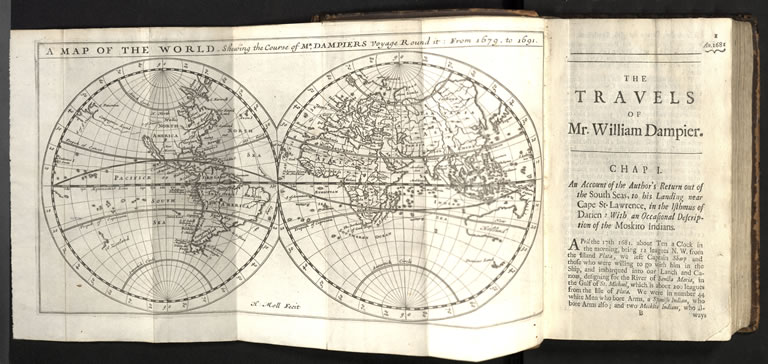
Dampier’s map is considered one of the most accurate of its time due to his decision not to include formations that he had not fully verified. If you look closely, you will notice that some land masses are incomplete.
William Dampier, A New Voyage Round the World, London: 1698. Presented by the Mandeville Special Collections Library, 2013

This image is from a book written about Sir Francis Drake, whose constant raiding of Spanish vessels for the English was the precursor to other privateers. According to legend, when Elizabeth I had Drake knighted, she had a French diplomat hold the sword, implying that the French supported Drake’s raids on Spanish vessels.
Anon, Sir Francis Drake Revived. Who is or may be a pattern to stir up all heroic and active spirits of these times to benefit their country and eternalize their names by like noble attempts. , London: 1653. Presented by the Mandeville Special Collections Library, 2013
Privateers were neither the first nor the last mercenaries employed by states to do their dirty work. Mercenaries date back to the ancient world, and are still used today; for example, a private military company called Blackwater was hired by the United States government to protect its interests in Iraq.
Consequences of Piracy
Are the consequences of piracy during this time period negative or positive?
Provide 2 examples to support your thinking.
Exchange of Ideas: Enlightenment and Absolutism in France and Russia
In a previous activity, you learned that thinkers from across Europe defined the period called the Enlightenment. Some of the values espoused by these thinkers were adopted by rulers who sought to reform their states. One of the consequences of this era was Absolutism, a system in which a monarch has complete control over the state. In some ways, Absolutism may seem to contradict Enlightenment values because of the ruler’s god-like control over everything in his/her domain; however, some theorists, like Thomas Hobbes, argued that a monarch with absolute control was by far the best option. Thus, while Absolutism may seem contradictory to Enlightenment values, it is actually a product of them.
Absolutism in France
Louis XIV of France used Absolutism to centralize power around the throne. When he was 10, he witnessed a series of civil wars led by nobles who wanted to limit the power of the crown; when he was older, he imposed a series of changes that strengthened the monarchy at the expense of the nobility. The embodiment of Louis’ Absolutism is Versailles, a massive palace that also served as the new location for the French government. Versailles was designed to intimidate visitors, making them more aware of Louis’ power; because it was built some distance from Paris, anyone who wished to conduct business with the French government needed to travel outside Paris to Versailles-the king’s personal residence-to do so.
The video below shows the changes made under Louis XIV, and shows you how Versailles was an architectural manifestation of his power.
Another way that Louis disempowered the nobles was through redefining his expectations of them. He used routine, ceremony, and access to control his court; the structure was so strict that his personal valet, Duke de Saint-Simon, said that "with an almanac and a watch, you could be three hundred leagues from here and say what [Louis] was doing."
Below is an excerpt from the Duke’s memoirs:
The frequent fêtes (parties), the private promenades at Versailles, the journeys, were the means on which the King seized in order to distinguish or mortify the courtiers, and thus render them more assiduous in pleasing him. He felt that of real favors he had not enough to bestow; in order to keep up the spirit of devotion, he therefore unceasingly invented all sorts of ideal ones, little preferences and petty distinctions, which answered his purpose as well.
He was exceedingly jealous of the attention paid him. Not only did he notice the presence of the most distinguished courtiers, but those of inferior degree also. He looked to the right and to the left, not only upon rising, but upon going to bed, at his meals, in passing through his apartments, or his gardens of Versailles, where alone the courtiers were allowed to follow him; he saw and noticed everybody; not one escaped him, not even those who hoped to remain unnoticed.
Absolutism in Russia
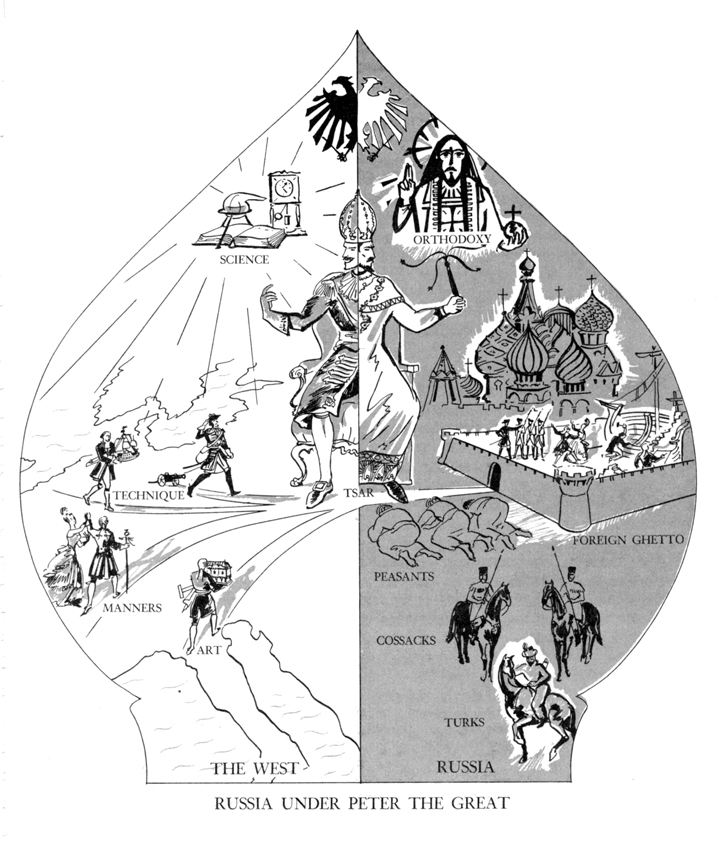
Click image to see larger version.
Source
Absolutism was a tool used by Peter the Great to westernize Russia based on Enlightenment ideals. As the image above indicates, he enacted a number of policies designed to limit the Byzantine and Eastern influences in nearly every facet of Russian society. For example, he ordered the construction of a new city, St. Petersburg, that was European in style. The image on the right is of a Church in Moscow that predates Peter’s reign; the image on the left is the Winter Palace built for Peter in St. Petersburg. Note its resemblance to Versailles.
Referring to Byzantium, or the Eastern Roman Empire (330 to 1453 CE). In this context, Byzantine means old, filled with elaborate bureaucracy, systems of privilege and ceremony. The antithesis of Enlightenment values.
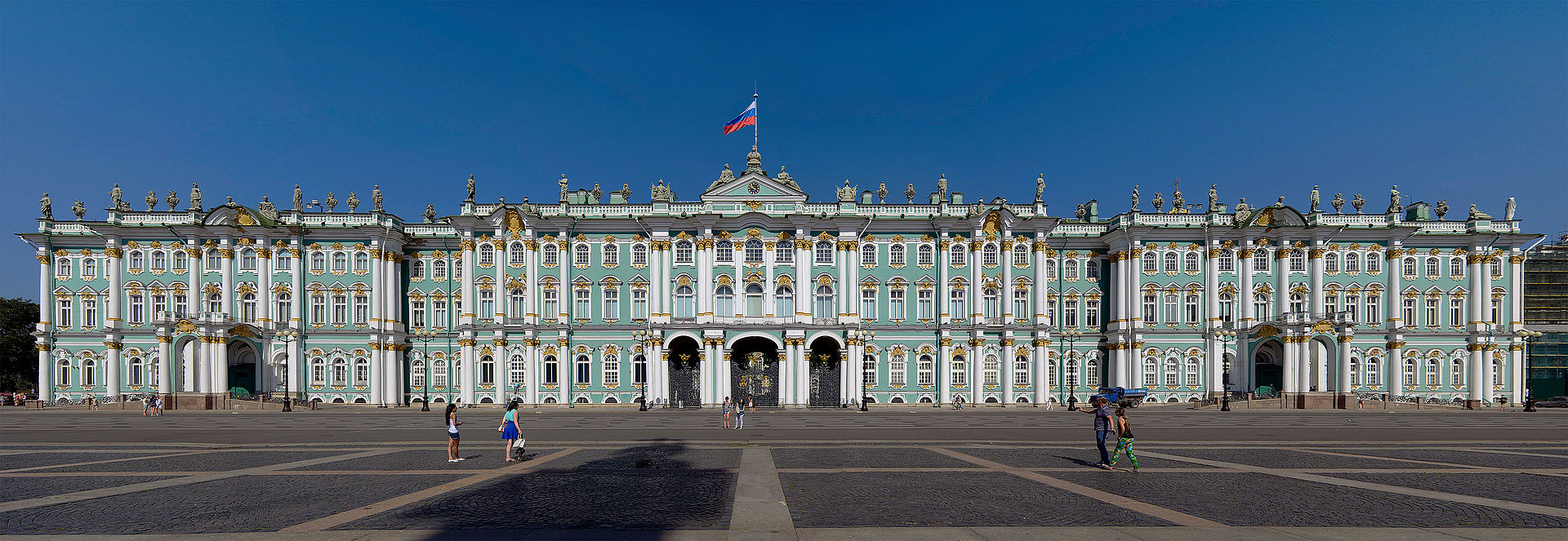
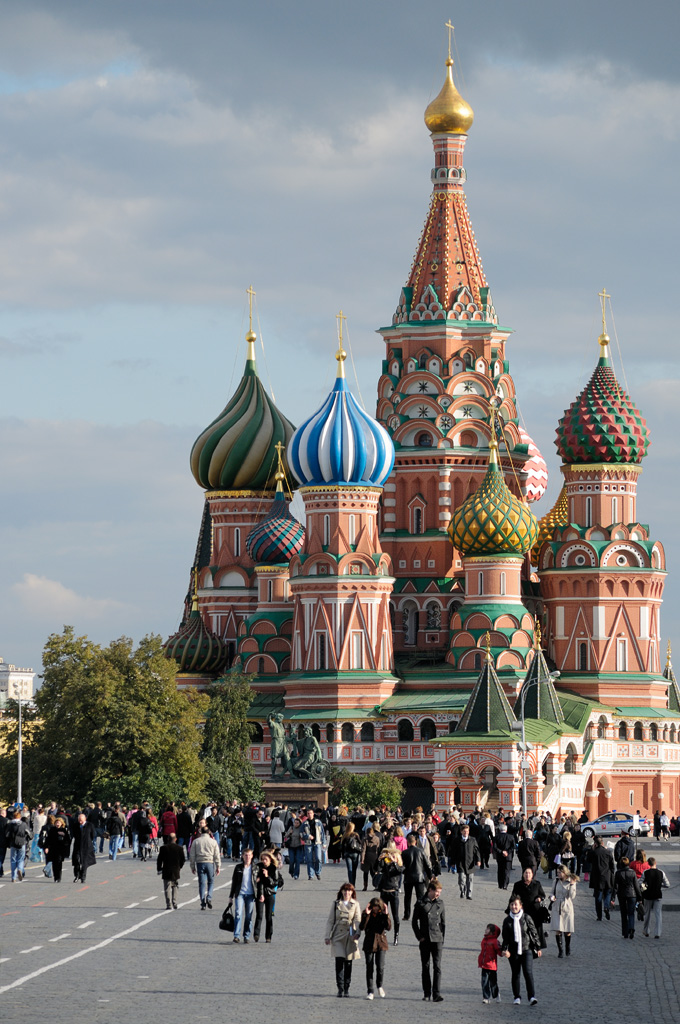
Like Louis, Peter had to contend with a noble class that had previously enjoyed considerable influence, and thus were not likely to accept Absolutist rule uncontested. In response, Peter created the Table of Ranks, a complex ranking system for all aristocrats. Initially, all nobles were placed in the lowest rank, regardless of their previous titles and prestige. In order to move up the ranks a nobleman had to demonstrate loyalty and service to Peter; since literacy was a requirement for many of the tasks, the nobles of Russia had to become literate to achieve higher status. Thus, Peter not only ensured that the highest ranking nobles were loyal to him, but also ensured that these same nobles were educated.
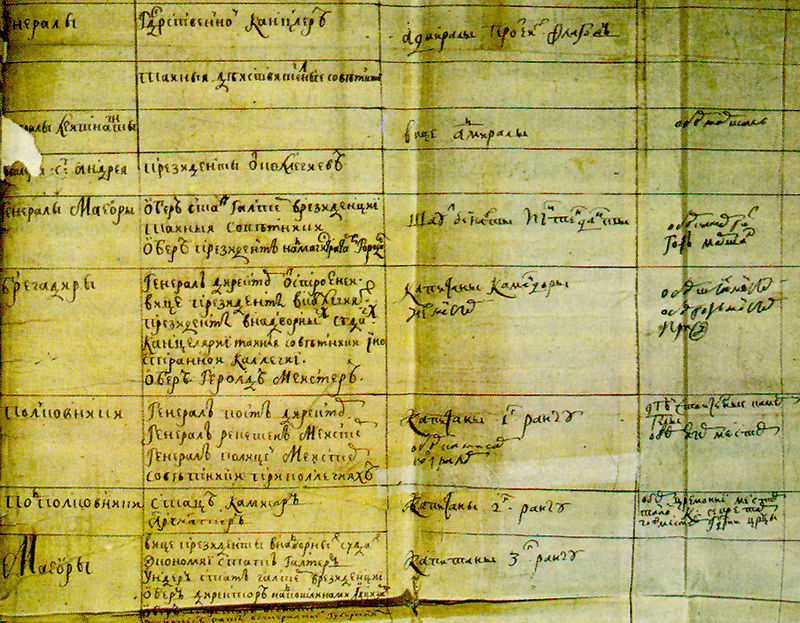
This document is a page from the Table of Ranks. How does it show the consequences of cultural exchange between Russia and Western Europe?
Source
Peter’s reforms were not limited to the government. He also passed a law that required all men (with the exception of priests and peasants) to shave their beards. While this might seem unimportant, this decision directly contradicted centuries of tradition; in fact, one his predecessors had argued that shaving one’s beard was an affront to God. Thus, the law was designed to stamp out this tradition and the Orthodox values that accompanied it.
The Orthodox Church is a Christian faith associated with Eastern Europe and Russia; it has its origins in Constantinople in the Byzantine Era.
Peter introduced the law by pulling out a shaving knife during an official ceremony and shaving a few of the nearby nobles; because of Peter’s authority, no one dared to stop him. Officials were given the authority to cut men’s beards on sight if they were not complying with the law. Eventually, the mandatory shaving law was replaced with a beard tax. Those who wished to save their beards could pay a tax proportionate to their class.
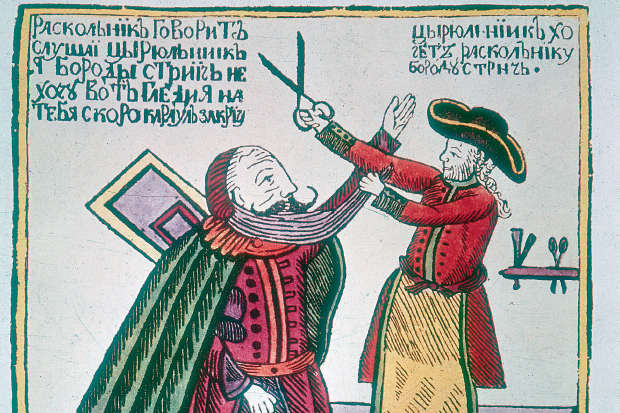
An early 18th century woodcut showing Peter the Great cutting off the beard of an unhappy boyar (noble).
Source
Consequences of the Shaving Law
How is this new shaving law a consequence of cultural exchanges?
Do you see this as intended or unintended?
Positive or negative?
Turquerie and Chinoiserie
European powers and the Ottoman Empire were in conflict during much of the early 17th century. This conflict culminated in the Siege of Vienna in 1683, when an alliance called the Holy League defeated the Ottomans, ending their expansion into Europe. While most European states viewed the Ottomans as an apocalyptic threat to the west (the Empire was viewed as the incarnation of the Antichrist bent on the destruction of Christianity), France maintained cordial relations with the Empire. At first, the motivation for this relationship was political. Both France and the Ottoman Empire were enemies of Austria; thus, they cemented an alliance against a common enemy. At the Siege of Vienna, France shocked European powers by remaining neutral.
Near the end of the 17th century, the Ottoman Empire’s military and political influence was on the decline. Because the Europeans no longer viewed the Empire as a threat, fear was replaced with fascination. At first, the only Ottoman goods that were available were brought to Europe by French diplomats. However, as political relations normalized and trade increased, more objects made their way from the Empire to Europe. Ottoman goods became the latest trend in Europe, known as Turquerie. Turbans were the height of fashion in France, Ottoman and Persian rugs were commonplace in wealthier homes, and coffee, an Ottoman drink, became increasingly popular.
The fascination with Turquerie extended to the highest ranks in European society. The painting below, depicts Madame de Pompadour as a Turkish woman. Madame de Pompadour was a French aristocrat and King Louis XV’s mistress, which meant that she was often at the centre of court life. Thus, this painting reflects the extent to which the fascination with Turquerie had grown.
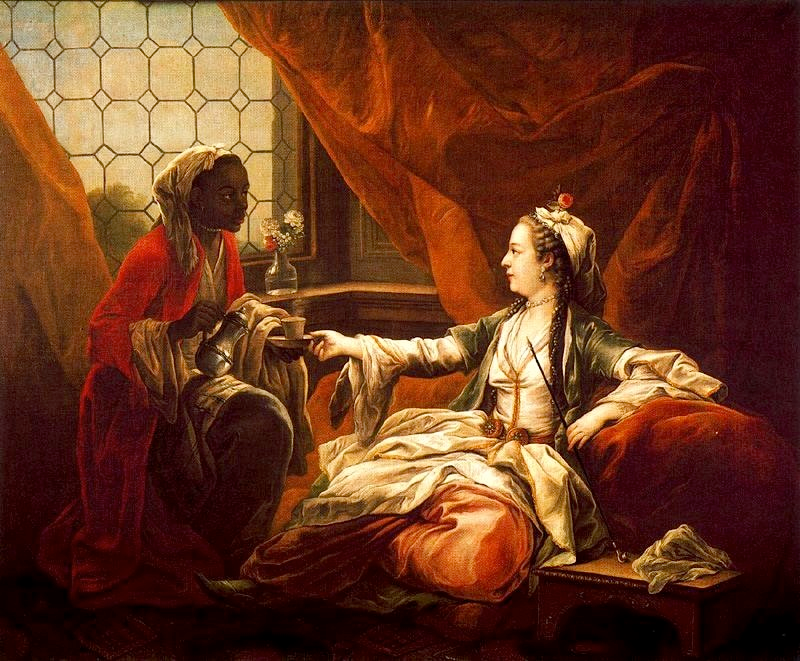
Madame de Pompadour portrayed as a Turkish lady in 1747 by Charles André van Loo
Source
Turquerie became so ubiquitous that it was also the subject of satire. The Persian Letters, written by Montesquieu in 1721, was a literary work in which two Persian travellers, Usbek and Rica, tell of their experiences in France. Much of the satire in the work relies on the travellers’ bewilderment at French and European customs. In the excerpt below, the travellers comment on the French fascination with Ottoman/Persian culture:
the attempt to correct wrongs in society by making fun of them
LETTER XXX
Rica to the Same, at Smyrna
The curiosity of the people of Paris exceeds all bounds. When I arrived, they stared at me as if a I had dropped from the sky: old and young, men, women, and children, were all agog to see me. If I went abroad, everybody flew to the window. If I visited the Tuileries, I was immediately surrounded by a circle of gazers, the women forming a rainbow woven of a thousand colours. When I went sight-seeing, a hundred lorgnettes were speedily leveled at me: in fact, never was a man so stared at as I have been. I smiled frequently when I heard people who had never traveled beyond their own door, saying to each other, “He certainly looks very like a Persian.” One thing struck me: I found my portraits everywhere-in all the shops, on every mantelpiece-so fearful were they lest they should not see enough of me.
Spectacles with a handle
Europe, China, and the Needham Question
In 1620, Francis Bacon wrote that three great Chinese inventions--printing, gunpowder, and the magnet--had changed the world. Bacon’s claims were not new; European intellectuals were well aware of the impact Chinese innovation had on the west: printing changed the way learning spread, gunpowder redefined warfare, and magnets were used in compasses that allowed sailors to identify north in the middle of the ocean. Even the Imperial bureaucracy, the portion of the Chinese government consisting of highly educated intellectuals chosen by merit, changed Europe; according to historian Tim Barrett, its influence can be seen in the British civil service and even the French Revolution.
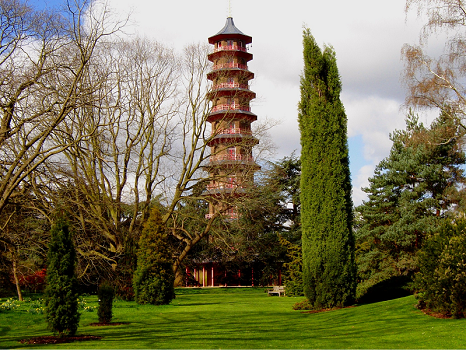
China’s cultural sophistication and its perceived exoticism contributed to the popularity of Chinoiserie, a western interpretation of Chinese art and style. Inspired by the designs found on Chinese silk and porcelain, European artisans and architects adopted many of these motifs in their own work. Below is an image of the Pagoda, a tower in the Chinoiserie tradition built in London in 1762 at the behest of Princess Augusta:
In fact, the European fascination with China was so powerful that it actually led to a backlash from some intellectuals who reminded their readers that China was an advanced culture, but it was not perfect. Ironically, their arguments still reflected the perspective that China was, in many ways, better poised for innovation than European states.
Yet, Europe industrialized first. Joseph Needham, one of the foremost European experts on China, addressed this incongruity through the following, which has become known as the Needham Question:
“The essential problem [is] why modern science had not developed in Chinese civilization (or Indian) but only in Europe.”
Historians continue to debate this question. Some have claimed that isolationist policies in China slowed its progress. Others have argued that European states pushed innovation due to competition with each other; China, on the other hand, was a unified state that had no reason to push technological advances to their limits. Still others suggest that Europe’s success is temporary, and that within the next 50 years China will be the undisputed cultural and technological leader once again; at that time, historians will look at 18th century China as an anomaly.
What historians do know, however, is that exchange of ideas and goods was not always preferred by states. Chinese exchange in the 18th century was based on an ancient system of tribute, and the Chinese had no incentive or interest in trading with the European “barbarians.” Below is an excerpt from an edict from the Chinese emperor addressed to George III, King of England, in 1793; what can you infer about the emperor’s view of Western goods and ideas?
You, O King from afar, have yearned after the blessings of our civilization, and in your eagerness to come into touch with our converting influence have sent an Embassy across the sea bearing a memorial. I have already taken note of your respectful spirit of submission, have treated your mission with extreme favour and loaded it with gifts, besides issuing a mandate to you, O King, and honouring you with the bestowal of valuable presents. Thus has my indulgence been manifested. …
Hitherto, all European nations, including your own country’s barbarian merchants, have carried on their trade with Our Celestial Empire at Canton. Such has been the procedure for many years, although Our Celestial Empire possesses all things in prolific abundance and lacks no product within its borders. There was therefore no need to import the manufactures of outside barbarians in exchange for our own produce. But as the tea, silk, and porcelain which the Celestial Empire produces are absolute necessities to European nations and to yourselves, we have permitted, as a signal mark of favour, that foreign [trading spots] should be established at Canton, so that your wants might be supplied and your country thus participate in our beneficence. But your Ambassador has now put forward new requests which completely fail to recognize the Throne’s principle to “treat strangers from afar with indulgence,” and to exercise a pacifying control over barbarian tribes, the world over. …
Known today and to the Chinese at the time as Guangzhou, the centre of trade between the Imperial Court of China and Europe.

The focus of this activity has been the consequences--both intended and unintended-- of cultural interactions. To consolidate your learning, use the learning object below to indicate which primary sources reveal direct consequences of exchanges, and which were indirect consequences. Resize the primary source to indicate the political, social, or economic significance of the issue it illuminates.
Intended and Unintended Consequences
Explain which 2 primary sources best exemplify unintended and intended consequences. Select the 2 primary sources from your choice of 3 categories:
- Economic
- Social
- Political
Save your work.
 Introduction
 Learning Goals and Success Criteria
 Learning Skills
 Rubric 1