
Fundamentals of Economics
Asking Economic Questions

MINDS ON
Welcome to Economics CIA4U. In this course you will learn lots about Economics and you will begin to see how Economics is everywhere. You will begin to be critical of what you hear/read/see and make more informed choices in your life. By the end of the course you will have completed a variety of different unit culminating activities to demonstrate your understanding of the overall expectations. You will also have the opportunity to see how economics is used in a variety of careers that you might want to consider.
 Doing Economics
Watch this interview with Michael Hlinka, economist and professor with a passion for financial literacy. As you watch, make notes on the following.
- How does economics relate to this career?
- What was an idea he stated that connected to your own interests or thinking?
- What question do you have now?
Needs and Wants
You will learn many economic concepts during this course. These concepts will help you understand Economics and will also help you make everyday decisions in your life. For example, have you ever thought about the difference between needs and wants? A need is something you MUST have to live and a want is something you would like to have. Organize the following into needs and wants by making a T chart:
- breakfast
- newest iPhone
- shelter
- education
- good health
- good marks
- vacation
- clean water
- your own car
Can you think of an example of one thing that is a need for one person but a want for another, or is it even possible?

ACTION
The Inquiry Process
Thinking critically about local and global events, issues and leaders means economists must be able to inquire and sort through vast amounts of information from a wide variety of sources. This process is known as the inquiry process. The Inquiry process has many components that you will be expected to learn and use in this course. They include:
InquiryProcess
Why Ask Questions?
You live in a world in which there is information available at your fingertips at any time of the day or night. However, it is important to recognize that if you don’t ask questions to pursue your curiosity, you will not be able to access all of that information. Within disciplines there are often specific ways of thinking about that particular subject. In economics for example, we are interested in asking questions that target:
- Economic Significance: Why is an economic issue important?
- Economic Perspective: How might different stakeholders view this economic controversy?
- Cause and Effect: How do individuals, groups and governments influence economic policies/ decisions? How are these stakeholders affected by economic policies/ decisions?
- Stability and Variability: How do economic pressures contribute to patterns or trends and how does economic change or steadiness influence economic decision-making? How does interaction of different sectors lead to stability and change and how do they respond to stability and/or variability over time?
 Pipeline Questions
What questions do you have about this photo? Record your questions in your notebook or other electronic folder of your choice.
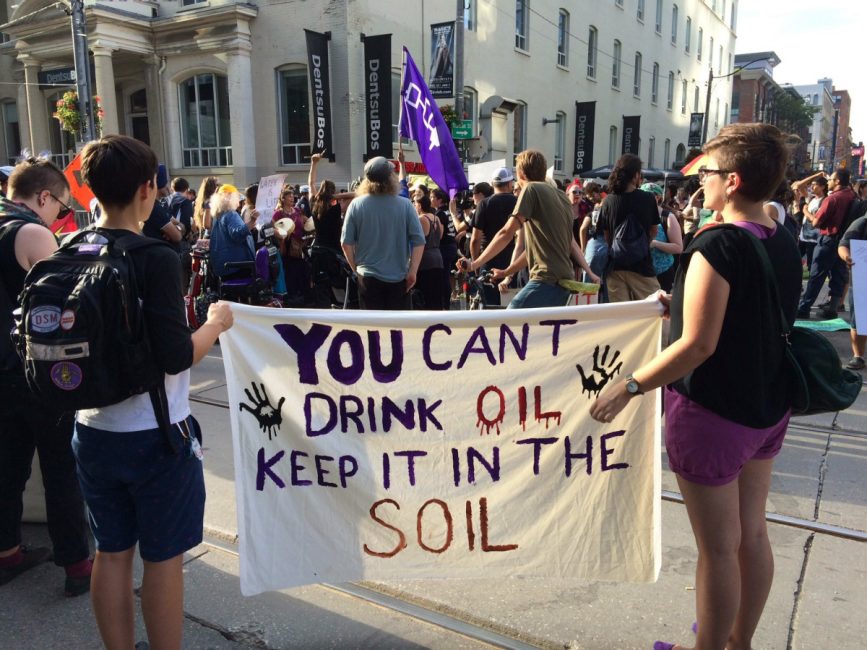
 Self-Assessing My Questions
Look over the questions you posed. Were they "good" questions? What makes a "good" question? Use the checklist below to self-assess the effectiveness of the questions you posed. You will need to do this throughout the course.
|
|
An effective question in economics should: |
|---|---|
|
generate other additional questions; |
|
|
lead to more than one possible answer or response; |
|
|
link to essential ideas in the discipline; |
|
|
connect to a concept of economic thinking; |
|
|
focus upon aspects of the content or evidence under exploration. |
Select one of your questions that was less effective, improve it based on the criteria for an effective question. Explain why one is more effective than the other using the criteria for effective questions.
Concepts of Economic Thinking
EconomicThinking
Citing Your Sources
Another important skill is how to cite sources.
Citing
Note Taking
As you read the following article, identify the different stakeholders and their perspectives. This graphic organizer can be used for your notes.
If you want to view any links in this pdf, right click and select "Open Link in New Tab" to avoid leaving this page. (View the original article.)

CONSOLIDATION
Connect, Extend, Challenge
- Using the article and accompanying photo in the Action section write 1-2 sentences for each using the following prompts:
- CONNECT: How are the ideas and information presented CONNECTED to what you already knew?
- EXTEND: What new ideas did you get that EXTENDED or pushed your thinking in new directions?
- CHALLENGE: What is still CHALLENGING or confusing for you to get your mind around? What questions, wonderings or puzzles do you now have?
- Using the information from the Toronto protest image/article, create a proper citation.
 Learning Goals and Success Criteria
 Learning Skills and Work Habits