
Macroeconomics
Monetary Policy

MINDS ON
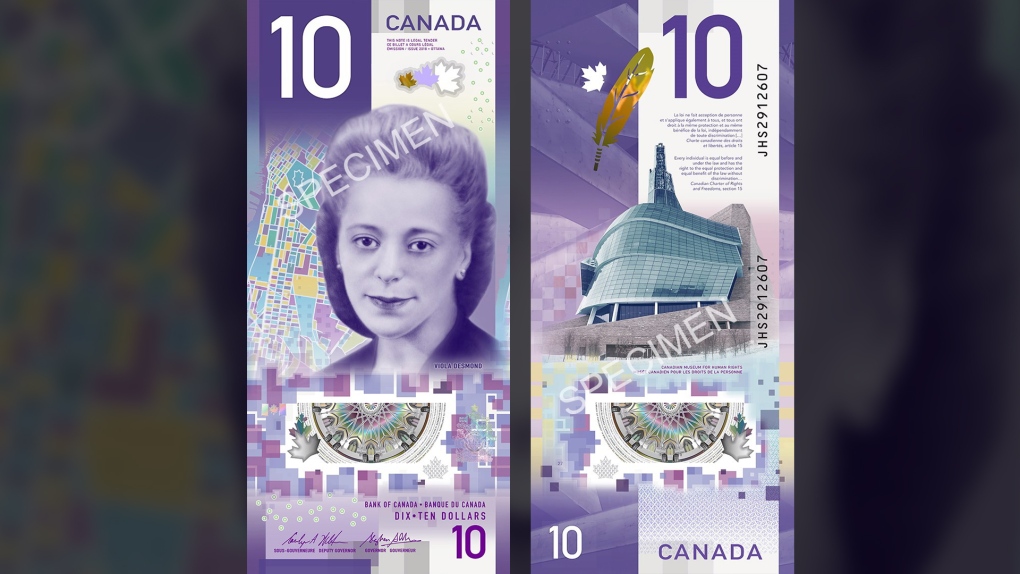
Have you ever thought about the money that might be in your pocket or wallet? Whose image is on the Canadian bills and coins?
In 2018, the Canadian ten-dollar bill, featuring Nova Scotia businesswoman and civil rights pioneer Viola Desmond, won the international Bank Note Award of the Year.
View this Heritage Minute to learn about Viola Desmond.
 What is Money?
As you think about money, record any questions that you might have.

ACTION
Money
Money has changed over time. As you examine the evidence that follows, what questions do you have? How does this story about Canadian money represent stability or variability over time?
“
Their money consists of certain little bones, made of shells or cockles, which are found on the sea-beach; a hole is drilled through the middle of the little bones, and these they string upon thread, or they make of them belts as broad as a hand, or broader, and hang them on their necks, or around their bodies. They have also several holes in their ears, and there they likewise hang some. They value these little bones as highly as many Christians do gold, silver and pearls . . .
~ Reverend Johannes Megapolensis, Jr., 1644
Card money occurred on 8 June 1685 and was redeemed three months later. In a letter dated 24 September 1685, to the French Minister of the Marine justifying his action, de Meulles wrote:
“
I have found myself this year in great straits with regard to the subsistence of the soldiers. You did not provide for funds, my Lord, until January last. I have, notwithstanding, kept them in provisions until September, which makes eight full months. I have drawn upon my own funds and from those of my friends, all I have been able to get, but at last finding them without means to render me further assistance, and not knowing to what Saint to say my vows, money being extremely scarce, having distributed considerable sums on every side for the pay of the soldiers, it occurred to me to issue, instead of money, notes on cards, which I have cut in quarters . . . I have issued an ordinance by which I have obliged all the inhabitants to receive this money in payments, and to give it circulation, at the same time pledging myself, in my own name, to redeem the said notes.
~ Jacques de Meulles, Intendant (1682-86) and interim Governor General of New France
Source: Bank of Canada, A History of the Canadian Dollar (Shortt 1925a, 73, 75).
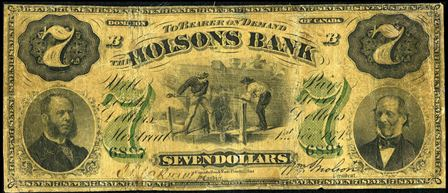
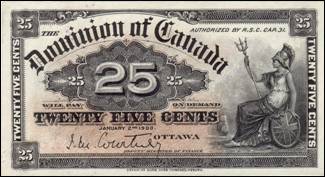
by Money Museum
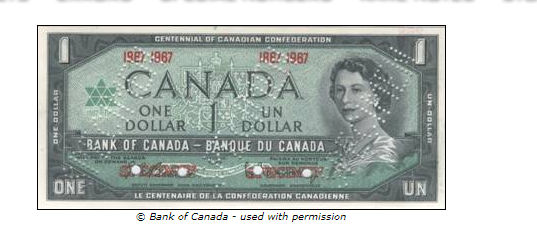
For more information, check out the Online Canadian Paper Money Museum.
Did You Know?
History of Money
- Barter - has the problem of “double coincidence of wants” (I have a cow, you have wood and how do we “exchange”?)
- Commodities (e.g., cattle, oxen, wheat, playing cards).
- 3000 BCE, Babylonia using silver based on weight.
- Gold.
- Turkey minted first coins 7th century BCE, but copied by Greeks.
- Coins could be ‘debased’ e.g., clipping or shaving off just a little (look at Canadian dimes).
- Paper - Chinese in 7th century CE (receipts for coins).
As you can see, money has changed a lot over time. There are some important characteristics that money must have, and when these are no longer valid, the Bank of Canada will make changes. Only the Bank of Canada (after 1934) can issue money, called legal tender.
The characteristics of money are as follows:
- generally accepted
- portable
- durable
- divisible
- recognizable
- not easily counterfeitable
- retain value over time
 Characteristics of Money
For one of the characteristics, create a 1-minute explanation of why it is the MOST important; record it using the video, or audio feature on your phone, device, or computer.
|
|
Checklist Items |
|---|---|
|
|
ideas clearly communicated |
|
|
persuasive |
|
|
relevant examples to support your position |
You may have wondered why we need money. Given that you can now use a debit card or your smartphone, why do we have money? Money has specific functions that are important for the economy. Watch these two videos and complete the interactive that follows.
Drag&Drop
Banks and Banking
Commercial Banks
In Canada, financial institutions are regulated by the government, under the Bank Act.
Schedule I banks are domestic banks, authorized under the Bank Act to accept deposits, which may be eligible for deposit insurance provided by the Canadian Deposit Insurance Corp. (CDIC) 32 in all.
Schedule II banks are foreign bank subsidiaries authorized under the Bank Act to accept deposits, which may be eligible for deposit insurance provided by the CDIC. Foreign bank subsidiaries are controlled by eligible foreign institutions.
There are a variety of financial institutions which offer a variety of services including: banking, for savings, chequing, loans, investments, currency exchange, insurance and many other services.
The Banking System in Canada
For the different financial service institutions below, select two different types and explain two advantages and disadvantages in a point form note, for a consumer looking for a similar financial service (e.g., a loan, insurance). Check out the Office of Superintendent of Financial Institutions for up to date information.
|
|
Banks |
Credit Unions |
Trust Companies |
Loan Companies |
Life Insurance Companies |
Fraternal Benefit Societies |
|---|---|---|---|---|---|---|
|
Number (2017) |
Domestic (32) Foreign (23) |
|
44 |
18 |
68 |
13 |
|
Example |
Bank of Montreal/ Bank of China (Canada) |
Alterna Savings and Credit Union |
Canada Trust Company |
BMO Mortgage Corp. |
London Life Insurance Company |
ACTRA |
|
Notes |
Domestic banks regulated by Bank Act. Foreign bank subsidiaries are regulated under the Bank Act. Foreign bank subsidiaries are controlled by eligible foreign institutions. |
-regulated by provinces -co-operative -provide chequing accounts, mortgages, business loans and investment advice. But, every credit union’s Board of Directors consists of democratically elected members from their community. Locally elected boards of directors are how we understand what’s important to our members and how we keep our decisions based on local realities. Rooted in this co-operative structure, the credit union difference is all about service – to members and to communities. |
-because of its fiduciary role, a trust company can administer estates, trusts, pension plans and agency contracts, which banks are not permitted to administer. -regulated under Trust and Loan Companies Act |
-several in liquidation |
-federal and provincial governments share jurisdiction over life and health insurers. -federal supervision encompasses insurers incorporated or continued under the Insurance Companies Act as well as foreign insurers who have been granted an order to insure in Canada risks. |
-institution that has a representative form of government. -operated for fraternal, benevolent or religious purposes, including the insurance of members, or the spouses/ common law partners or children of members, against accident, sickness, disability or death. |
Source: Canada. Office of Superintendent of Financial Institutions. 2017
Bank of Canada
All free market economies have a central bank owned by the government. In Canada, it is the Bank of Canada, formed in 1935 under the Bank of Canada Act. The Bank of Canada has four functions:
|
1. Banker for the government (Funds management) |
|---|
|
|
2. Banker’s Bank (financial system) |
|
|
3. Currency |
|
|
4. Monetary Policy |
|
The Bank of Canada Functions
For each of the following, identify which function of the Bank of Canada is performing. Explain your reasoning.
1.

2.
If you want to view any links in this pdf, right click and select "Open Link in New Tab" to avoid leaving this page. (View the original article.)
3.
4.
Monetary Policy
Monetary Policy is one of the most important roles of the Bank of Canada.
 Monetary Policy Notes
Watch this introductory movie, Monetary Policy and the FED- EconMovies #9: Despicable Me. As you watch, take notes about how monetary policy works.
The Bank of Canada has various methods of influencing the money supply:
- Change the reserve ratio (rr) [there is no longer a reserve ratio]. Increase rr, decrease CR ( cash reserves), decrease loans, decrease Money Supply (or vice versa)
- “Moral suasion” governor of B of C personally persuades banks to increase/decrease Money Supply (MS).
- Open market operations - Most important method of controlling MS through purchase/sales of securities on open market.
How Monetary Policy Works
Explain HOW monetary policy works.
Select an issue and brainstorm some questions that you would want to investigate.
Monetary Policy Evidence
Monetary policy affects all Canadians. To conduct monetary policy, the Bank’s Governing Council assesses diverse relevant information and comprehensive analysis and then applies its judgment.
If you want to view any links in this pdf, right click and select "Open Link in New Tab" to avoid leaving this page. (View the original article.)
If you want to view any links in this pdf, right click and select "Open Link in New Tab" to avoid leaving this page. (View the original article.)
If you want to view any links in this pdf, right click and select "Open Link in New Tab" to avoid leaving this page. (View the original article.)
Interest Rates in Canada
If you want to view any links in this pdf, right click and select "Open Link in New Tab" to avoid leaving this page. (View the original article.)
If the Bank of Canada increases interest rates, the impact would be to increase the costs of loans. This means consumers/businesses have less money available. This would decrease disposable income of consumers, which decreases prices, which reduces inflation. You can use the following short forms to explain the Bank of Canada decision:
↑ i, ↓Yd, ↓P
i = interest rate
Yd = Disposable Income
P = prices (inflation)
Cause and Effect
Why did the Bank of Canada make this decision? What are the likely effects? Consider different stakeholders. Add to your notes after examining the evidence that follows. When complete, create a quick oral explanation of the most important effect.
If you want to view any links in this pdf, right click and select "Open Link in New Tab" to avoid leaving this page. (View the original article.)
If you want to view any links in this pdf, right click and select "Open Link in New Tab" to avoid leaving this page. (View the original article.)
If you want to view any links in this pdf, right click and select "Open Link in New Tab" to avoid leaving this page. (View the original article.)
If you want to view any links in this pdf, right click and select "Open Link in New Tab" to avoid leaving this page. (View the original article.)
If you want to view any links in this pdf, right click and select "Open Link in New Tab" to avoid leaving this page. (View the original article.)
The Exchange Rate
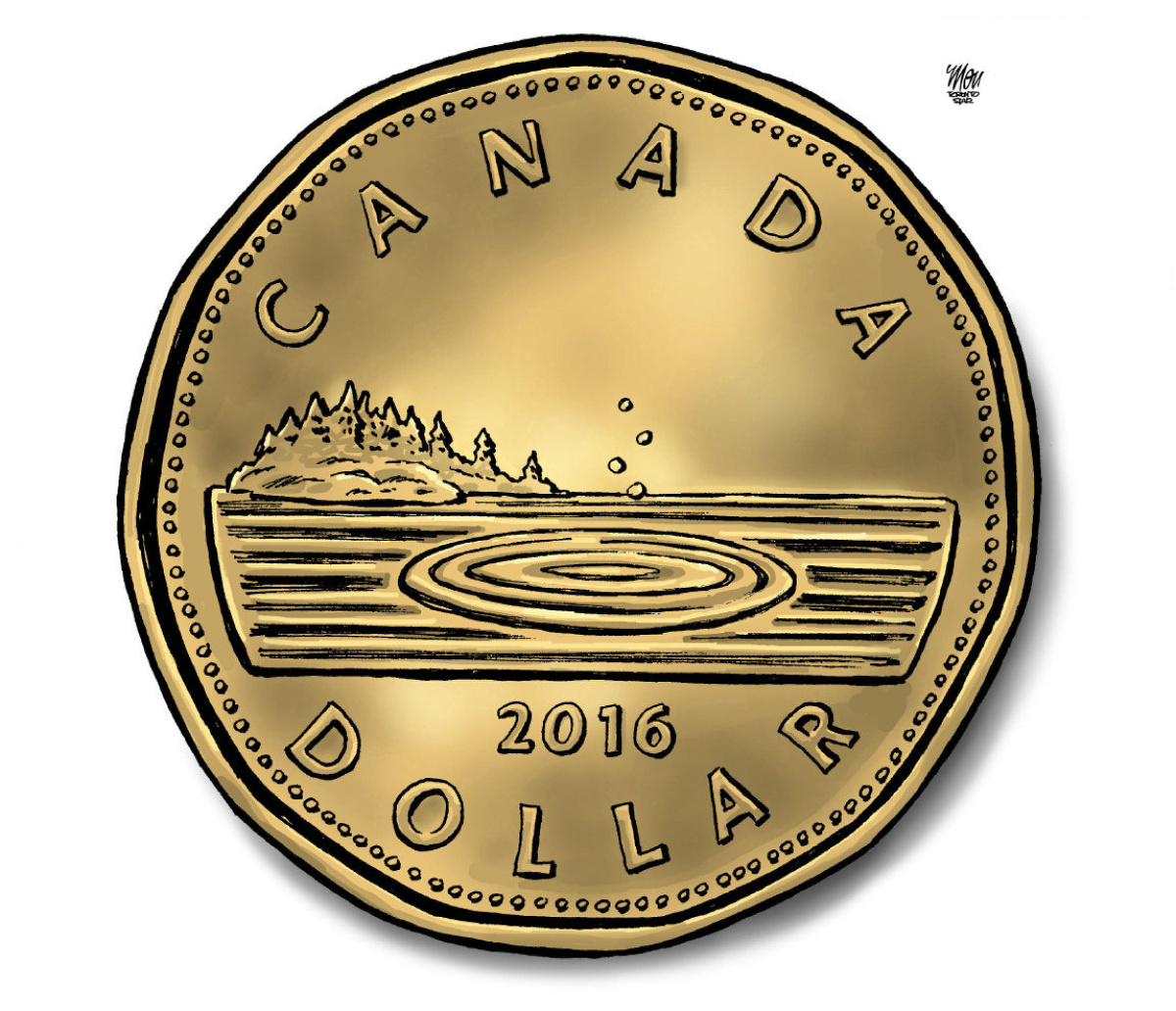
One other responsibility of the Bank of Canada is to oversee the exchange rate. The exchange rate is the process of exchanging one currency for another. If you have ever travelled to another country, you had to exchange Canadian dollars for that country’s currency. If you purchased something produced in another country, then the businesses had to exchange currency. You will learn more about this in the final unit.
Bitcoin
Bitcoin is a form of digital currency.
If you want to view any links in this pdf, right click and select "Open Link in New Tab" to avoid leaving this page. (View the original article.)
Digital Currency
Which function of money does digital currency satisfy?

CONSOLIDATION
Watch this Tedtalk - The Future of Money. Use it to keep track of the changes in currency.
The Future of Money
Use the concepts of economic thinking to organize the most important ideas and questions.
If you want to view any links in this pdf, right click and select "Open Link in New Tab" to avoid leaving this page. (View the original article.)
The Recollections of Pine Gulch
Explain how the money supply is affected by events in the story. Give your summary a title. Use the ideas to find a cartoon that relates to monetary policy and provide the source.
 Learning Goals and Success Criteria
 Learning Skills and Work Habits