
CLN4U
Canadian and International Law
Unit 3: Rights and Freedoms
Activity 4: Beyond our Border: Are human rights protected internationally?
In Activities 1, 2 and 3 you focused on rights and freedoms in Canada. Though we may have challenges and conflicts regarding rights and freedoms, we are quite privileged in many ways. Our rights are protected by law; our government is obligated to uphold those rights and freedoms; our judiciary is separate from our government, and both our citizens and the members of the judicial system have a strong belief in the rule of law.
A different reality exists in other parts of the world. Imagine the following scenario:
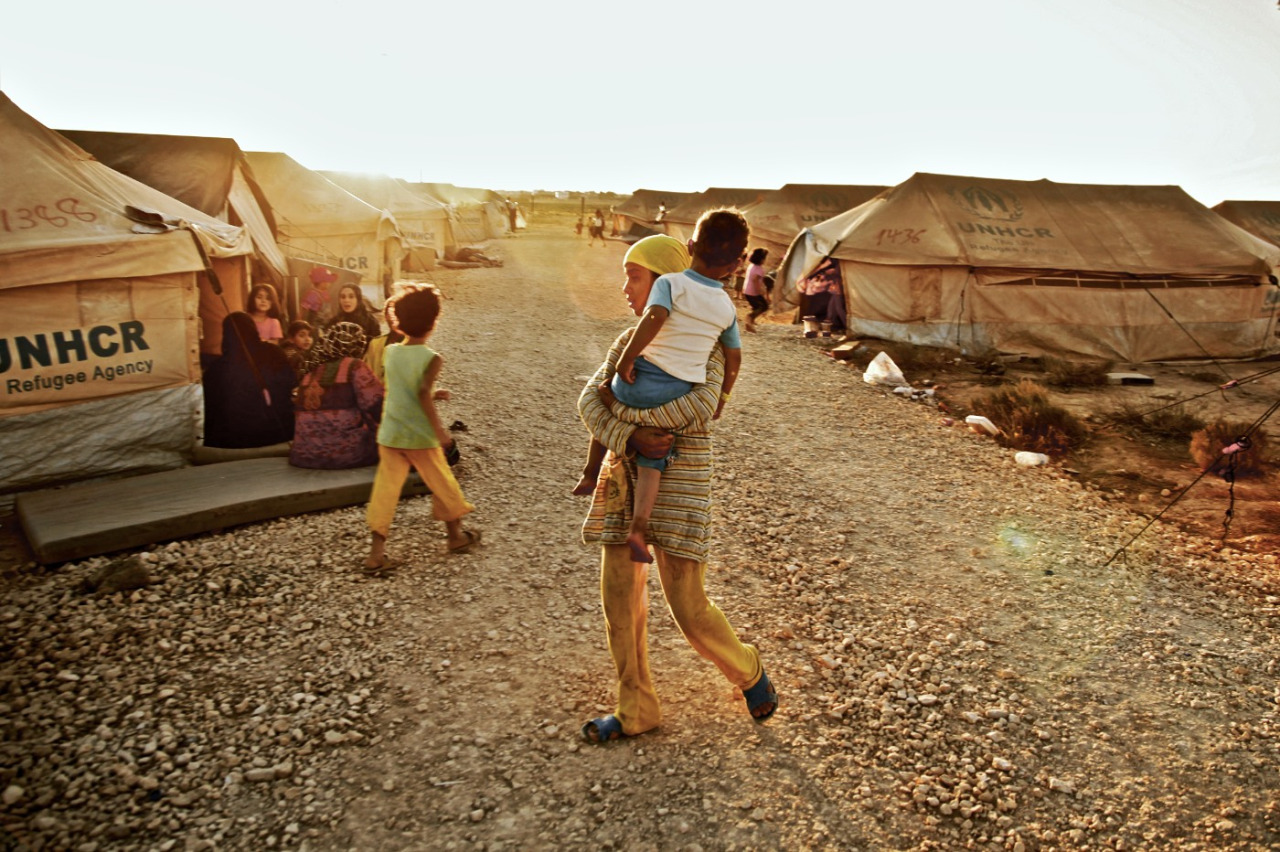
A young family is forced to flee from their country because a civil conflict has broken out. They are no longer safe because their political views differ from the views of the group in power. Conditions had become increasingly difficult as they faced discrimination in their country; the father lost his job, the children were not allowed to attend school and the mother was unable to move about the city to visit her family or go to work.
A relative of the family was imprisoned without a trial. Conditions grew so unstable that they felt it was necessary to leave their home. Soon after the family arrived in a refugee camp located in a neighbouring country, a new baby was born to the family.
Access to health care and decent nutrition was difficult. The nationality of the baby was also a concern, as the host country did not recognize the baby as a citizen of its nation.
It was impossible to register the birth and get the necessary documentation from the country from which the family had fled. Some international organizations were present to assist the family but there were many families in a similar situation so resources were scarce.
In this brief scenario it is quite easy to identify the rights and freedoms that are fragile or are being violated outright:
- Everyone has the right to life, liberty and security of person;
- Everyone has freedom of expression and freedom of thought, belief and opinion;
- Everyone has the right to work free from discrimination;
- Everyone has a right to an education;
- Everyone has the freedom to move about within the borders of their state;
- Everyone has the right to be presumed innocent until proven guilty;
- Everyone has a right to a nationality;
- Everyone has the right to a standard of living adequate for their health and well-being.
It is also evident in the example above that our rights are interconnected and influenced by a variety of factors. Many people in the world struggle to have their basic human rights and freedoms recognized and upheld. Even in the places rights and freedoms are protected, there is room for improvement.
Issue I: The universal nature of human rights. This is the idea that the origin of human rights is in the western world and that it is unfair to impose these ideas on the rest of the world.
Issue 2: This is the criticism that western countries use human rights abuses as a pretext for war and that these nations also commit human rights abuses.
Consider this example:

In Uganda it is illegal to participate in homosexual acts. In 2013 the Ugandan government passed an anti-homosexuality law which made being gay punishable by life in prison. Gay people face persecution by society and the courts. There was also a law in Uganda that made it a criminal act if a person failed to report a gay person. It is likely that a doctor or teacher or family member might know if a person were gay. It is possible then that a gay person might have limited access to health care or education. Though it is still illegal to engage in homosexual acts, the new law was deemed unconstitutional by the Uganda Constitutional Court.
The impact of the rights violations ripples out; one right violation causes another rights violation.
After WWII the world began to realize the need to develop a guiding document that outlined the rights and freedoms that should be available to all people in the world. It was very important to articulate those rights and freedoms in a document called the International Declaration of Human Rights. Take a moment to skim and scan the rights protected in this document.
There are additional treaties and customs that combine to make up international human rights law. Like domestic laws, international treaties have a distinct purpose, and a governing institution or body to assist with the implementation of the laws such as the United Nations Human Rights Office of the High Commissioner. There is also an international court. International law is distinct, however, from domestic law in that the participation of member states is key to the success. In Canada, you cannot “choose” to follow a law whereas a country in international law can choose to be a party to a treaty.
 Human Rights Video
Please take a few minutes to watch the following Introduction to Human Rights:
Find your style:

At this point in your academic life, you will likely have developed organizational tools that suit your learning style. Feel free to adapt the organizer above to suit your needs. Organizational skills can help you to be successful both in school, work and your personal life. If you have a minute, check out 45 tips for staying organized in college.
Despite those good intentions, the creation of international law and the hard work of the many people who came before us, there is still work to be done in many areas as conflicts and rights violations continue to occur.
The factors that influence law:
- media, globalization,
- the exploitation of natural resources,
- technology,
- political unrest or military conflict,
- economic pressures and societal norms,
The Challenge of Human Rights Issues
Why are human rights issues still such a tremendous challenge for the international community if laws exist?
The following video clip explains the connections between international human rights law and domestic law in the UK. It also discusses the factors that influenced the development of human rights law. Watch "Human Rights Explained In A Beautiful Two Minute Animation."
Notice that one important step in the realization of human rights is for independent states to make domestic laws that protect rights. The creation of the Charter of Rights and Freedoms is one way that Canada lives up to its international commitment to protect human rights.
Click on the various countries below for a glimpse into human right abuses around the world.
Notice that in many of the examples used above, agreements have been signed yet the violations continue. You may have noticed that a number of factors complicate the issues such as war and conflict, political will, economic challenges and the absence of effective tools to enforce the agreements.
Click through the slideshow below for a deeper look into the factors that influence the protection of human rights on the world stage. Be sure to watch each video and follow each link to read the articles.
 Extend Your Learning
Everything connects to the environment.
Watch this TED Talk with Roger Cox for an intriguing look at how human rights can save the planet. He argues that we can use the law to protect both the planet and human rights. There are many interesting ideas presented in this talk.
Consider:
What were the 3 most significant ideas presented?
Can you make 2 connections to your own knowledge or life experiences?
Can you create 1 question that emerged as you viewed the talk?
Self Care
Investigating human rights violations can be profoundly disturbing. Once you know, you can’t “unknow.” Take care. If you need a little reprieve; try a break, exercise, a conversation with a friend or some music.
A 1972 hit song from Johnny Nash "I Can See Clearly Now" might perk you right up!
 Introduction
 Learning Goals and Success Criteria
 Learning Skills
 Rubric 1