
CLN4U
Canadian and International Law
Unit 3: Rights and Freedoms
Activity 5: Where do we go from here?
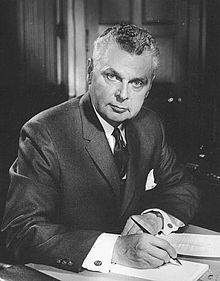
By National Film Board of Canada. Still Photography Division.
Photographer: Gar Lunney Credit: Gar Lunney
Library and Archives Canada / C-006779
[Public domain], via Wikimedia Commons
We must vigilantly stand on guard within our own borders for human rights and fundamental freedoms which are our proud heritage......we cannot take for granted the continuance and maintenance of those rights and freedoms.
As Diefenbaker notes in the quotation above, “We cannot take for granted the continuance and maintenance of those rights and freedoms.” That means that individuals, groups and governments around the world must be attentive, vocal and active. One group that advocates for human rights around the world is the non-governmental organization Human Rights Watch. Every year they publish a report on each nation that highlights challenges and violations that are occurring in the country. They also note progress and efforts to address human rights concerns that have been made. We have our own ideas about Canada’s successes and weaknesses but it is interesting to look at the rights situation in our country through the eyes of an international organization.
What did they think of Canada’s action, or inaction, in 2015?
You are going to take a few minutes to read World Report: Canada - Events of 2015. Before you read, have a peek at the image below. Ask yourself: Which one of the reading roles below best describes the role you usually choose?
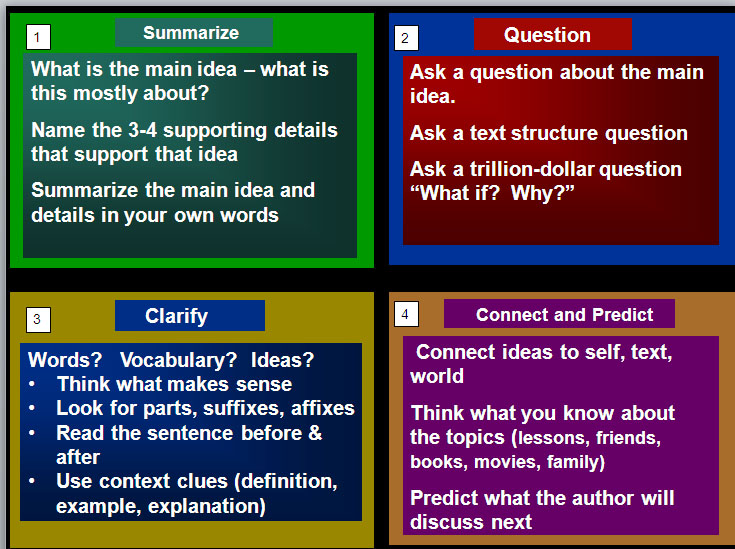
College of Education. University of Michigan.
As readers, we often fall into certain patterns. After you have read the choices, please choose a “Reading Role.” Think about your answer to the question above: Which one of the reading roles below best describes the role you usually choose?
If you most often chose to summarize for example, perhaps try to predict, clarify or question this time. You are encouraged to try something new to challenge yourself to read through a different lens.
 World Report: Canada 2015
- Choose a reading role. Re-read the article carefully with that particular role in your mind.
- Use the table to record your thoughts. There is an example of each role provided for you in the table.
- When you have read the article and recorded your thoughts, please prepare a discussion piece. Write from your specific role: if you chose the summarize role, then summarize the article; if you chose the question role, write about the questions that you were prompted to ask as you read.
 Extend Your Learning

You have just read an international perspective on Canada. We also regularly engage in our own self reflection. For example, on the 30th Anniversary of the Constitution Act, 1982 and the Charter of Rights and Freedoms in 2012, there was a great deal of conversation that focused upon the legal significance of the Charter and the ways in which it has changed Canada.
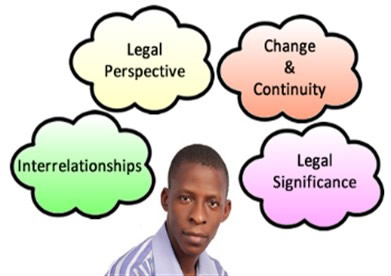
You may choose to watch "The Constitution at 30" on The Agenda with Steve Paiken. Notice the qualifications of the people assembled to discuss the anniversary of the patriation of the Constitution. This interview is an excellent example of an academic discussion. If you are pursuing a liberal arts degree such as law, politics or international studies at university in the future, you are encouraged to spend some time independently watching this interview.
This interview is not for the faint of heart; you will have to listen actively, pause on occasion to clarify a word or idea and take the time to record the big ideas as well as the smaller details that inform the conversation.
If you wish to make notes, one suggestion is to use the questions of the host to organize your thoughts. For example: What was the problem in Canada at the time, that Pierre Trudeau had determined we needed to fix?
There is also an interesting piece The Charter 25 Years Later: The Good, the Bad, and the Challenges written by the Right Honourable Beverley McLachlin in which she addresses some of the challenges and misconceptions about the Charter.
Where do we go from here?
Notice that you began the rights and freedoms unit by asking questions, you gathered information from many sources, evaluated the information, drew your conclusions and communicated your thinking in different ways. All of the steps of the legal inquiry model are interconnected. You perhaps drew the conclusion that though progress has been made, there are some alarming trends around the world that need our attention. This conclusion brings you back to the need to question. We continue to ask: What other ways can Canada and the world work toward greater recognition and protection of human rights?
"The Power of Words" is a brief video focusing upon the tremendous potential for change that can occur as a result of individual voices speaking out against human rights.
Strategies for Strengthening Human Rights
For each of the five strategies there is a task to complete. These should be submitted together as one assignment. Please see the rubric following the fifth task.
1. We can learn from one another.
Canada’s Constitution is fundamental to the protection of rights in this country. Citizens can challenge their government in court; the branches of government are separate and minority rights as well as language rights are entrenched. Our constitution has become influential on the world stage also. Read the article from the Globe and Mail’s John Ibbitson published in April 2012.
2. We can work together as an international community.
The world has structures such as the United Nations, non-governmental organizations such as the International Red Cross as well as strong domestic leaders, citizens or corporate figures who can lead by example to make a difference. These groups can work together to achieve a common goal. Articulating the goal is often the first step.
An excellent example of a time the world worked together effectively was in the creation of a treaty to ban landmines. Take a moment to view the Mine Ban Treaty video.
3. We can apologize and redress previous injustices.
Can you think of a time when someone did something that hurt you? You may have said something like, “I just want him or her to say sorry.” Recognition of wrongful actions can help restore human rights because it begins with an act of apology. An apology acknowledges harm and it recognizes the dignity and humanity of the parties involved.
One of the most overt acts of racism in Canada occurred during WW2. The Canadian government apologized for these actions in 1988.
 Did You Know?
An apology to particular groups to address historic injustices is not an isolated event. If you have a moment, think about the more recent apology to Manitoba’s Sayisi Dene for the forced relocation that occurred in 1956. This is a part of Canadian history that may be unfamiliar and uncomfortable for you.
4. We can hold perpetrators responsible in domestic and international courts.
The world community has tools that can be used to condemn large scale human rights abuses. The system does have challenges and critics. Please read the article prepared by the BBC.
Extend Your Learning
If you wish to know more, take 20 minutes to view International Criminal Court.
5. We can continue to seek out information, ask questions and hold our government and institutions accountable for their actions in a lawful manner.
Canadians have become accustomed to the legal process. Our human rights laws allow us to challenge existing laws, employers, the government and institutions through the justice system in an effort to ensure that our rights are upheld. This is not an easy task. Freedom of the press has an essential role to play in this process. The other essential component is a citizenry who is willing to think critically and to ask tough questions.
Consider an event from 2010 that shocked Canadians. Read the following from the Ontario Justice Education Network about the G20 Toronto Summit Meeting.
There were criticisms of the police and the government after the event. The police used a tactic known as kettling and they also arrested large numbers of people. These two aspects of the event have resulted in legal action. Have a quick peek at this video. The officer in charge at the time of the kettling was also held legally responsible. Mark Fenton was charged under the Police Services Act. Watch a quick clip about his disciplinary hearing.
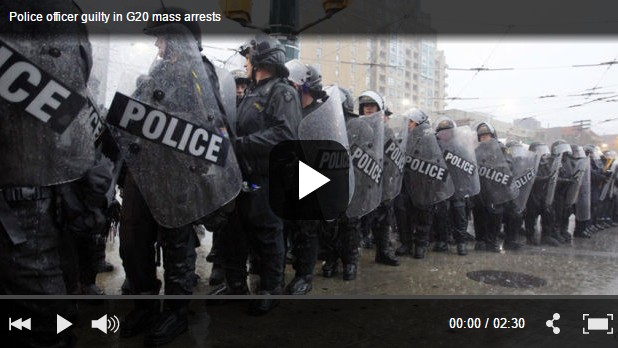
The court is one way to hold both individuals and our institutions accountable.
Policing organizations have their own internal mechanisms for evaluating an event. There were people who were behaving in a violent manner and many people agree that the police needed to target those individuals as they posed a threat to public safety. The controversy centres upon the loss of civil liberties of those innocent people. Five of the reviews conducted by both civilian and police organizations include those by the following organizations:
-
Commission for Public Complaints Against the RCMP,
-
The Office of the Independent Police Review Director (OIPRD),
-
The Ombudsman of Ontario,
-
Toronto Police Service – Internal Review and the
-
Toronto Police Services Board.
These groups made a number of suggestions including the creation of specialty policing groups to handle protests of this scale, policy clarification around police identification, better integration among forces and proper documentation of events by officers.
It is important that Canada has both the court system and these oversight bodies within the system itself.
Extend Your Learning
If you wish to explore this topic further watch CBC Fifth Estate You Should have Stayed at Home
It has become clear that knowledge and education about human rights is crucial if we are to recognize and protect the rights of people in Canada and around the world. You have been studying rights through the eyes of a young adult. You may have found some of the issues, content or ideas difficult. You are likely aware also that information that is appropriate for you might be inappropriate for a younger person yet they too need to know their rights.
How do we teach children about this important issue? Watch this video for children. Perhaps you know a youngster with whom you can share this video. It has interesting pictures and you might be surprised by the great conversation you can prompt.
 Introduction
 Learning Goals and Success Criteria
 Learning Skills
 Rubric 1