
CLN4U
Canadian and International Law
Unit 5: International Legal Issues
Activity 2: Beyond our Borders: Canada’s Environmental Actions

From 1962 to 1970, a pulp and paper mill dumped 9,000 kilograms of mercury, a potent neurotoxin, into the English-Wabigoon River system, poisoning fish, aquatic vertebrates and people. That mill — now closed — was upstream from several First Nations communities, including Grassy Narrows. Residents there, still suffering from mercury contamination, continue to seek environmental justice.

Home to Me is a song written and performed by N'we Jinan Artists of Grassy Narrows. Have a listen.
This song was a collaborative project that resulted in an album made of songs recorded by youth in a number of different communities across the country.
These talented young people are trying to remind listeners of the strong connections that exist between their First Nations community of Grassy Narrows and their land. This is a community that has struggled with inadequate housing, high rates of suicide and serious environmental water contamination that has caused major health problems for decades.
Read more about Grassy Narrows:
 Check for Understanding
- Explain your understanding of the concept of bioaccumulation.
AnswerBioaccumulation refers to the increasing concentration of toxic material from one link in a food chain to the next. Scientists who have monitored mercury in Grassy Narrows found the higher up an organism is on the food chain, the more mercury it contains.
- What health concerns are posed by the consumption of mercury?
AnswerPeople have suffered from numbness in fingertips and lips, loss of coordination, trembling and other neuromuscular problems. Mercury poisoning has also been linked to developmental problems in children, which persist into adulthood.
- Why is fishing a legal issue?
AnswerFish are a traditional food of indigenous communities in Northern Ontario, and their harvest and consumption are important for culture and health. Fishing is a protected treaty right. If the fish is contaminated and cannot be safely consumed, the rights of the community are not being recognized. Aboriginal rights are protected in the Constitution.
Scientists identified the problem years ago, the government is aware and activists have been advocating for decades. The international community is aware of our failure to provide communities across the country with safe water. What is the delay?
Have a watch of this Human Rights Watch video Risk. Some have suggested the problem runs deeper than political apathy.
 Extend Your Learning
Curious about other environmental issues concerning First Nations? Read "Facing the Change: 50% of Lennox Island, P.E.I., could be underwater in 50 years." It will help you to recognize the potential threats posed by climate change to the survival of a community.
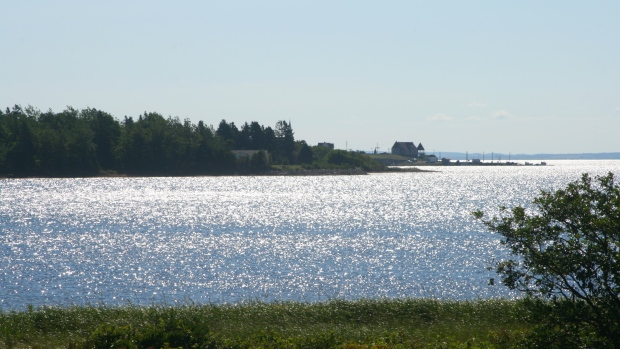
Nobel Prize-winning climate scientist Adam Fenech says Lennox Island is losing about one hectare a year to rising sea levels.
Laura Chapin, CBC

Take a few moments to go through this slideshow on environmental law. You can stop and start the slideshow to read the bullets and take notes.
At the end of the slideshow there was a question: Do the laws that exist effectively protect the environment and ensure sustainable development for the future? Many people think there is room for improvement. Let’s look at the roles of two different interest groups and their opinion of Canada’s environmental record.
1. Ecojustice
Please watch The Ecojustice Approach
We work with our clients to keep toxic chemicals out of our homes and the environment and we go to court to make sure polluters are held to account. We are fighting for world-class environmental laws and stronger environmental standards, including the addition of the right to a healthy environment to Canada’s Charter of Rights and Freedoms.
Currently, Canada’s patchwork of environmental laws and weak regulatory standards mean that thousands of people, disproportionately those in First Nations communities, do not have access to clean running water while thousands of other Canadians are exposed to harmful levels of air pollution every day. Dozens of toxic chemicals already banned in other countries can still be legally used within our borders.
There is a direct connection between the strength of our laws and the health of our environment. In the last 50 years, the right to a healthy environment has gained recognition faster than any other human right. Canada has fallen behind the over 110 countries that legally recognize the right to a healthy environment. We are working toward a Charter right to a healthy environment for Canadians because we know it will be a powerful catalyst to improving the quality of our laws, our environment and our health.
At Ecojustice, we believe that environmental rights are human rights, and we are leading the charge to make Canada’s environmental laws the strongest in the world.
2. The Council of Canadians
The climate crisis demands urgent action to transition to a low-carbon future. Canada is going in the wrong direction – we are stuck in the tar sands, the fastest growing source of our greenhouse gas emissions. Our government’s focus on export-oriented trade in the name of becoming an “energy superpower” is trumping needed action on climate change and energy security. Climate justice demands that we address the root causes of the climate crisis, including unsustainable production, consumption and trade. Real solutions must be based on democratic accountability, ecological sustainability and social justice.
The Council of Canadians is part of the People’s Climate Plan, which is organizing in communities across the country to encourage people to attend these consultations and demand an ambitious climate strategy that’s built on three fundamental principles:
A plan that aligns with the science of climate change. Bold climate action that ensures Canada meets its commitments to a 1.5°C world requires us to keep our fossil fuels in the ground.
A plan that builds a 100% renewable energy economy. Bold climate action that ensures Canada transitions to a 100% renewable energy economy by 2050 will create more than a million clean, safe and rewarding jobs.
A plan that is justice-based. Bold climate action that enshrines justice and reconciliation for Indigenous peoples, ensures no worker is left behind in the transition to a clean energy economy, and lets those hit hardest by the climate crisis take the lead.
Both groups take the position that Canada has a great deal of work to do. Each also notes the interrelationships between environment, law, politics and the economy. Concerns around resource efficiency, chemical waste, climate change and environmental governance are shared by the rest of the world. There has been progress over the last decade. Watch this short video about the role of one United Nations organization and their efforts to create sustainable development programmes.
Questions
-
What is UNEP and when was it created?
AnswerUNEP is the acronym for United Nations Environmental Programme and it was established in 1972. Their initial concerns centered upon meeting the food needs of a growing population, air pollution and the sharing of water resources.
-
Why is there tension between the economic perspective and the environmental perspective?
AnswerEconomists and environmentalists have historically been on opposite sides of this discussion. Economists feel that jobs would be lost and that might result in serious political and financial instability. Environmentalists believed that because resources are finite, that it was necessary to adapt prior to a collapse of traditional economy. There was also concern that developing nations bore the brunt of providing the resources and were also far more vulnerable to economic downturn.
-
What was the significance of the 2008 programs REDD and the Global Green New Deal?
AnswerThe UN REDD Programme was created to combat deforestation, forest degradation and climate change. The Global Green New Deal focused upon growing the economy in a sustainable way
- How had the perspectives of governments shifted by Rio+20 Conference in 2012 and the 2015 adoption of Sustainable Development Goals?
AnswerAll nations are committing money to the creation of sustainable development goals and all are more cognisant of the need to be part of a global solution.
Canada is a participating member in UNEP. The government department, Environment and Climate Change Canada also partners with the World Meteorological Organization, the Commission on Sustainable Development, and other international organizations such as the Arctic Council, the G-8, and the Inter-American Institute for Global Change. Canada has signed several bilateral agreements with individual countries to govern areas of mutual interest including air pollution, tracking of species, land and water use, vulnerable areas and climate change.
Extend Your Learning
There are many people engaged in meaningful discussions about the planet. Scientists, legal experts, innovative business and technology companies, individuals with specific local knowledge and advocacy groups are challenging us to think and to create solutions. Have a listen to Johan Rockstrom: "Let the Environment guide our development" if this is a particular area of interest for you.
You may also wish to read a study produced by UNEP in which they investigate environmental crime. It is a lengthy document but it is a fascinating, relatively new, area of criminal activity, The Rise of Environmental Crime: The growing Threat to Natural Resources, Peace, Development and Security, is definitely worth a look.
The issues are complex. You know that laws exist on both the domestic and international level. You know that factors such as the economy, political will and global conflict influence the creation, adoption and implementation of these laws.

In your studies and in the media you will likely have become familiar with environmental issues. This UNEP Sustainable Goals Development video helps to explain the importance of agreeing upon specific goals and the role that young people must play. Which of the 17 goals took you by surprise? Which of these issues most concern you?
Click on the topics below to learn more. Each is one of the priorities set out by the United Nations Environmental Programme.
Did you notice?
- The United Nations has explicitly stated common goals. We are all in this together.
- The cooperation and innovation of individuals, businesses, corporations and regional governments is necessary to our shared success.
- Politics, economics, law and the environment are interconnected.
- Policies, regulations, agreements and laws are useful tools to ensure compliance.
- China, Sierra Leone, Haiti and the European Union are mentioned specifically. Canada can learn from other places.
- International agreements must be ratified in order to have the force of law.
Extend Your Learning
Maybe what is needed is a shift in our perspective. What if nature had rights like humans have rights?
Consider this excerpt from a book Rights of Nature: The Case for a Universal Declaration of the Rights of Mother Earth, featuring essays by Margaret Atwood, Vandana Shiva, Desmond Tutu, Eduardo Galeano, Evo Morales Ayma, Maude Barlow, David Suzuki and others about the need for the UN to adopt strong policies to protect the planet. The declaration was drafted in the wake of the failed 2009 UN Copenhagen Climate Summit, when more than 32,000 people from around the world gathered the following April in Cochabamba, Bolivia to sort out a path for global cooperation to ensure a safe and sustainable future.
 Introduction
 Learning Goals and Success Criteria
 Learning Skills
 Rubric 1