
Fiction Texts
Chapter 8: Lighting the Way

MINDS ON
 Vocabulary 201
Stylistic devices: In literature and writing, stylistic elements are the use of any of a variety of techniques to give an auxiliary (definition:Providing supplementary or additional help and support.)meaning, idea, or feeling to something which is literal or written.
Have you ever read, listened or viewed a story that made you turn away from it? Was the reason that the protagonist was about to go into a dangerous, disturbing or deadly situation? If so, this tells you how invested you were in some aspect of the story since you had a real reaction to a fictional situation. Whether this was because you could empathize (definition:To empathize is to understand and share the feelings of another.)with or imagine what was occurring with the character or situation, ultimately it was the author who crafted the story in such a way that you were, temporarily, unable to go on.
In many cases, it could be the plot's structure that made you feel the way you did. To build a good plot, an author needs to build tension – that's what keeps you turning pages or perched on the edge of your seat. Traditionally, plot can be visualized in the following manner with these key elements:

Beginning Situation and Exposition: Here, we are introduced to the characters, the setting, and most importantly, the conflict.
Rising Action: Here, the conflict is developed. There can be more than one incident that helps to develop the conflict and to create suspense and interest in the story.
Climax: This is the turning point of the story. Here is where the main character usually has to confront the conflict, and this often results in the character being changed in some way afterward.
Falling Action: At this point, all the loose ends, sub plots, and details surrounding the climax are resolved.
Conclusion/Denouement: Here, the story comes to a reasonable ending.
 Short Story Terms Review
Before continuing on your ENG2D journey, it's important to take a moment to ensure you have the right knowledge for the tasks ahead. To make sure you're ready, complete the following interactive Short Story Terms Review. If there were terms that you did not know, make sure you include them with their definitions in your Notebook.
ShortStoryTermsReview

ACTION

Much like a hearty meal, fictional stories are made up of several different ingredients. What the preceding simile (definition: A simile is a direct comparison of two different things using “like” or “as.")tells us is that stories, like meals, are delicious when care and attention is given to what goes into them. As you proceed through this unit, you'll read, listen and view several stories that use various ingredients to make fictional fantasies come alive.
Elements of Fiction
However, to ensure you are ready to delve into the upcoming fictional stories, it's important that you first understand the Elements of Fiction by completing this interactive activity. If there were any concepts that you did not know, make sure you include them in your Notebook.
ElementsofFiction
.jpg)
by used under CC BY
Charging Bull is a famous bronze statue that can be found in the Financial District of New York City. After unofficially installing the statue in 1989, Artist Arturo Di Modica's guerrilla art (definition:Also referred to as "street art," guerilla art is a method of making art where the artist leaves anonymous art pieces in public places.)has been said to symbolize (definition:An artistic and poetic movement or style using symbolic images and indirect suggestion to express mystical ideas, emotions, and states of mind.)the resiliency of the American people in the face of an economic downturn. However, just before International Women's Day in 2017, a bronze statue known as Fearless Girl was installed in front of the bull to symbolize workplace equity and, according to artist Kristen Visbal, was designed to "to keep her features soft; she's not defiant, she's brave, proud, and strong, not belligerent." However, while Fearless Girl is certainly art on its own, it's the juxtaposition (definition:The deliberate placing together of two or more elements that emphasize each other through this placement.)of it in front of Charging Bull that deepens their combined meaning.
 Better Together
Take a moment to consider what you believe is meant by the juxtaposition of Fearless Girl in front of Charging Bull. Then, recall or find an example of juxtaposition used in a fictional story of your choice (it can be a short story, a television show, a cartoon, a piece of art, a documentary, a movie, etc). Write down your views on Charging Bull's and Fearless Girl's meaning, as well as your example. You should also summarize your analysis of how masterfully juxtaposition is used to enhance meaning both in Charging Bull and Fearless Girl - as well as in your chosen example.
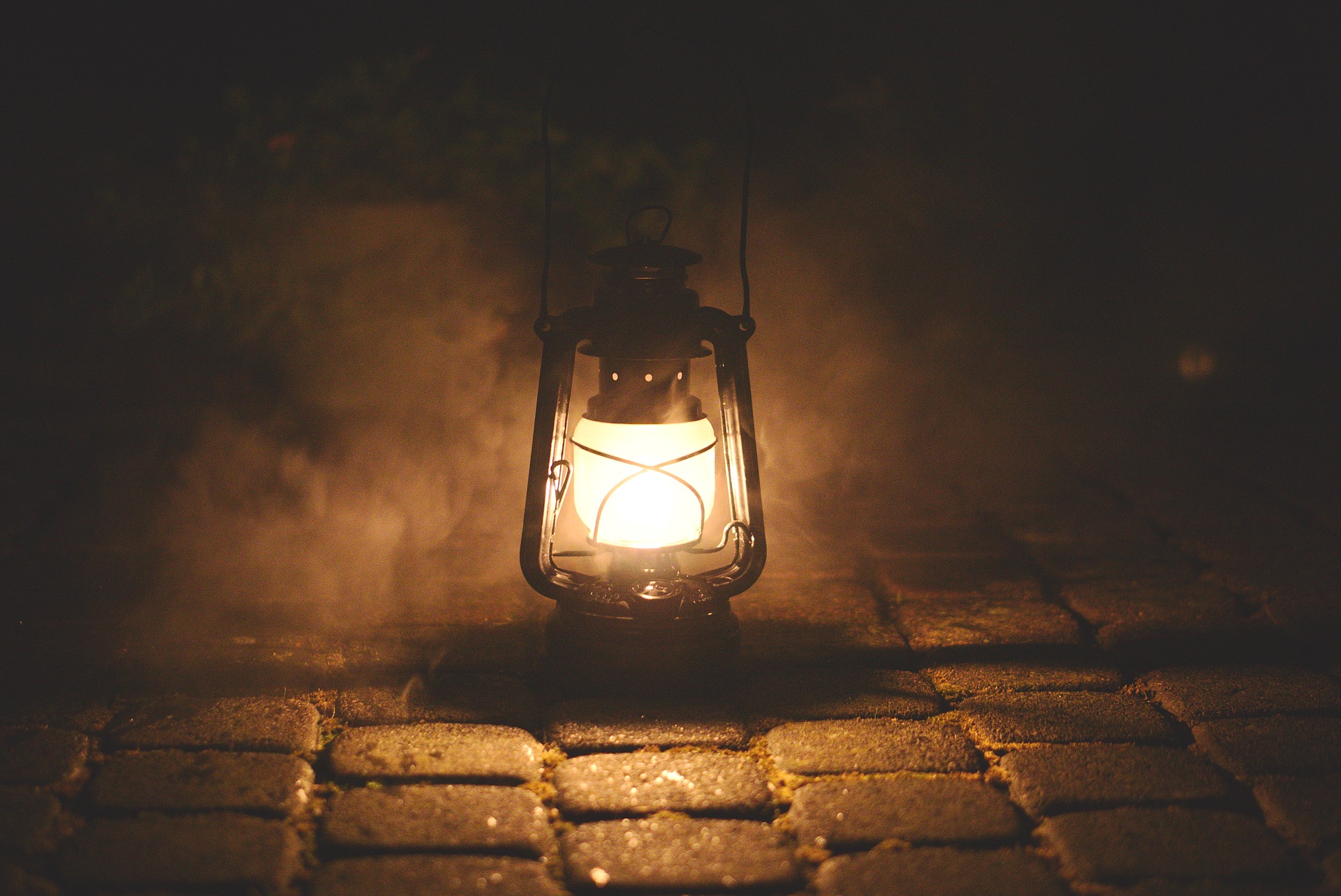
Think back to a time when you were somewhere dark. What did you do? Odds are, in addition to moving cautiously to avoid bumping into something or someone, you found the nearest light source. After that, you were likely more confident in your movements. Well, the preceding analogy (definition:An analogy is a comparison between two things, typically for the purpose of explanation or clarification.)represents what it's like to consume a story after learning how to identify literary devices. No matter whether you read, listen or view a text, authors use literary devices as a means of allowing their audiences to understand and appreciate what's occurring throughout their stories. Fortunately, authors have a wide-array of devices they can use to make their stories stronger. In your upcoming assignment, you will choose a literary device, research it, and record your findings.
Sidequest: Literary Devices
Believe it or not, there are literally hundreds of literary devices! Fortunately, you'll only need a couple of dozen to be able to delve deeply into most authors' stories. If you aren't familiar with literary devices, now would be a great time to strengthen your skills by learning more about them. If you prefer to learn by:
- viewing, check out Literary Devices with Mr. Taylor.
- reading, check out Literary Devices.
- doing, check out Can You Pass This Quiz On Common Literary Devices?

CONSOLIDATION
 A Little Literary Illumination
Identifying, understanding, and appreciating literary devices, like most skills, comes with a learning curve. Fortunately, knowing and applying learned literary devices will allow you to think about why, and communicate about how, authors use them to extend and enhance their stories. Throughout this course, you will learn about many different devices. Choose one.
Part 1: Your poster for your literary device must include the following:
- the device’s definition;
- a written example of the device from another author’s writing; and
- a found or created image that illustrates the written example (if found, please include proper attribution).
Remember that a poster, like any medium, has specific elements and conventions. According to Colorado State University's Poster Design Tips and Techniques, a good poster:
- tells a story;
- can be read from more than five feet away;
- is interesting and eye-catching;
- has a simple, uncluttered design;
- uses clear language and images in a logical sequence; and
- summarizes key points without excess detail.
When you are finished, conduct a self-assessment by ensuring that you meet the following criteria.
| Checklist Items | |
|---|---|
| Did you accurately define the device? | |
| Did you find and attribute the device in another author’s writing? | |
| Does your image understandably showcase the device? | |
| Did you organize your poster so that it helps educate your audience? |
Part 2: Next, find a fictional story (it can be a narrative, poem, video, song, etc.) that exemplifies the device you chose and defend your choice(s). Be sure to indicate the text (title and author) and identify the devices used. Specifically, you should explain how the devices are being used, along with whether they are successful in achieving the author’s intention.
Then conduct a self-assessment by ensuring that you meet the following criteria.
| Checklist Items | |
|---|---|
| Did you find an appropriate piece of text? | |
| Did you provide proper MLA formatted citation for the found piece? | |
| Did you identify the devices explicitly and accurately based on your learning throughout this activity? | |
| Does your response explain how the device was used? Does your response explain to what degree the device enhanced the effectiveness of the text? |
 Learning Goals and Success Criteria
 Learning Skills and Work Habits