
EWC4U
Unit 3: Poetry
Activity 6: Polishing Poems and Reflection


Poetry is nearer to vital truth than history.
 Did You Know?
Nowadays it seems commonplace for there to be a day for both the usual and bizarre. However, poetry has its own special day as recognized by the United Nations. As stated on its website: “[p]oetry reaffirms our common humanity by revealing to us that individuals, everywhere in the world, share the same questions and feelings. Poetry is the mainstay of oral tradition and, over centuries, can communicate the innermost values of diverse cultures.
In celebrating World Poetry Day, March 21, UNESCO recognizes the unique ability of poetry to capture the creative spirit of the human mind.
A decision to proclaim 21 March as World Poetry Day was adopted during UNESCO’s 30th session held in Paris in 1999.
One of the main objectives of the Day is to support linguistic diversity through poetic expression and to offer endangered languages the opportunity to be heard within their communities.
The observance of World Poetry Day is also meant to encourage a return to the oral tradition of poetry recitals, to promote the teaching of poetry, to restore a dialogue between poetry and the other arts such as theatre, dance, music and painting, and to support small publishers and create an attractive image of poetry in the media, so that the art of poetry will no longer be considered an outdated form of art, but one which enables society as a whole to regain and assert its identity.”
Sing for Me
While neither poetry nor music are completely interchangeable, they definitely overlap a great deal. Indeed, many famous songs have been inspired by poems. Some are obvious given the song’s title (for example, Iron Maiden’s Rime of the Ancient Mariner or Rush’s Xanadu) while others are more subtle (for example, Sheryl Crow’s All I Wanna Do or Coldplay’s Kaleidoscope. Check out more poetry-music connections at Songfact.
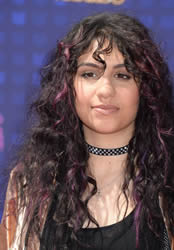
Singers vocalize many of the emotions poets write.
Source: Celebmafia
To ensure that you are fully versed in poetic styles, take a moment to complete the Literary Devices interactive activity below: If you're working on a tablet, click here to open the following interactive in its own window instead of using the embedded version below.
 I’m With the Band
After you are finished, find a favourite song of your own and analyse it for poetic devices. You should:
- identify and label them;
- explain how are they used to enhance the song’s purpose; and
- examine whether they are effective choices.

Contemporary Poets
Another way to polish your poems is to expand your own poetic reading - the more exposure you have to poets and their poetry, the wider your poetic worldview will be.
Cultivating Contemporaries
Find a contemporary poet who is still actively writing (and ideally, reciting) as of this year.
Then complete the following aspects of this assignment.
- Research and summarize your chosen/assigned poet’s biography. Pay specific attention to how her or his writing practices, processes, and personal experiences, beliefs, and socio-cultural contexts may have influenced her or his work.
- Read at least five of their poems and copy them into your Writer’s Notebook (using proper MLA citations).
- Review the poems for their use of personas, purposes, themes, elements, forms, and devices.
 Enrichment
Why not enter some contests yourself? There are plenty of free or small-fee contests in Canada and Internationally, and a simple Google search for ‘poetry contests’ will net you many results.

As Wayne Gretzky noted, “[y]ou miss 100% of the shots you don't take.” Hmm, that would be a good prompt for a poem...
Before entering any contest, make sure that you read the rules and regulations carefully. Beyond ensuing that you are meeting all contest criteria (e.g., costs, file types, word counts, and formatting), be aware that some contests have clauses regarding publication rights and ownership.
 Polished Perspectives
For your final task for this activity, you will create a polished mini-portfolio of the poems you have written throughout this unit by selecting five of them. There must be at least one each of a confessional, reconstruction, and an altered states poem; the other two poems are your choice, provided they were written during this unit.
Along with your poetry portfolio, you must include an annotated paragraph where you identify and explain your writing decision for each of the poems. Your reflection should comment specifically on how your poems:
- achieve their purpose;
- adhere to the poetic forms chosen (e.g., haiku);
- adhere to the poetic type chosen (e.g., confessional);
- utilize poetic language and
- were proofread, revised, and edited to become polished.
- Optional: record yourself reciting one or more of your poems.
Prior to submitting your task, conduct a self-assessment by ensuring that you meet the following criteria.
- Have you considered and incorporated the appropriate and relevant poetic techniques learned throughout this unit?
- Have you proofread, edited, and revised your work?
- Have you completed the identification and explanation of your writing decisions?
 Metacognitive Moment
Now that this unit is complete, reflect on your growth as a writer by writing a two or three paragraph response. Your response should comment on the following questions.
- What are your strengths as a writer?
- Refer to the goal for improvement you set at the end of Unit 2. Did you achieve your goal? If yes, give an example from your writing. If not, examine the criteria in the rubric and other materials from this unit to help you focus on improvement.
- Do you believe that you see poetic writing as a potential art, craft, and/or career? How so? What skills are needed?
Include examples from your works so far, as well as specific references to each activity. As a reminder, here are the activities you’ve completed in this unit:
- Activity 1 - Snap Your Fingers: appreciating poetry
- Activity 2 - Analysing and Acknowledging Authors
- Activity 3 - Poetic Perspective #1: Poetry as Confession
- Activity 4 - Poetic Perspective #2: Poetry as Reconstruction
- Activity 5 - Poetic Perspective #3: Poetry as Altered State
- Activity 6 - Polishing Poems and Reflection
Next, select one of your polished pieces from the unit and reread it. Now, in one or two paragraphs, explain what specific Poetic Writing skills are showcased in both your product and its creation. Make sure that you:
- give an example of a creative choice you made, and how it improved the effectiveness of communicating your message; and
- give an example of how your own beliefs, values, or experiences are revealed in your writing.
Alternately, you can choose to create a digital mind-map, a short video, or a digital cartoon showcasing your skills growth.
 Learning Skills Reflection
If you're working on a tablet, click here to open the following interactive in its own window instead of using the embedded version below.
 Introduction
 Learning Goals and Success Criteria
 Learning Skills and Work Habits
 Rubric 1