
EWC4U
Unit 5: Creative Non-Fiction
Activity 3: Tell Me: Persuasive Free Form


All stories have to at least try to explain some small portion of the meaning of life. You can do that in 20 minutes and 15 inches. I still remember a piece that the great Barry Bearak did in The Miami Herald some 30 years ago. It was a nothing story, really: Some high school kid was leading a campaign to ban books he found offensive from the school library. Bearak didn’t even have an interview with the kid, who was ducking him. The story was short, mostly about the issue. But Bearak had a fact that he withheld until the kicker. The fact put the whole story, subtly, in complete perspective. The kicker noted the true, wonderful fact that the kid was not in school that day because “his ulcer was acting up.” Meaning of life, 15 inches.
 Did You Know?
Wikipedia is a global resource that is used daily by millions of people. And there’s no denying that the idea of communal, open-source, free information has many benefits.
But if you scroll down to the bottom of Wikipedia’s homepage, you’ll find a tab titled Disclaimer with the following statement “WIKIPEDIA MAKES NO GUARANTEE OF VALIDITY”.
What does this mean for you as a creative writer? Simple: while creative non-fiction is a powerful genre for exploring issues, make sure its ‘creative’ component doesn’t descend into the erroneous.
Beating Bias
It is sometimes difficult to identify, much less correct, bias in your writing. Bias can be both obvious (such as an explicitly stated perspective) and subtle (such as a question that directs the respondent). Even more challenging is deciding what is relevant to support an opinion, and what is unsubstantiated bias.

Sometimes you need a partner to see the way out...
Fortunately, as you’ve come to learn throughout this course, working in writing communities and soliciting peer feedback is an excellent avenue to ensure your writing is personal without being prejudiced. Additionally, there are many online tools available for fact checking your research.
prejudice in favor of or against one thing, person, or group compared with another, usually in a way considered to be unfair.
Now it’s time to determine your ability to detect bias by completing the Be Aware of Biased Language interactive activity below. If you're working on a tablet, click here to open the following interactive in its own window instead of using the embedded version below.

Positive Profiling
Writing a personal profile about someone is a common creative non-fiction task; it gives the writer the creativity to develop a narrative around the person being profiled. Most biographical articles include information from a one-on-one interview with the person being profiled. However, as with most writing tasks, there is an art to developing interview questions.
 Preparing To Profile
Prior to writing a profile of your own, you’ll need to learn what makes a successful one. Research how to write a profile and compile a list of five ‘must-haves.’ Next, read a profile of your choice and respond to the following questions. There are resources below to assist you with your searches.
- How does the author organize the profile?
- Is the profile’s portrayal of the person positive, neutral, or negative? How do you know? Why do you think this is the case?
- What creative writing elements (evidence, rhetoric, etc.) did the author use to engage the reader?
- Was there a bias? Defend your stance with evidence from the profile.
- Provide an MLA citation for your found profile.
Resources
- Writing Creative Nonfiction: The Profile/Biography Sketch is an excellent blog post that explains step-by-step how to generate ideas for and write a personal profile.
- Hello! Magazine Profiles provides many contemporary examples of celebrity profiles.
- The New Yorker’s Persons of Interest: Profiles of artists, thinkers, and newsmakers provides well written and comprehensive profiles of many diverse people.
 Writer’s Notebook
To get you into a profiler’s mindset, you will conduct an interview with someone who you do not know well. Prior to your interview, you need to generate five questions that you intend to ask in order to help you write a short personal profile of her/him. During the interview, you also need to ask at least five follow up questions based on her/his answers. After the interview, review the answers and look for patterns or commonalities in these responses.
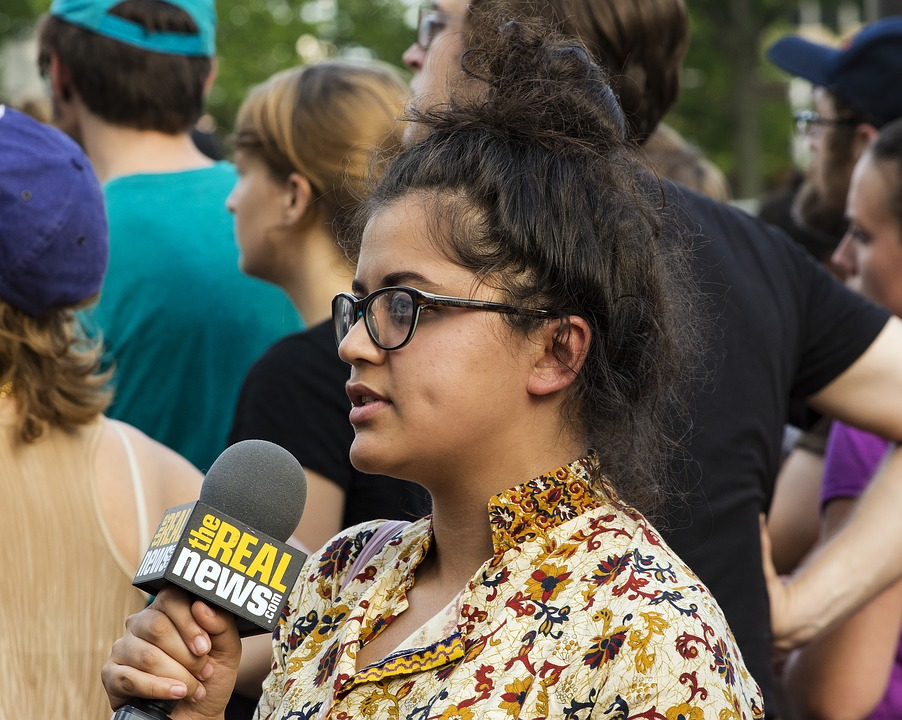
The questions you ask can be as important as the answers you receive.
Edifying Editorials
Examining Editorials
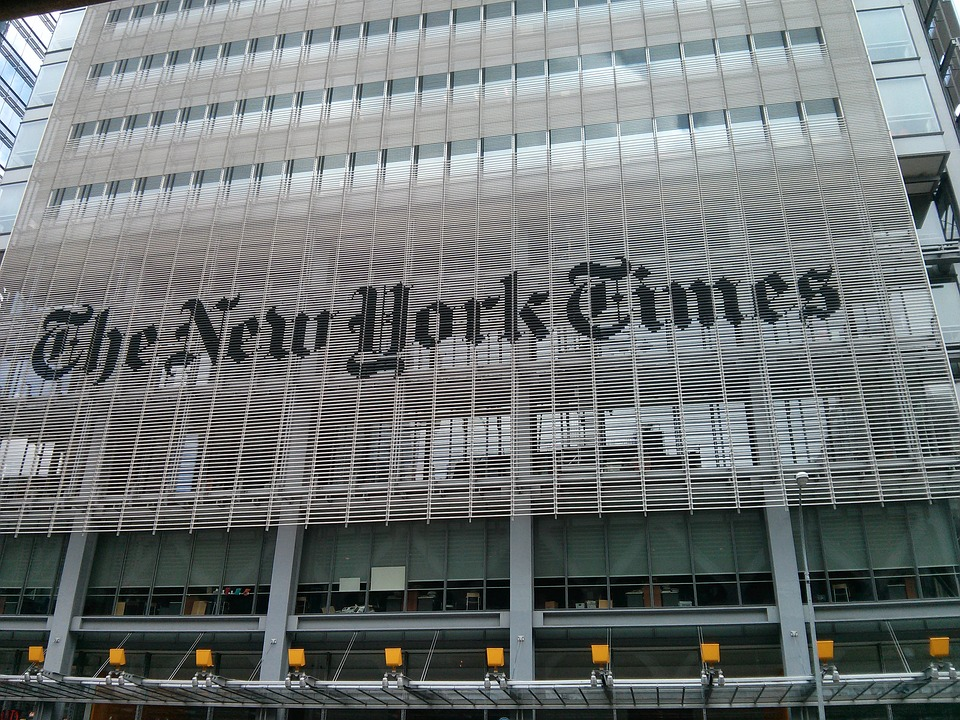
Most newspapers provide a forum to capture the public’s diverse voices.
Prior to writing an editorial of your own, you need to learn what makes one successful. Research how to write an editorial and compile a list of five ‘must-haves.’ Next, read an editorial from a newspaper of your choice and respond to the following questions. You might use the criteria in the Assessing Creative Non-Fiction Texts checklist to guide you. There are resources below to assist you with your searches.
- How does the author organize the editorial?
- Is the profile’s presentation of the issue positive, neutral, or negative? How do you know? Why do you think this is the case?
- What creative writing elements (evidence, rhetoric, etc.) did the author use to engage the reader?
- Was there a bias? Defend your stance with evidence from the editorial.
- Provide an MLA citation for your found editorial.
Resources
- Editorial Writing Examples provides student relevant sample editorials along with general strategies for writing editorials.
- Editorial Writing is a short video that explains how to write an editorial.
- Writing an Editorial provides a comprehensive series of lists of what an editorial should include.
- How to Write an Editorial is a video by New York Times’ editorial page editor, Andrew Rosenthal, which provides seven tips for writing an effective editorial.
 Enrichment
Now that you’ve written your own opinion piece, why not learn, How to Submit an Op-Ed Article to The New York Times, itself? Alternately, you can go to almost any newspaper’s editorial page and receive instructions on how to submit an opinion piece. If you choose to do so - and if your piece is published - make sure you share the good news!
If you want to view any links in this pdf, right click and select "Open Link in New Tab" to avoid leaving this page.
Personal Persuasion
Now that you’ve had a chance to review profiles and editorials, it’s time to write your own. You will write:
- a 300 - 400 word personal profile about either the classmate you interview or another person that you opt to interview, along with your questions (both pre-planned and those developed in response to the interviewee’s answers); and
- a 300 - 400 word editorial on an issue of your choice.
To complete this assignment, you need to do the following:
- Select a person for your profile and an issue for your editorial.
- Choose your audience. You need to choose an audience(s) whom you would want to read your pieces.
- Write your drafts. Use the criteria in the Creative Non-Fiction Checklist to guide you as you write.
- Edit and revise your drafts. Make necessary revisions. You may want to refer to past supports, including success criteria in the assessment tool, Assessing Editing Skills, Assessing Revising Skills, or your Writer’s Notebook.
 Metacognitive Moment
Now that you’ve researched and written a personal profile and editorial, take a moment to reflect on your experiences of writing creative non-fiction. In your Writer’s Notebook, answer the following questions.
- Did you find generating ideas for easy or difficult? Why might that be the case?
- Which form did you prefer? Why?
- Using examples from your texts, explain how you adapted your writing to reflect your chosen audience(s).
- Explain how your beliefs, values, and experiences are revealed in your writing, and how they influence your perspectives and biases.
- Would creative-non-fiction writing be a career you would consider? If so, how so? If not, why not?
- After revising your feedback, identify two strengths and two areas for improvement.
 Introduction
 Learning Goals and Success Criteria
 Learning Skills and Work Habits
 Rubric 1