
GWL3O
Unit 1: Looking Inward
Activity 2: Showing Off My Soft Side

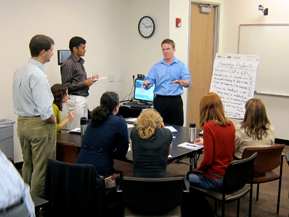
Aiden is 38, married, has three very active children, and is involved in his community. He has a college diploma in Business Administration and has an hour-long commute to and from work each day. While Aiden is happy to have his job, he has been in the same position for a number of years and would like to be promoted. An advancement would mean potentially working from the head office closer to home. Aiden knows a great deal about his industry and is very skilled in his job. However, he recognizes that he has difficulty with the more ‘soft’ skills that are important in the workplace. In fact, in a recent job review his supervisor noted that he sometimes has difficulty communicating and working as a member of a team. Aiden agrees with this assessment, and noted that he also finds that he has occasional challenges in these areas in his busy life at home and in the community.
Soft skills get little respect, but will make or break your career.
‘Soft skills’ is a term often used to describe the skills which characterise relationships with other people, or how you approach life and work. Other phrases often used for these types of skills include: ‘people skills,’ ‘interpersonal skills,’ ‘social skills,’ or ‘transferable skills.’
‘Hard skills’, in contrast, is a phrase usually used to describe job-specific skills. Examples of such skills include professional skills like bricklaying or accountancy, medical expertise such as diagnosis and treatment, or other skills that can be taught and whose presence is testable through exams.

Think about It: ‘Soft Skills’ versus ‘Hard Skills’
Take a moment to create a quick T-Chart (with Soft Skills on one side and Hard Skills on the other).
| Soft Skills | Hard Skills |
|---|---|
Under Soft Skills, list all of those skills that you feel are currently, or will be important to you in the future (at school, work, home, and/or in your community). Then, do the same under Hard Skills.
Inquire About It: ‘Soft Skills’ versus ‘Hard Skills’
Building upon the activity that you completed in the previous lesson, the second stage of the Inquiry Model asks you to find resources. Consider the topic ‘soft skills versus hard skills’...
- If you were to conduct an inquiry on ‘soft skills versus hard skills’, what are the questions that would guide your inquiry?
- What do you already know about these questions? What do you need to know?
- List the resources that you would consult to find the answers.
- How do you know that these resources are credible? For help in determining whether or not a source is credible, check out the following brief video:
trustworthy; academically reliable

Learn About It: ‘Soft Skills’
“Like hard skills, soft skills require a lot of practice to make you really skilled at using them. Unlike hard skills, there are no exams to prove that you can do them. You measure your success in developing soft skills in how well you manage the relationships with those around you: family, friends, and co-workers, as well as customers and those who provide you with goods or services.”

Communication is a very important 'soft skill' at home, school, work, and in the community.
In the MINDS ON part of this activity, you brainstormed what you believed to be important ‘soft skills’. The following are examples of soft skills that are essential for personal management and building relationships with others at school, work, home, and/or in your community. Click on each to first read its definition. Then, click on More... to read why the skill is important and how it can be improved.
Work With It: Portfolio and Reflection - Assessing My Soft Skills
The fortunate thing about ‘soft skills,’ as you have read, is that each can be developed through some awareness, basic strategies, and practice. This development starts, however, with identifying where you currently stand with regard to each skill. Based on everything you just learned about a selection of ‘soft skills,’ it’s time to assess where you identify yourself on the `development continuum’ for each. In the interactive below, indicate where you feel you currently land for the ‘soft skills’ listed, from “I really need to work on this” to “I’ve got it mastered.”Once you have finished, save the summary slide to pdf.
Now that you have accessed your soft skills, pretend you are in an interview and in a chart, either:
-
Provide strategies you can use to improve in this area (for the ‘soft skills’ in which you have assessed yourself in the lower end of the development continuum) OR
-
Describe examples of situations in which you have done well in this area.
Add your summary slide, your chart and a reflection to your Portfolio.
Learn About It: Time Management
Have you ever considered how some people seem to get so much accomplished, often on time, despite so many responsibilities at home, work, school, and/or in the community, while others always seem to be behind, scrambling to get things done?
The answer to this question may not involve the number and size of tasks that need to be completed, but rather the ability of one person to use time-management strategies effectively. Below are 20 Quick Tips For Better Time Management.

Managing your time is important to balancing your life at home, school, work, and in the community. Using some simple strategies, you can manage your responsibilities and tasks, while still having enough time to pursue your leisurely interests.
 Work With It: Portfolio and Reflection - My Time Management Strategies
Consider which of the above strategies you could actually use, given your current circumstances, to balance school, work, family, and fun. Select at least four (4) that you feel you can use. For each of the four (4) strategies:
Describe specifically how you will use this strategy to manage your time and commitments, ensuring you meet your responsibilities while still allowing sufficient time for the leisure activities that interest you.” You can create a table similar to the one below to help organize your work.
| Strategy Number |
Time Management Strategy | Application |
|---|---|---|
| 1 | ||
| 2 | ||
| 3 | ||
| 4 |
The strategies selected by the student, as well as the descriptions of how they will apply these strategies, will auto-populate a chart with the headings, “Time Management Strategy” and “Application.” The students will be able to save the chart for upload into their Portfolios.
Save the chart, naming it “My Time Management Strategies.” Add the file and reflection to your Portfolio.
Learn About It: Teamwork Skills
Managing your own time is one thing, but to be effective in the workplace, you also need to be able to work efficiently with diverse groups of people. People who take this course are at a different point in their lives – some are older adults, some are younger adults, some are still in school, some are returning to school, some may be planning to go into an Apprenticeship, College, or University, while others plan to continue with or enter the work world. Some have extensive work experience, and others may not. Some have families at home, others may be living on their own. The list goes on.
The one thing that is constant among us all, though, is the importance of mastering teamwork at home, school, work, and in the community.
Learn About It: Anger Management
Lastly, let’s look at personal management skills.
Personal management skills are "The personal skills, attitudes, and behaviours that drive one’s potential for growth). Many of the 'soft skills' we have talked about also fall under personal management skills."
Specifically, we will look one personal management skill - Anger Management.
Anger Management is “the process of learning to recognize signs that you're becoming angry, and taking action to calm down and deal with the situation in a positive way.”
Anger is an acid that can do more harm to the vessel in which it is stored than to anything on which it is poured.
Think About It: Anger Management
So, how well do you manage your anger? To find out, search for and complete an online Anger Management self-assessment or test. Most online Anger Management self-assessments also provide advice and tips to help you take your control of your reaction to situations that can spark anger. So, be sure to read not only about your results, but any suggested strategies provided, as well. Trouble finding a test? Here is an example: How Good Is Your Anger Management?
- How did you do?
- What do your results tell you?
- What advice and tips were provided that you feel would help you control your reaction to situations that might spark anger?
Now, think of a situation when you had difficulty managing your anger. You may also choose to use a situation where you observed someone else struggle with this emotion.
Consider the following questions.
- What caused the anger?
- How was the anger displayed?
- Did the display of anger help the situation, heighten the situation, cause other problems, etc.?
- What could have been done differently to handle the situation?
- Would it have been more effective?
- What was the impact on the people involved?
All of us experience anger from time to time. It's a normal, commonly experienced emotion. However, anger can be incredibly destructive if we don't know how to control it. Frequent or misplaced anger can hurt our reputations, destroy our relationships, limit our opportunities, and even damage our health.
Work With It: Portfolio - Assessing My Personal Skills
In this activity you learned about ‘soft skills’ and ‘personal management skills’ and why they are so important to life at home, school, work, and in the community. You also assessed your skills and developed strategies to improve them where needed.
Go to the Mind Tools website and complete the Test Your Skills and Find the Resources That Will Help Quiz.
No need to create an account when asked… Simply copy and paste your results (found below your Total) into a document, naming it, “My Personal Skill Assessment.” Be sure to click on the links contained in your results, as the information they lead to will be very helpful.
Add the file to your Portfolio.
 Introduction
 Learning Goals and Success Criteria
 Learning Skills and Work Habits
 Rubric 1