
GWL3O
Unit 2: Look Outward
Activity 1: We're All Together


Camila excelled in many of the arts while she was growing up in Chile. After completing high school, she moved to Canada to pursue a degree in Cinematography and later a career in film. Now, in her mid-20s, she has been working at an established film production company as one of four assistants to the company’s Lead Cinematographer. Camila routinely works with these colleagues, as well as a host of other individuals employed by the company including the Director, Camera Operators, and the Lighting Crew. Though Camila finds it rewarding working with so many creative individuals, she sometimes feels that the unique perspective she brings, given her Chilean upbringing, is overlooked.
Think About It: Group Diversity
Consider a group (at school, at work, or in the community) of which you have been a part, or of which you are currently a member. How would describe the ‘diversity’ within the group?
- If the group was diverse, what benefits have you observed resulting from having this diversity within the group?
- Or, if the group was more homogeneous, what benefits do you feel may have been lost?
it did not possess a significant degree of diversity amongst its members

Learn About It: Groups, Benefits of Groups, Group Cohesion, and Group Norms
In this activity, you will be asked to look closely at groups, group dynamics, and the benefits of diversity in groups.

Groups offer many benefits, particularly cohesive groups. Look at this particular group. What observations and inferences can you make?
What exactly is a ‘group?’
A group is defined as collection of people with some common characteristic or purpose.
- A group can consist of any number of people.
- People in groups interact, engage and identify with each other, often at regular or predetermined times and places.
- The group members share beliefs, principles, and standards about areas of common interest and they come together to work on common tasks for agreed purposes and outcomes.
- People in groups are defined by themselves and by others as group members; in other words, individuals are aware that they are part of a group.
Everyone is a member of a variety of formal and informal groups. While the number and type of groups that you belong to will change over the course of your life, they will always exist. With the above characteristics in mind, brainstorm what groups you have belonged to in the past, currently belong to, or may belong to in the future. Think about your involvement at school, at work, and/or in the community.
Benefits of Groups
As a member of a group, you actively engage with other group members. There are many advantages to groups, including:
- learning about the individuals that comprise your group and about yourself;
- experiencing varied perspectives and life experiences;
- having your thinking challenged;
- receiving assistance in working through an issue;
- influencing your personal development and impacting your behaviour and attitude;
- experiencing group interactions that build your confidence, improve your interpersonal, social, and communication skills, and strengthen your teamwork skills; and
- creating appreciation for the value of diversity and importance of inclusion.
The aim of a group is usually to bring about some change, support or insight into either the individual, the group as a whole, or the environment. Whilst groups may well encounter internal problems and conflict at certain stages, when they are working effectively groups provide a positive, supportive environment in which to develop and learn new interpersonal skills.
Group Cohesion
Often, the potential of a group is determined by the degree of group cohesion. Cohesion fosters a greater sense of identity and purpose, generates active participation and cooperation, and increases the likelihood of productivity and success. The question becomes how a group can generate cohesiveness. One way is through the development of group norms.
Group Norms
Often group norms are formally constructed, documented, and made explicit to group members. In other instances, group norms may be unspoken, implicit, and naturally recognized, understood, accepted, and followed. Group norms may also evolve over a period of time, often being developed and revised as demanded by circumstances, situations, or events. Conforming to group norms demonstrates support for the group and belonging, while habitual refusal may lead to marginalization or, in extreme cases, expulsion.
Having group norms helps to promote integrity within the group, as well as encourage focus and productivity while minimizing potential conflicts.
The success of group norms is often determined by the degree to which all members were involved in creating them, the degree to which they are recognized and understood, and the degree to which they support, rather than conflict with, group processes and progress.
the tendency of a group to work together toward a specific goal, or for a defined purpose, in a unified manner. Groups with cohesion are characterized by shared dedication and a sense of connectedness. Staying together is of mutual interest and there is a resistance to leaving.
the standards of behaviour and attitudes to which the group abides; the group’s rules.
Group processes, here, refer to the “how” of the group – i.e., how it operates and how it is governed. It refers to all of actions and interactions undertaken as it works toward achieving its goals and/or deploys its purpose. For instance, how the group structures and runs meetings, how the group communicates internally and externally, and so on.
Examples of Group Norms
The following list gives examples of norms. Obviously, different groups with different memberships and different aims and objectives will employ differing sets of norms.
- Meet at x venue and at x time.
- Dress business casual.
- Begin and end on time.
- Attend as many meetings as possible, minimum of 70%.
- Listen carefully to the current speaker.
- Do your homework; be prepared before the start of a meeting.
- When speaking keep your point relevant and concise.
- Do not use hostile or inappropriate language or body language.
- Be polite and courteous.
- Show respect to other members of the group and their ideas.
- Work on the goals and objectives of the group.
- Do not talk or hold side conversations whilst others are talking.
- Turn off your cell phone for the duration of meetings.
Learn About It: Group Roles

Individuals in groups typically assume roles. However, any individual may have more than one role and any role may be shared by more than one individual. Also, roles are not static… the role an individual may play in one situation, or point in time, may be different than the role played in another situation or point in time.
There are many models that help us to identify and understand the roles that are played in groups. Meredith Belbin, for instance, identifies nine group roles, or clusters of behaviour. As you read this, consider which role you most often fulfill when working in a group, and which one you have the most difficulty fulfilling.
When you look at these roles, you may see your own attributes, or aspects of your own personality, reflected in some or many of them. It is important to know, however, that:
- an individual may often take on more than one role within a group;
- a particular role may be shared among two or more individuals; and,
- individuals may adopt different roles at different times.
Strength lies in differences, not in similarities.
Work With It: My Group and The Roles of Its Members
Create a document, entitled “My Group and The Roles of Its Members.” Think about a group to which you belong or once belonged. Briefly describe the group and, using fictional names or initials, create a chart that helps you to identify the individual(s) that align best with each of the roles described above. Remember that an individual may often take on more than one role within a group and a particular role may be shared among two or more individuals. Each time you identify the person, or people, that align best with each role, briefly explain your selection. For instance:
Completer-Finisher – Todd – When our group was organizing the benefit concert, Todd made all the arrangements with the venue, constructed the promotional literature and media ads, and acquired all of the performers. While he did a great job and everything ran smoothly, it was a lot of work. He could have assigned some of the tasks to others in our group and, perhaps, the concert would have been even better.
Note: If you are having difficulty thinking of a group, feel free to use one that you have observed on a TV show.
Learn About It: Diversity in the Workplace
What comes to your mind when you think of the term ‘diversity?’ Often it is the idea of race, ethnicity, and national origin. However, diversity is far more than that. It includes respect for, and appreciation of, not only these characteristics but also differences in gender, age, education, experiences, socio-economic status, sexual orientation, personality, physical abilities, religious beliefs, cognitive abilities, political beliefs, or other ideologies. In fact, diversity is even bigger than this - it also includes different perspectives, experiences, lifestyles, and cultures that people bring with them.
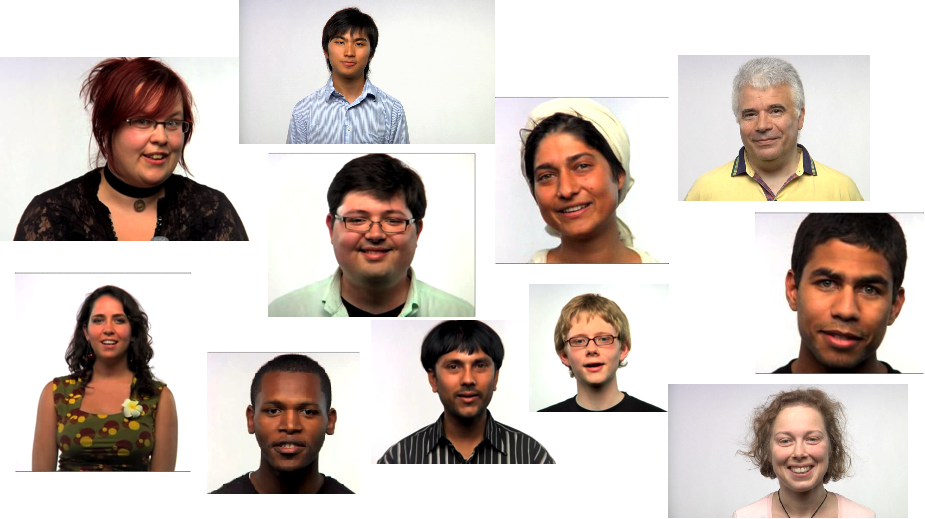
Diversity includes race, ethnicity, and national origin, but it also includes far more… What other forms of diversity come to mind?
Diversity in a group can affect group dynamics in positive ways by providing broader perspectives, a wider range of ideas, and more varied strengths.
When you have a team of critical thinkers with different sensibilities and areas of expertise who are willing to collaborate and challenge each other in order to reach a common goal, you get results that are well-thought-out, effective and creative.
Take a moment to view this brief video for some great examples of how diversity benefits the workplace:
Learn About It: Canada's Best Diversity Employers
The annual Canada's Best Diversity Employers competition recognizes employers across the country that have exceptional workplace diversity and inclusiveness programs. This competition recognizes successful diversity initiatives in a variety of areas, including programs for employees from five groups:
- women;
- members of visible minorities;
- persons with disabilities;
- Indigenous peoples; and
- lesbian, gay, bisexual and transgendered/transsexual (LGBT) peoples.
Take a moment to learn more about this competition by reading this Globe and Mail article:
A full list of the most recent winners of the competition is available on Canada's Best Diversity Employers. Select at least three (3) employers from the list that interest you. Click on them and read more about why they were selected.
Successful companies are not the ones that build a business, then look at diversity as a nice-to-have attribute. Truly successful and innovative companies are those that build diverse teams when they are just starting out in their own apartment or their folks’ garage. Diversity is a mentality, not just strategic imperative.
Work With It: Embracing Diversity at ?
In this activity, you will have three options: choose ONE of the following options.
- Assume you are an employer at a hypothetical business or institution; or
- Select an actual business or institution at which you have been, or are currently, employed; or
- Choose an actual business or institution and interview someone there who is knowledgeable of its policies and operations.
Based on what you have learned about Canada’s Best Diversity Employers in this activity, and, more importantly, your own ideas, create a submission entitled, “Embracing Diversity at ?” (where the ? is the name of the business or institution). Your submission must promote the way(s) the business or institution embraces the benefits offered by the diversity of people on its staff.
Options for your work include:
- a poster;
- a flyer;
- a radio ad (brief, e.g., 30-60 seconds);
- a video ad (brief, e.g., 30-60 seconds;
- a news article (brief, 300 words); or
- a recording or script of the conversation or interview that you had with the person at the business or institution. If you choose this option, be sure to do the following:
- request and arrange the conversation/interview ahead of time.
- ensure the interviewees are aware of the purpose of the interview as well as the destination of your findings.
- obtain their consent to be recorded and/or to use their answers in your submission.
Trouble thinking of ideas? Check out how Starbucks takes full advantage of the diversity of its employees:
Also helpful are these articles:
Diversity and independence are important because the best collective decisions are the product of disagreement and contest, not consensus or compromise.
Inquire About It: Workplace Diversity at ?
Using the Inquiry Model, determine the degree to which a business, company, organization, or institution of your choice (from small to large, local to international) either capitalizes on, or fails to embrace, the benefits offered by the diversity amongst its employees.
Create a document, entitled “Workplace Diversity at ?” (where the ? is the name of your selected business, company, organization, or institution). In it, communicate your findings, interpretations, and conclusions in the form of an opinion piece of at least 500 words. Begin your opinion piece with an overview of the steps you took during your inquiry that actually led you to your findings.
Work WIth It: Expanding Job Opportunities
Diversity, as we have seen, contributes significant benefits to the workplace. Can one’s cultural knowledge and fluency in other languages also benefit those searching for work by expanding employment opportunities? Absolutely!
First, create a document, naming it “Expanding Job Opportunities Through Knowledge of Cultures and French.”
Explain, in a short opinion paragraph, what difference it makes to a job search when the candidate has a knowledge of French, a knowledge of different cultures, and/or a knowledge of Indigenous communities and nations, histories, cultures, traditions and perspectives. Also include within your work one example of a job posting that requires knowledge in one of these areas that supports your opinion.
You may locate this job posting on any website, however you may wish to start with www.indeed.ca where you can search millions of jobs from thousands of job boards, newspapers, classifieds and company websites. On this particular site, leave the ‘where’ field blank, so that the engine searches postings from all over the country. Enter "Knowledge of Different Cultures", for example, in the ‘what’ field (don’t forget the quotation marks - “” - as this will make the search engine locate only those postings that contain the entire phrase). Click ‘Find Jobs’.
 Introduction
 Learning Goals and Success Criteria
 Learning Skills and Work Habits
 Rubric 1