
GWL3O
Unit 2: Look Outward
Activity 3: Trending Now


Jenni is 40 and works on the assembly line in an automotive factory. She has worked in the same plant since she was 18, but still has a number of years until retirement. Over her time there, she has seen a lot of changes - decreases in production because of changes in consumer demand, changes in the production process as a result of new environmental legislation, outsourcing of certain components to other countries, the expansion of the company as it built new facilities in other countries and job changes resulting from automation. As a result, Jenni is concerned about the long term stability of her own job.
Think About It: Economic and Societal Trends
What trends can you identify from the brief story above? Are these familiar to you? What other trends are you aware of that are affecting the workplace, labour market, and/or economy?
What advice do you have for Jenni? Do you see any challenges that these changes may present to her? How about opportunities?
a person’s place of employment (e.g., an office, a store, a factory, etc.)
the supply of labour and the demand for employment
the wealth of a region (e.g., a province), represented in part by the degree to which goods and services are being produced and the degree to which these are being consumed (i.e., purchased)

Learn About It: Globalization
Globalization is a very broad term, but it generally refers to how countries and their citizens interact and integrate with one another. For our purposes here, we will focus on economic globalization, which is one of the more common interpretations of globalization. Economic globalization involves increased trade between countries, often encouraged by trade agreements and/or the lowering of tariffs.
It also involves the process of businesses expanding into other countries. When this occurs on a large scale, these businesses are referred to as multinational companies or multinational corporations.
The following video provides an easy-to-understand visual explanation of globalization, as well as the benefits it may afford and the problems it may cause:
When we think about globalization, we often think about companies expanding their operations around the world. While that is a significant aspect of globalization, the term actually incorporates many types of connections.
taxes that are placed on goods being imported from other countries.
a large corporation with operations and assets in several countries.
As you can see, globalization is quite complicated. As a result, it can be controversial. In fact, over the years, it has been the fodder of numerous political debates as domestic and international economic policies and trade agreements are being discussed.
Inquire About It: How Might Globalization Affect My Future?
Given what you have learned from the video above, conduct your own inquiry into the the concept of globalization and its significance. The following questions will help to guide your inquiry.
- Describe Globalization in your own words
- What is the significance of globalization (e.g., magnitude, impacts, etc.)?
- Most importantly, what may globalization mean to you and others you know, (i.e., how might it impact your future in terms of your career and quality of life?)
The idea here is not to determine whether or not globalization should be embraced or rejected – we’ll leave that to leading economists, business leaders, political figures, and interest groups to debate. Instead, you are asked to develop a deeper understanding of globalization, including its significance, impact, and most importantly, what it may mean to you personally (i.e., how might it affect your future in terms of your career and quality of life).
There are no correct answers here, just assertions and arguments backed by data from reliable sources.

Taking some time to become informed about trends and how they offer both opportunities and challenges in the future can have a significant impact on the positive design of your future.
After reviewing the material above, consider the following statement.
What may globalization mean to you, and others you know (i.e., how might it impact your future in terms of your career and quality of life?)
Learn About It: Outsourcing
Outsourcing occurs when companies transfer portions of their work to other contractors, consultants, or service providers. Often this is driven by:
- the need or desire to reduce costs;
- prohibitive local environmental laws (e.g., lower levels of ground contamination are allowed in Canada as compared to other countries);
- a lack of available skilled labour or expertise;
- the need to increase efficiency, a desire to avoid liability;
- a desire to focus on the company’s core business;
- the simple fact that the company does not want to provide the service itself.

Companies outsource a variety of aspects of production and/or operations to other businesses for several reasons.
Outsourcing is seen most commonly in parts manufacturing, accounting, human resources, payroll, information technology, marketing, facility management, custodial services, and food and beverage catering.
A quick scan of any news source will reveal articles and opinion pieces involving outsourcing and its perceived impacts, both positive and negative. Consider, for instance, the following opinion piece on outsourcing, taken from Belleville’s newspaper, the Intelligencer:
Now consider the opposing perspective as it appears in the following CBC News article:
Learn About It: New Technologies and the Workplace, Labour Market, and Economy
Technological innovation often creates new opportunities and jobs. Unfortunately, this may also cause other jobs to become obsolete. This cycle has been the case for centuries. The difference today, however, is that the rapid pace of technological innovation is unprecedented. While this excites some, others are concerned about the impact this may have on the workplace and employment.
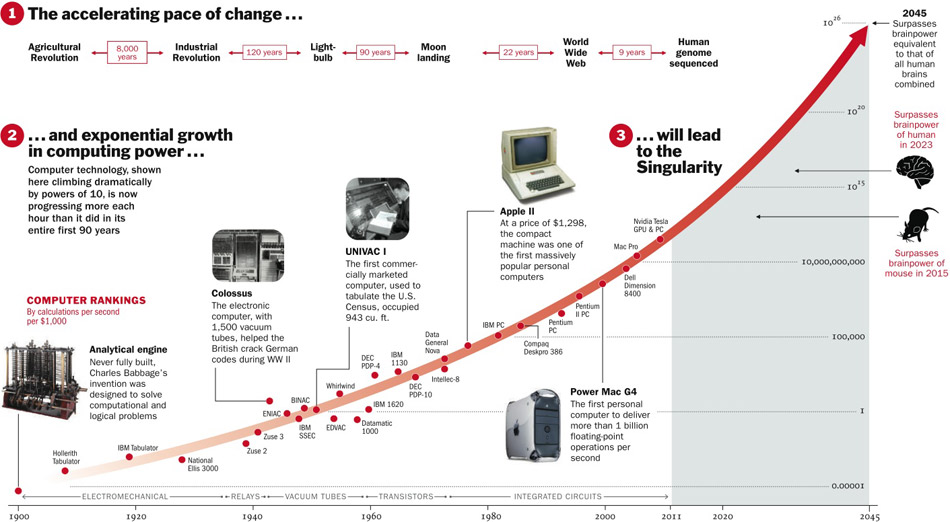
The accelerating pace of change and exponential growth in computing power.
Time Magazine
One aspect of technological innovation that has long impacted production, manufacturing, and the provision of services is automation.
The following TedTalk video provides one perspective on the impact that automation has on employment, challenging the notion that automation has taken away jobs, and suggesting that it has actually created more jobs. The talk also goes on to propose what automation will mean to the future of work, as well as predicting the challenges that will be, and will not be, posed to society.
the replacement of manual human actions in the production, manufacturing, or the provision of services processes with automated machinery, electronic devices, or computer code.
Similar to globalization and outsourcing, automation is a controversial topic having both proponents, as you saw from the video, and opponents who feel that its negative impacts outweigh its perceived benefits.
Consider, for instance, the following article, taken from CBC News. The article delivers some thought-provoking projections regarding the negative impact of automation on Canadian jobs:
On the flip side, the following article, taken from the Globe and Mail, provides another perspective, arguing that automation is necessary for the efficiencies that are required for industries to survive.
Work With It: My Opinion Piece on Technological Innovation
Your task is to consider the arguments put forth in the videos and articles, as well as information acquired from additional research, prior knowledge, and if possible, personal experiences.
After you have made your selection of supporting materials, your will write a 300 word opinion piece, naming it “My Opinion Piece on Technological Innovation”, either challenging or agreeing with the ideas put forth. Again, there are no correct answers here, just good assertions and arguments backed by solid research and data from reliable sources, which should be included in your written work.
Remember, as well, to cite the sources of your findings.
 Tip
TipHow to Write a Strong Opinion Piece
When you form an opinion, you make up your mind or decide what you think about something. While forming an opinion you might ask yourself questions:
- What do I already know about this?
- What are my instincts or experiences with this?
- How do I feel about this?
- What is my position on this topic?
Supporting your opinion is a key skill. Opinions are often based on instinct or subjective experience. You can strengthen your point of view and be more likely to persuade others to agree with your opinion if you back your reasons with strong support.
In order to help others understand your opinion, you must both share the reasons why you feel the way you do, and provide support for your reasons.
Different types of support include:
- Anecdotal: memoir, narrative, personal story, incident;
- Testimony: declaration about truth, proof, confirmation, evidence;
- Statistics: data, figures, facts, evidence, conclusions; and
- Analogy: comparison, metaphor, resemblance, simile.

Economic and societal trends are changing the landscape of today’s workplace, labour market, and economy, and causing (some would argue) reduced job security, increasing the prevalence of part-time and contract work, and causing more frequent career changes. Such trends may impact the design of your future. Having an awareness of these issues is pivotal in helping you to recognize the opportunities, and potential challenges, afforded by these trends. This information will help you to make decisions that are right for you.
Think About It: Trends: How will I Embracing Opportunities and Manage Change
What impacts do you see currently, or believe that you will see, in your own community as a result of globalization, outsourcing, and technological innovation?
How will you actively embrace the potential benefits afforded by these trends and avoid the possible obstacles they may also deliver?
Save your responses in your Portfolio
 Introduction
 Learning Goals and Success Criteria
 Learning Skills and Work Habits
 Rubric 1