
HHS4U
Unit 3: What Shapes Intimate Relationships?
Activity 2: Healthy Relationships

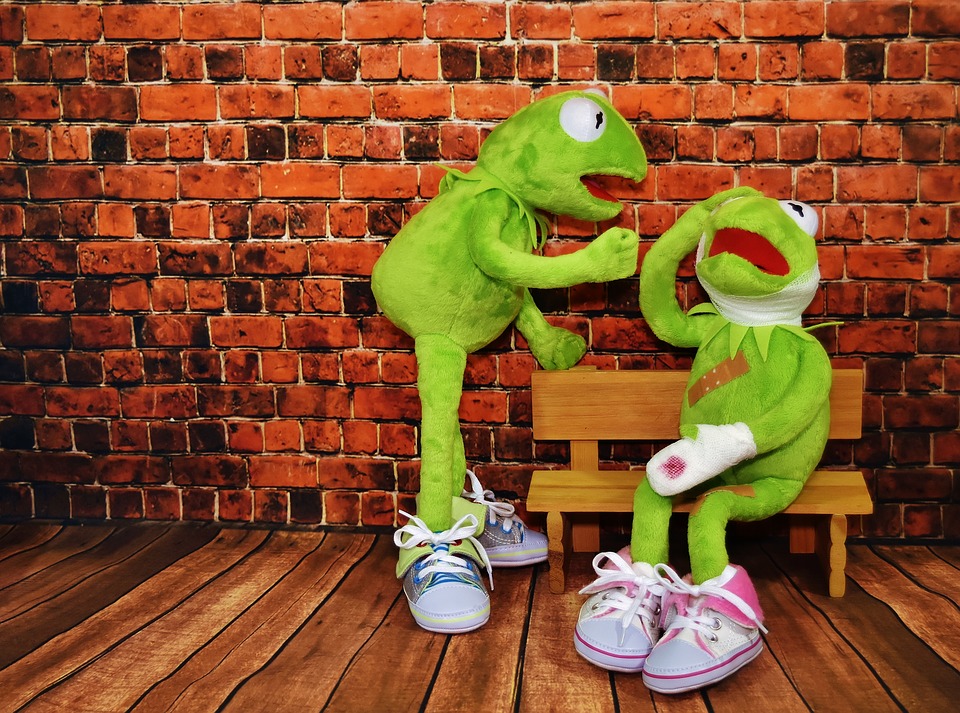
 What Does This Picture Say?
Carefully consider the image above.
- What issue(s) that people face in relationships are conveyed by this image?
- Is there any other way to interpret this image? Brainstorm as many possible issues that one might see in this image. Try to consider both positive and negative issues.
- Using search engines, find a quotation or image that represents relationships. The relationship can be a friendships or a romantic relationships. It can also be a positive or negative issue or experience, such as moving on from a break up, finding happiness, overcoming abuse, etc. Why doyou think it is meaningful to consider in a course where relationships are being studied. Be sure to provide the proper reference for the quotation or image chosen.

Safe Space
Be sure the information that you share is appropriate for all audiences. You do not have to explain why the quotation or image is meaningful to you, but rather why it is meaningful when studying relationships. Do not share sharing personal, intimate details.
Identifying Healthy and Unhealthy Relationships
People have many different types of relationships in their lives. Perhaps it’s a relationship with a parent, or a neighbour, or a colleague. For this activity, you will discuss intimate relationships, or relationships where individuals form close bonds with one another.
The meaning of an intimate relationship is different for everyone. For some it might signify a romantic relationship; for others, it might be a friendship. Regardless, when individuals form relationships it is important to understand the difference between a healthy versus an unhealthy pairing. Sometimes the differences are subtle.
 Healthy vs. Unhealthy
Using search engines and databases, research the factors that are related to healthy and unhealthy relationships. You may wish to use this template to organize your information.
Suggested Resources - Healthy vs. Unhealthy Relationships
Safe Space
Some of the issues you are about to encounter deal with sensitive topics and might be triggering or disturbing to some students.
 Healthy, Unhealthy or Both?
In the interactive below, turn the dial to indicate if each situation is healthy and/or unhealthy. Once you have set the dial, drag the factors that need to be considered onto the purple target.
 Healthy vs. Unhealthy: My Thoughts
Think about the following questions
- As you completed the Healthy vs. Unhealthy learning activity, did you have any concerns with any situations? Was there something you disagreed with or something you didn’t understand? Explain.
- Why do you think “respect” showed up in every situation as a factor to consider? How important is respect to you?
- What was the overall message that you learned from completing this learning activity?
Establishing a Healthy Relationship
Watch the following video and answer the questions below:
- Explain the following key concepts that are shown in this video:
- Insight
- Mutuality
- Emotion regulation
- Describe your thoughts on the video. Do you agree with the concepts presented? Do you disagree?
Dealing with Domestic Abuse and Intimate Partner Violence
Safe Space
The information you are about to encounter is sensitive and may be triggering to some people.
Domestic abuse and/or intimate partner violence is a frightening situation that is experienced by Canadians in a variety of relationships.
Your task is to research domestic abuse and/or intimate partner violence. You should identify:
- statistics on groups of people most impacted by domestic violence and/or abuse.
- strategies to avoid or respond to violence and abuse in relationships.
You may wish to use this template to help you organize your information.
Submit your findings to your teacher. Your teacher will provide you with feedback on your ability to identify concepts and outline strategies to deal with domestic abuse and intimate partner violence.
Suggested Resources - Domestic Abuse and Intimate Partner Violence
If you want to view any links in the following pdfs, right click and select "Open Link in New Tab" to avoid leaving this page.
- Statistics Canada- Section 3: Police-reported intimate partner violence.
- Ministry of the Status of Women- Statistics: Domestic Violence.
- Walking Together: Ontario’s Long-Term Strategy to End Violence Against Indigenous Women.
- Recognizing and Responding to Intimate Partner Violence Resource Guide for Refugee Resettlement Assistance Programs in Ontario.
 Introduction
 Learning Goals and Success Criteria
 Learning Skills and Work Habits
 Rubric 1