
Introduction to Social Science
A Campaign for Social Change

MINDS ON
“
Be the change that you wish to see in the world.
~ Mahatma Gandhi
Change can occur as a result of many different actions.
Chief Theresa Spence was determined to prove how committed she was to having the Canadian government take First Nations' concerns seriously. Her attempt to change the government's approach to dealing with Indigenous peoples inspired Spence's six-week hunger strike. This, in turn, brought international recognition to the challenges faced by First Nations' communities.


While diving in Greece, 19-year-old Boyan Slat discovered that there is more plastic than fish in the water. This inspired him to take action: he has come up with a plan to clean up half of the garbage in the Pacific Ocean. Using the Internet as a tool for his message, Slat states "The Internet really made this project possible... You can do an awful lot of things with a limited amount of resources." He is the Founder and President of the Ocean Cleanup Foundation and is determined to see change happen within the next decade.
Source
There is no one way to ensure change – no singular path. It is dependent upon the person, the situation, and the audience.

ACTION
Most people have very full days – we have schoolwork to do, perhaps also a job, as well as our own needs and, perhaps, those of our families to address. Because of these demands, it is very easy to look at our own lives, and not outwardly at the larger community.
If you take a moment to consider the situations of those around you, you may discover that not everyone's needs are being addressed. There may be someone in your community who is struggling with unemployment or inadequate housing or has issues with mobility and accessibility. Sometimes, it takes having a personal connection with someone to open your eyes to what supports may or may not be available within the community. In other instances, awareness can come from observation, the media, or other direct or indirect sources.
 Around Me
What problems or needs you have observed around you in your daily life? Consider work, community, and school, as well as conversations with family members and friends.
Start by describing the problem that you perceive, and then provide evidence. Have you observed issues personally? Have you had conversations with those affected?
Finally, suggest what you could do to begin to rectify the situation.
What is Social Activism?
Activism means to take action to effect social change. Activism can look very different depending on a number of things – the time, place, issue, and the level and kind of support offered by people. Recently, there has been a worldwide resurgence of small-scale activism or microactivism. This might range from organizing a small local event, to distributing information, or to raising awareness through conversations.
Activists often consider questions such as "How can I make a difference?" or "What do I need to do to be an instrument of change?"

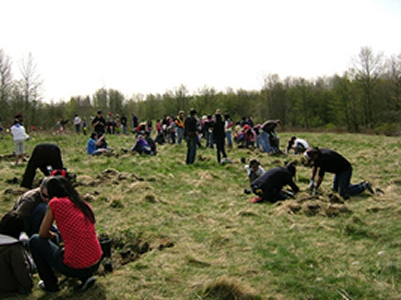
People also realize that although they are only individuals, they can indeed make a difference with their actions. Better yet, by banding together with others, they create grassroots movements. This can be seen in the eating local (or locavore) trend that shows how the shared ideals of a group can create a genuine movement if people are dedicated to a cause.
The trend of armchair activism typically involves lending support without leaving your armchair, perhaps by blogging to raise awareness or supporting online petitions such as those found at change.org.
Sometimes those who set out to create change are known within their communities. Segun Akinsanya, the founder of a youth program called Bright Future Alliance, is an example of an activist who has achieved this kind of recognition. Sometimes, like Craig Kielburger, founder of Free the Children, activists gain worldwide fame because of the magnitude of change they evoke.

The important thing to remember is that in both instances, they are individuals who have identified a need and taken action to create change. Click on each tab in the interactive below. Review the questions, then watch the videos.
TakingAction
While the issues depicted in the videos may or may not affect you personally, or be of concern in your community, they are examples of how one person can create change. Keep the examples and techniques in mind as you begin to read about the course culminating task.
Be(ing) the Change – The Course Culminating Task
The design of this course may be different from those that you have previously taken in that you will begin the culminating task now and work on it throughout the course. In fact, every lesson within the course is designed to help you consider and plan your culminating task. Your ultimate goal will be to create change. The path to this change, and the issue you choose to pursue, will be yours to determine.
You will begin by identifying an issue that you believe needs to undergo change. The quotation at the beginning of this lesson from Gandhi states that you should "be the change that you wish to see in the world." This task is an opportunity to do exactly that.
The topic that you select might be a very local issue that is specific to your neighbourhood, or it might be a global issue that you believe needs awareness and local action. Perhaps you already have an issue in mind that that you would like to learn more about and become involved in. Maybe it impacts you directly, or you have watched other people in your community struggle in this area – regardless, select an issue that you feel is worthy of your effort and attention.
Each of the four units in this course will end by having you return to work on your course culminating task.
- Unit 1 – Selecting your topic
- Unit 2 – Researching your topic
- Unit 3 – Designing a plan of action
- Unit 4 – Causing change
- Unit 5 – Reflecting on your work

Each time you revisit the culminating task, you will add to your understanding through research and planning.
Conducting a Needs Assessment
Your task in this lesson is to determine a topic. You may already have a topic in mind, or you may still have some thinking to do. Completing a needs analysis will be valuable in both of these situations. One of the keys when embarking on a social change movement is to ensure that other people also identify your cause as one that is worthy of effort. Because your ultimate goal will be to create change, and because that cannot be done effectively without the support, or at the very least, the interest of other people, it is crucial to collect some basic information by completing a needs assessment before beginning to work on a topic.
After reading the information below on needs assessments, you will be asked to create one of your own using a provided template.
NeedsAssessment
 Creating the Needs Assessment
Download this template for your needs assessment. The first three questions are provided, but you will need to add three more questions that will help you personalize your assessment. Remember that the goal is to be open to the suggestions of the people that you speak with, so try not to be so specific that you guide their opinions.
Complete your questions within the template before you administer your needs assessment in the next assignment.
Completing the Needs Assessment
Now it is time to use it to gather information.
You will need to complete a minimum of five different needs assessments, each one through a conversation with a different person.
Consider the people that you are selecting. If you have a topic in mind that involves the youth of the community, perhaps this is the group you wish to target for your needs assessments. If you are still looking for a topic, perhaps a wide cross-section will yield the best variety of ideas.
Remember that when you are asking the questions sometimes the best thing you can do is give the person time to think about the question. Don't assume that just because people have finished speaking, they are completely done with their answer.
Complete at least five needs assessments.

CONSOLIDATION
Finalizing your Topic

Now that you have compiled the feedback from your needs assessment, the next step is to formally select a topic. Take some time to consider your choice as it will be the basis for the major assessment in this course. It is important that you believe this to be a worthy topic as you will be putting a great deal of effort into learning more about it, as well as designing and executing a change strategy.
If you are considering a very large topic (for example hunger), begin thinking about how you can tackle this on a local scale. For the scope of this course, you need to ensure that you can create and accomplish reasonable goals. Most likely you have identified a topic from your completed needs assessment, however if you are still in need of suggestions, consider the following options:
- Physical Accessibility to Public Buildings in your Neighbourhood;
- Access to Extracurricular Activities for Youth;
- Trash on Local Streets and in Public Places;
- Disability Justice;
- The Dying Downtown Core of a City;
- The Bystander Effect and Cell Phones;
- Plastic Water Bottles and the Environmental Effects;
- Social Media and Gender Representation; or
- Media Representation of Race.
Proposing a Topic
When you have gathered the required number of completed needs analysis surveys, outline the impact that you would like to have with your social change activity by stating your attainable goal. Address the following topics:
- your chosen issue;
- the specific focus of your chosen issue (on a local or smaller scale);
- the present condition of your issue (what does it look like now?); and
- what would you like to change (what does it look like when you're done?).
The proposal of a topic is simply a beginning point. Take the time between now and the end of Unit 2 to think about this topic. At that point, you will be given the opportunity to refine or change your topic if needed.
However, it is a good idea to be thinking about the specific details regarding your action plan as you complete other activities in the course, and as you go about your daily activities. Have conversations with people about your chosen topic. See if you can identify visual evidence related to your plan. Look at other change campaigns and evaluate whether the strategies that they have utilized may be helpful for you, as well. This task is best done a little bit at a time, and any work now will be beneficial as the course progresses.
 Learning Goals and Success Criteria
 Learning Skills and Work Habits