
Towards Right Action: Exploring Ethics
Ethics IRL

MINDS ON
“
If I am not for myself, then who will be for me? And if I am only for myself, then what am I? And if not now, when?
~ Rabbi Hillel
Let us assume that, given the opportunity, you always choose the option that favours the ‘greater good.’ Excellent! Give yourself a big pat on the back. You’re awesome!
But wait a minute, let’s examine that. First off, ask yourself what compels you to act in such an altruistic manner?
Did you make that choice based on your inherent nature to do good, or were you coerced into acting a specific way in order to align with an expectation - a commandment from the Divine, a spiritual pathway, a social convention, or a fear of punishment? How much of your decision was based solely on you, your values, your independent thinking?
This is an important distinction.
As David Hume points out, the questions regarding the nature of free will, while often discussed in Metaphysics, also have ramifications for Ethics. Consider, having free will(definition:David Hume thought that free will - or "liberty," to use his term - is simply the “power of acting or of not acting,” according to the determination of the will: that is, if we choose to remain at rest, we may; if we choose to move, we also may.) means that you are free to choose your course of action - so can we be truly ‘good’ if our decisions are not a product of free will? When faced with a decision, if we take the one that will get us the highest praise or the least punishment, are we truly acting ‘good,’ or merely ‘acting?’
MakingEthicalDecisions
 Making Ethical Decisions
After some consideration, answer the following questions. Along with your reasoning, make sure to include real life scenarios that illustrate and support your thought process:
- What does each of these approaches to making ethical decisions say about your level of freedom to make a unfettered decision about a ‘right’ or ‘wrong’ action? Which approach, in your opinion, is the most restrictive? Explain why.
- In relation to the previous question, if you are not free to make either an altruistic or egoistic decision, because of expectations or duty, then are you a truly ‘good’ person if you are coerced in making an altruistic choice?
- Is acting ‘good’ and being ‘good’ the same thing? Explain why or why not.
- For a person’s actions to be considered “good,’ should we question the source or reason of her/his intentions, or just accept the action as good, regardless? Elaborate on your response.
- Think about the debate between free will and determinism. How do the implications of this debate inform our personal understanding and decision making with regard to right actions and wrong actions?

ACTION
To Whom Do We Owe Our Moral Responsibility?
When we get into ethical debates, we assume that humans make their own choices, but, as noted in the Minds On section, while those ‘choices’ are often influenced by external pressures, such as expectations, duties, and fear of consequences, we still assume that people are accountable for what they choose to do.
However, not everyone accepts the idea that humans are fully responsible moral agents.
For those who believe in a Supreme Being, behaving morally has its rewards, and behaving immorally is met with punishment - especially in the afterlife. Even religions that have a different system of reward and punishment, such as the Karmic religions, believe that morally 'right' actions are rewarded with higher reincarnations than 'wrong' ones. So what happens if you don’t believe in a Supreme Being or an afterlife? What would make one behave in a moral manner?
Humanism
Many ethical systems argue that it is not necessary to evoke a belief in a Supreme Being to make humans behave morally. Confucianism, Aristotelianism, Utilitarianism, and Atheism, for example, argue for a morality based on Humanist values.
Humanism is a system of thought that incorporates ethical, metaphysical, epistemological, and political philosophies, the parts of each branch of Philosophy that focus on human dignity, interests, and values. Humanism promotes a way of thinking that assumes that humans have the potential to solve their own problems through the use of logic, reason, and a belief that individuals are ultimately good and want to flourish and succeed.

The emphasis of Humanism is that we must take responsibility for our own lives, communities, and the world in which we live. We have individual freedom to make choices, but the expectation is that those choices are made responsibly, with compassion, tolerance, and an aim to make a more just society for all.
How Do We Make “Good” Decisions in the Real World?
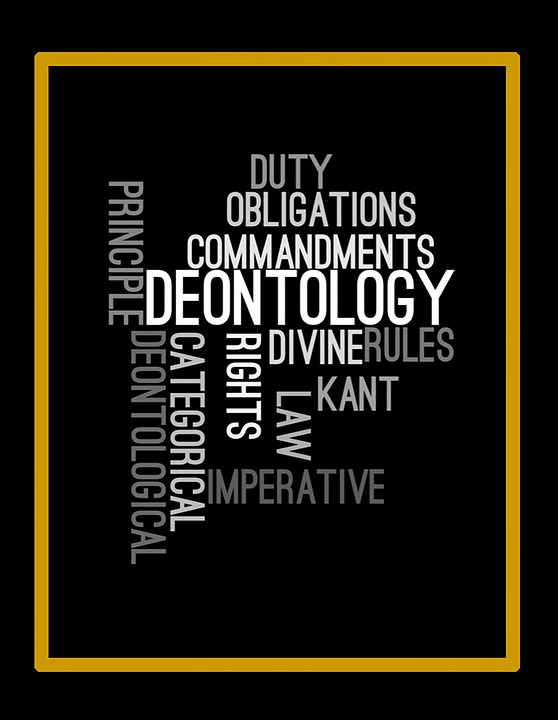
So what can the process by which we make ethical decisions tell us about our culture, or belief systems, and ourselves?
In terms of Philosophy, the doctrine of Applied Ethics is probably one of the most personal and contentious as it is something that we must confront about ourselves on an almost daily basis. Applied Ethics routinely asks us if we truly ‘walk the walk we talk’ - do we really act in the ethical or moral manner that we say we do?
For example, as a society we say that lying is wrong, dishonest and morally bankrupt - yet how often do we justify lying by saying that we are ‘sparing someone’s feelings’ by using a ‘white lie?’ Sometimes, do we lie to get out of an awkward social situation - or even a speeding ticket? Or to spare ourselves of a consequence we don’t want to face?
In other words, as a society we uphold the belief that it is important to act ethically, yet in real, everyday life, we often act unethically.
Applying Ethics IRL (In Real Life)
On any given day, we are faced with a number of situations that require us to make ethical decisions. Most of these times, those situations are minor, or have very few consequences. However, sometimes we are required to take a stance on an issue - one that requires us to consider more carefully how we will respond. Whether this is a decision that has direct and more serious consequences to ourselves and to those close to us, or whether we have to defend or counter a particular point of view - we may find that we have to carefully consider where we stand ethically on an issue before committing to a course of action.

CONSOLIDATION
“
We are discussing no small matter, but how we ought to live.
~ Socrates in Plato’s ‘Republic’.
Eudaimonism: A Guide to Making Ethical Choices in the Real World?
Eudaimonia is found in the writings of Aristotle. Mill’s Utilitarianism has been referred to as ‘eudaimonistic’ as its focus is on human ‘well-being.’ But what exactly is ‘eudaimonism?'
Eudaimonism is defined as doing good and living well in the here and now, and ultimately leaving the world a better place for those who come after. It is a moral philosophy that defines right action as that which leads to the ‘well-being’ of the individual.
In other words - if it feels good, then it must be good.
This may not seem as self-serving at first glance.
The basis of Epicurean Ethics, according to its creator, is that pleasure is the highest good which equals happiness. The theory, according to Epicurus, states that everything we do is with the purpose of gaining pleasure for ourselves.
That may seem, hedonistic, but, at the same time, the Epicureans also spent a great deal of energy trying to make plausible the idea that all activities - even those that are self-sacrificing, or done solely for the sake of virtue or what is noble - are in fact directed toward obtaining pleasure for oneself.
The fear that some may have - that if one were to live with the goal of self-happiness, that people would abuse others for their own self-serving means - was countered by Plato who pointed out that even "evil" people feel guilt at doing something which is clearly wrong, even when there is no fear of punishment. According to him, doing what is wrong simply makes people miserable.
Consider then, devoid of any obligation or duty to a Divine Being or the rules/consequences binding society to an ideal - could we make sound, ethical decisions based solely on the concept of ‘if it feels good, then it must be good?’
 The Philosopher’s Notebook
What do you use, personally, to guide your moral and ethical compass? In other words, how do you know when you are doing something good?
In your Philosopher’s Notebook, recount a moment in your life where you were faced with an ethical decision. As hindsight is 20/20, unpack that moment and analyse how you made the decision that you did. Did your decision make anything better? What informed or influenced it? Depending on how far back in your personal history the event was, you may even be able to dispassionately analyse whether the decision you made then ultimately had a positive or adverse consequence for you, or those around you.
Would you, or should you have made a different decision? Explain why.
 Learning Goals and Success Criteria
 Learning Skills and Work Habits