
Chasing Beauty: Aesthetics, Society and Science
What is Art?
MINDS ON
“
Art requires philosophy, just as philosophy requires art. Otherwise, what would become of beauty?
~ Paul Gauguin (1848 - 1903, CE), French Post-Impressionist artist.
From The Guardian Newspaper, May 27, 2016
Pair of glasses left on US gallery floor mistaken for art
Teenager leaves spectacles on floor of San Francisco’s Museum of Modern Art as a prank, leading some to think they were an exhibit
The feeling of slight dissatisfaction that can come with visiting a modern art gallery is a universal one, best articulated as “I could have done that.”
A pair of US teenagers have beaten artists at their own game, pulling off a successful prank at the San Francisco Museum of Modern Art (SFMONA) earlier this week.
While Kevin Nguyen, 16, and TJ Khayatan, 17, were impressed with much of the art on display on their visit on Saturday, they questioned the artistic merits of some exhibits.
Could they do better?
Khayatan put Nguyen’s glasses on the floor below an official-looking piece of paper to see how it would be received by gallery-goers.
The work seemed to hit a chord with the public, striking in its simplicity, yet – probably – a challenging commentary on the limits of individual perception.
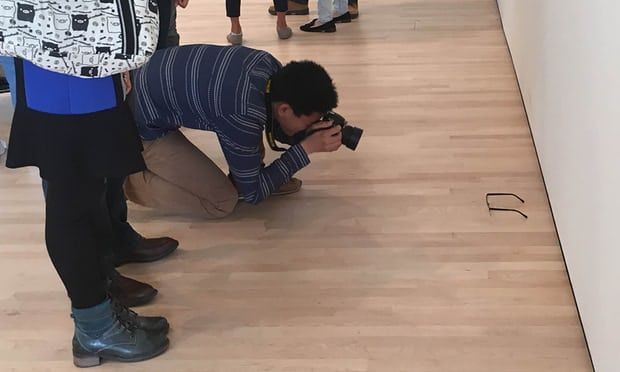
Khayatan told BuzzFeed News that people gathered around the exhibit to view it and take photographs. He, in turn, took photographs of them admiring his work and later posted them to Twitter, where they went viral.
Nguyen shared images, too, noting the awkwardness of having to retrieve his glasses before they moved on in the museum...
Asked how he interpreted the “art piece,” he suggested “the deeper meaning” could be about perception: “Anything in life can be art as long as you provide the insight and help people see what you see.”
Both philosophers John Dewey (1859 - 1952) and Arthur C. Danto (1924 - 2013) proposed thought experiments that posited exactly what happened with the eyeglasses in the gallery.
Dewey’s Finely Wrought Object presents the following:
Suppose that a finely wrought object, one whose texture and proportions are highly pleasing in perception, has been believed to be the product of some primitive people. Then there is discovered evidence that proves it to be an accidental natural product.
Is it a work of art?
Danto’s Randomly Generated Object presents a similar query:
Imagine that we learned that the object before us (which) looks like a painting that would spontaneously move us if we believed it had been painted - say the Polish Rider by Rembrandt, in which an isolated mounted figure is shown mid journey to an uncertain destiny - was not painted at all, but is the result of someone’s having dumped lots of paint in a centrifuge, giving the contrivance a spin, and having the results splat on a canvas, ”just to see what would happen.”
...Now the question is whether, knowing this fact, are we prepared to consider this randomly generated object a work of art?
To sum up all three scenarios - is “art” merely perception?
 But Is It Art?
Consider the following:
Topic 1. Like beauty, is art something that is in “the eye of the beholder?”
Topic 2. Representation versus Expression - is it more important that art “looks like something,” or is it more important that it expresses an emotion?
Topic 3. Art can be categorized by its different forms:
- Visual Arts - Includes for example, sculpture, drawing, painting, photography, cinema, and jewellery making.
- Digital Arts - Encompass a range of artistic works and practices that involve digital technology, including painting, drawing, sculpture, net art, digital installation art, virtual reality, and music.
- Performance Arts - Are often conducted live in front of an audience, and may include music, dance, theatre, spoken word poetry. Are often conducted live in front of an audience, and may include music, dance, theatre, spoken word poetry.
- Music - Includes the mechanics of instruments, notes, scales, rhythm, tempo, chords, harmony, bass, and melody.
- Dance - Is a form of non-verbal communication that is found in most human cultures. It involves human movement with an inferred purpose, such as the communication of an aesthetic or emotional idea.
- Literary Arts - Refers to the art of writing literary works of the creative imagination, including poetry, drama, fiction, and non-fiction.
- Fashion Arts - The art of application of design and aesthetics or natural beauty to clothing and accessories.
- Culinary Arts - The art of the preparation, cooking and presentation of food, usually in the form of meals. Includes such skills as cake decoration, plating, and the production of chocolate.
- Architecture - The art and science of designing buildings and nonbuilding structures.
In your opinion, which of these forms is “art?”
 Who Gets to Decide?
In reference to your response to Question 3 above, and both Dewey’s and Danto’s thought experiments, who gets to formally decide what is and is not art? Should it be the sole right of an art critic, art historian or art academic, or should popular opinion dictate these defining qualities?

ACTION
The Challenges of Defining “Art”
Much like trying to define “beauty,” defining “art” is also problematic.
For whichever definition is suggested, there will be some who disagree with its vagueness or its constraints. As in the case of a pair of Burberry glasses on the museum gallery floor, developing a set of criteria can be subject to differences in perception.
For example, what are the parameters of the criteria?
- Is art defined only by its aesthetic qualities?
- Is art something that must lack utilitarian function?
- Must art have a meaning or an intent?
- Is it “art” because the creator of the work says it is so?
- Is it “art” only when an art critic declares it to be so?
- Is art something that is only made by hand?
- Why do we define some things as “craft” and some things as “art?”
- Can a child’s drawing be considered “art”?
- Can art be considered art if it is temporary - as in a performance piece or installation?
- Does the medium with which an artwork is created dictate its value or worthiness as “art” (e.g., an oil painting on canvas versus a comic book illustration)?
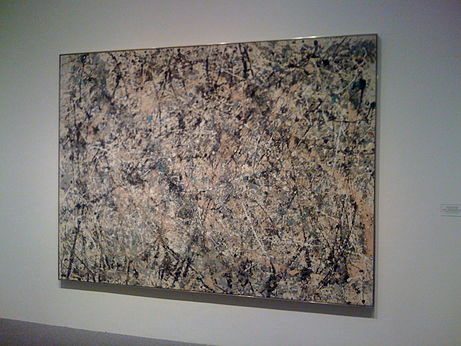
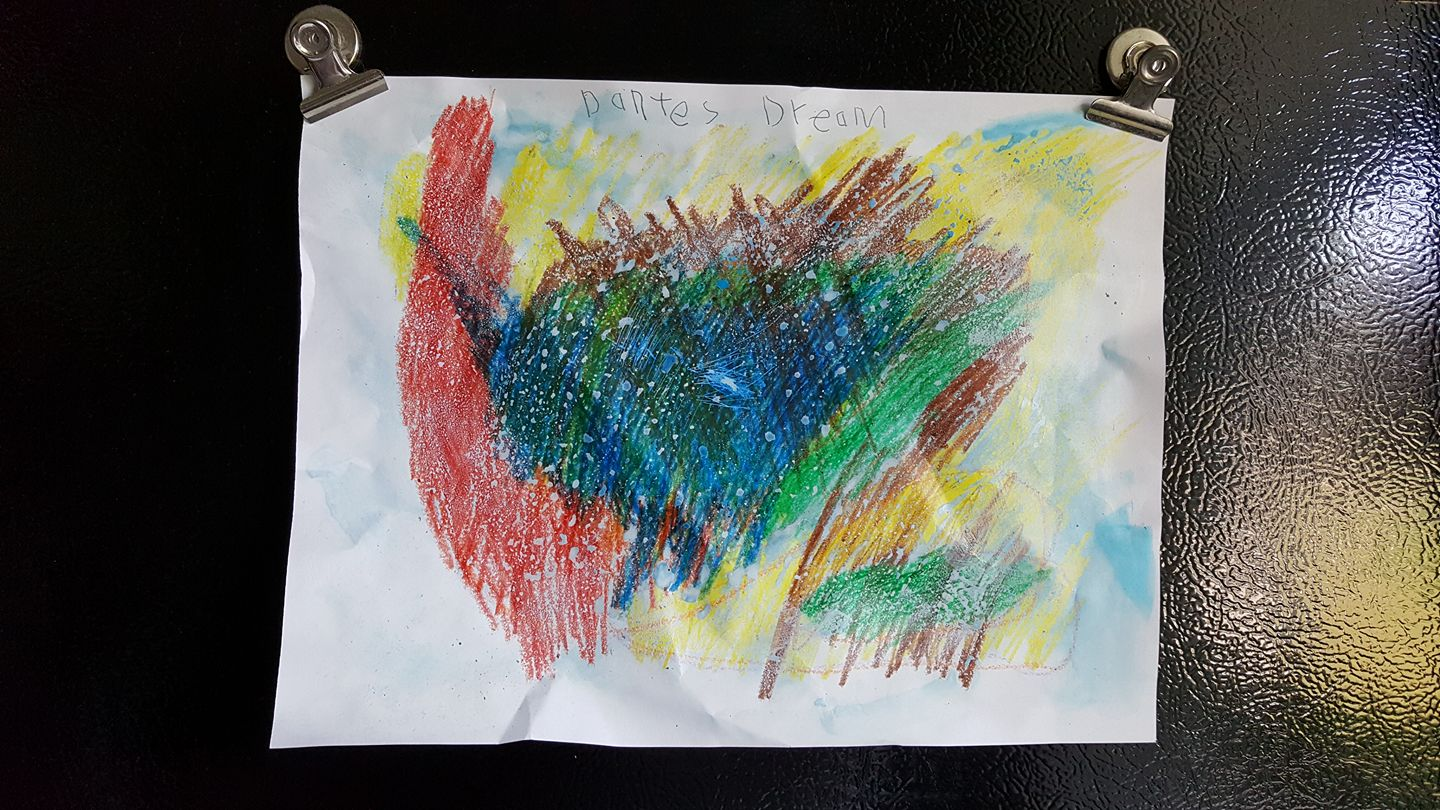
Fridge in kitchen, Marmora, ON.
by Dante Blackthorne
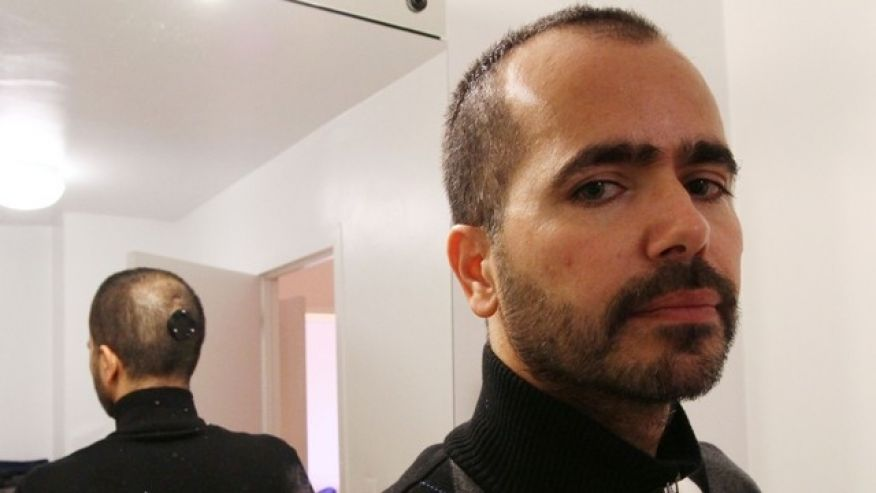
by Fox News
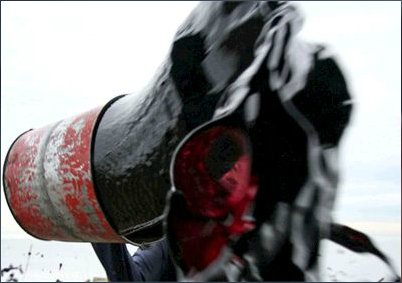


Delineating the Parameters - The Theories of Art
What makes something a work of art - or not - is mainly dependent on the criteria used and the perspective taken. Theories of Art are often attempts to understand the essence of what makes something art. They usually focus on a single key concept, such as “expression” or “representation.”
DelineatingtheParameters
The Impact of Art in Society - Why a “Philosophy of Art?”
In Dialectical Materialism, Russian philosopher Alexander Spirkin (1918 - 2004) wrote the following on the connection between Philosophy and Art:
“No scientifically, let alone artistically, thinking person can remain deaf to the wise voice of true philosophy, can fail to study it as a vitally necessary sphere of culture, as the source of world-view and method. Equally true is the fact that no thinking and emotionally developed person can remain indifferent to literature, poetry, music, painting, sculpture and architecture. Obviously, one may be to some extent indifferent to some highly specialised science, but it is impossible to live an intellectually full life if one rejects philosophy and art. The person who is indifferent to these spheres deliberately condemns himself to a depressing narrowness of outlook.
Does not the artistic principle in philosophical thought deserve the attention of, and do credit to, the thinking mind, and vice versa? In a certain generalised sense the true philosopher is like the poet. He, too, must possess the aesthetic gift of free associative thinking in integral images. And in general one cannot achieve true perfection of creative thought in any field without developing the ability to perceive reality from the aesthetic standpoint.”
Aesthetics has an influence on other areas of study. Consider all the forms of art - from visual arts to architecture - and you can understand why there is a Philosophy of Art. Art records our history, is expressed through mathematics, reflects our social and cultural development, and can provide insight into the power structures that make up our society.
AlternateLenses

CONSOLIDATION
Does Art have to be Beautiful? A Return to Aesthetics
At the beginning of this activity, you were asked to share your definition of art. Even before you were introduced to the theories of art, you most likely had an idea of what you liked, and what you would consider to qualify as art.
You had a sense of an aesthetic.
As addressed in the first activity of this unit, aesthetics is a branch of philosophy dealing with the nature of beauty, art, and taste, and with the creation and appreciation of beauty.
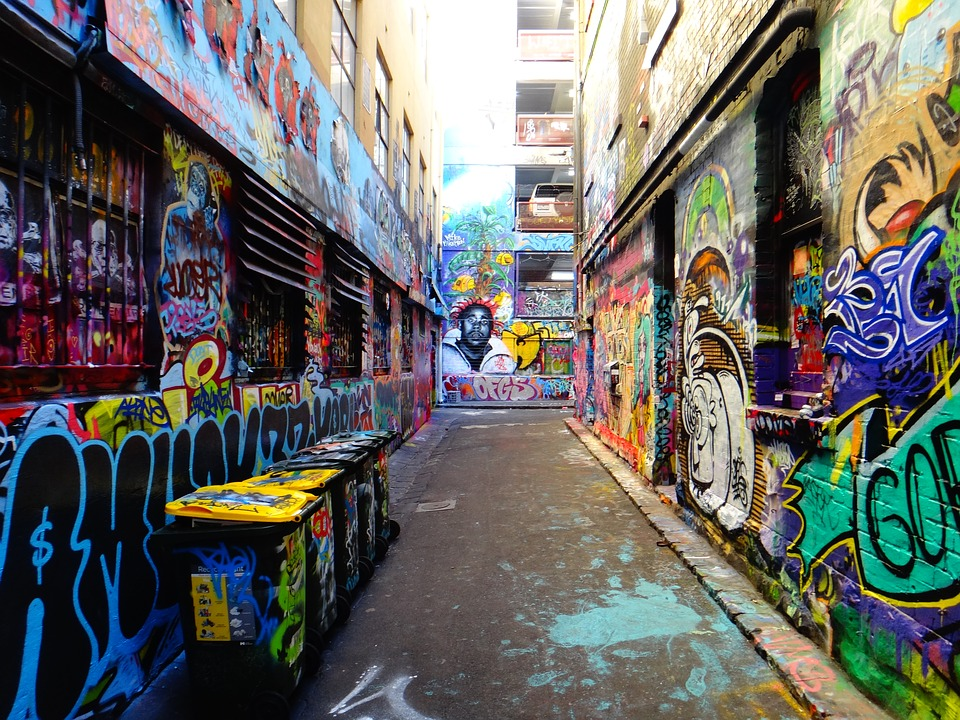
In this activity, we looked for a definition of art. This meant exploring art forms that may have been outside your aesthetic experience.
So what is the foundation for your aesthetic judgment? How would you explain to someone why you like one artwork over another?
 Learning Goals and Success Criteria
 Learning Skills and Work Habits