
Chasing Beauty: Aesthetics, Society and Science
Art Criticism

MINDS ON
“
When art is made new, we are made new with it. We have a sense of solidarity with our own time, and of psychic energies shared and redoubled, which is just about the most satisfying thing that life has to offer... This being so, it is a great exasperation to come face to face with new art and not make anything of it. Stared down by something that we don't like, don't understand and can't believe in, we feel personally affronted, as if our identity as reasonably alert and responsive human beings had been called into question. We ought to be having a good time, and we aren't. More than that, an important part of life is being withheld from us; for if any one thing is certain in this world it is that art is there to help us live, and for no other reason.
~ John Russell (1919 - 2008), New York Times Art Critic. The Meaning of Modern Art: History as Nightmare.

Excerpt from the Toronto Star, Wednesday, July 26, 2017.
By Tim Kelly
Markham residents have beef with huge cow sculpture
Massive chrome sculpture on stilts in Cathedraltown neighbourhood caught many residents by surprise.
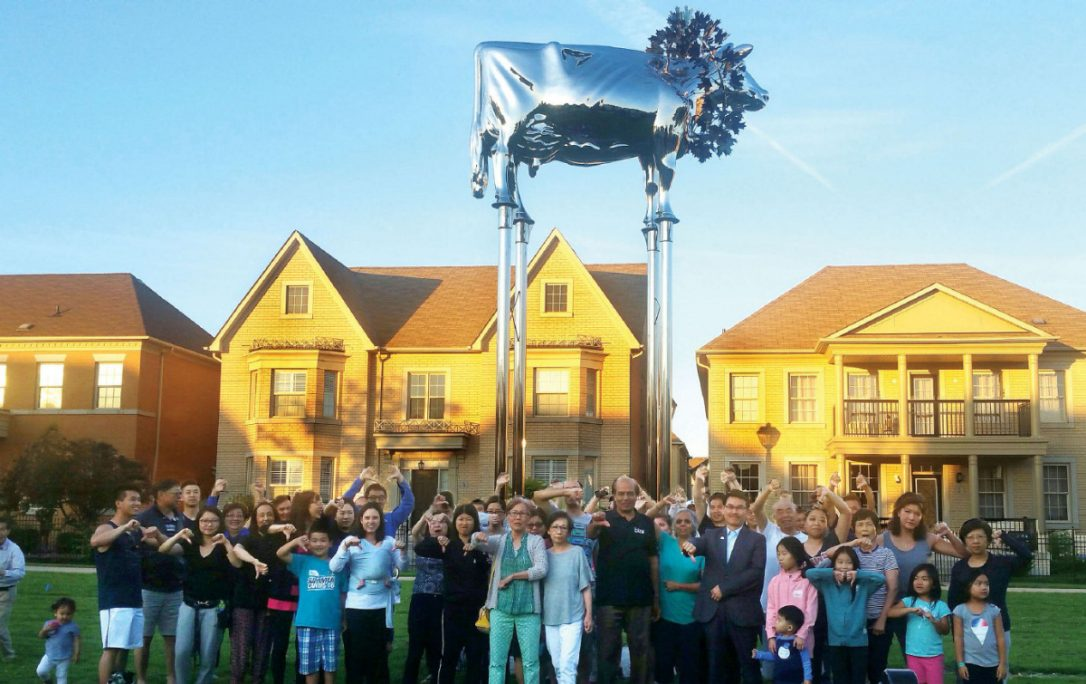
Residents of a Markham neighbourhood want a towering cow sculpture installed 10 days ago by the city to just moooove on.
The unhappy people gathered Tuesday night to give local councillor Alan Ho, who voted last year to approve the chrome statue, a piece of their collective mind.
Ho was in huge backtrack mode as resident after resident slammed him for supporting the statue in a large parkette on Charity Cres. in the Cathedraltown neighbourhood. He urged them to gather a petition opposing the artwork and to head to council at its first meeting in September to tell elected officials exactly what they think.
The cow, called Charity, Perpetuation of Perfection, was apparently a prize-winning milker for the donor and the statue is dubbed “Brookview Tony Charity.”
Under intense questioning from residents at the site of the statue, Ho admitted the donation of the statue was valued at $1.2 million.
But he insisted the donation cost the City of Markham and taxpayers nothing.
Residents were udderly unimpressed.
Tammy Armes, a member of the Cathedraltown Ratepayers Association, said the sculpture caught everyone by surprise.
“This is really a shock for us; it’s not a small cow. It does not belong in this community,” Armes said.
Danny Da Silva, who lives right in the sightline of the sculpture, was blunt in his assessment of it: “I hate it. I don’t like to be forced to look at this, but I have to unless I don’t want to come out of my house anymore.
“I think it’s actually kind of disturbing looking. I come from a Christian background and this is actually one of the worst things you can do, is to raise a calf; it’s facing the cathedral. Who’s going to want to buy the house, there’s very little to admire,” he added.
Da Silva suggested it be moved to another location, like the carousel in downtown Markham.
Ho said he believed the statue belonged in another location but that the donor insisted on the current location and council agreed. He said if the statue does get moved it’s not clear whether the donor or the city will have to pay the cost.
NIMBY!
NIMBY is an acronym meaning “Not In My Backyard” - and clearly, not in this Markham neighbourhood. What constitutes “Art” is a matter of perspective.
Let us look at the facts, as presented in this article.
- Last year, local councillor, Alan Ho, voted to approve the installation of a large chrome cow statue in the neighbourhood of Cathedraltown.
- According to Tammy Armes, a member of the Cathedraltown Ratepayers Association, the local residents did not know that this statue was being installed. They were not part of the selection or approval process, and had no opportunity to voice their disapproval.
- According to the councillor, Alan Ho, the artwork has been valued at $1.2 million, and was a donation - no taxpayer money was used to buy or erect the statue.
- The donor was very insistent about the location of the statue.
- The residents have been urged to gather a petition for the removal of the statue from the public park in their neighbourhood.
- If the statue is removed, Councillor Ho is not sure if the donor will pay for the change in location - the city may have to foot the costs, instead.
 NIMBY! Art, in the Eye of the Beholder
In the past two activities of this unit, we discussed how we define "beauty" and "art," with much of the discussion focusing on the notions of subjective taste and perspective.
In the case of the statue, Charity, Perpetuation of Perfection, the local community has been very critical of the artwork, seeing it less like “art” and more like an “eyesore.”

Consider your thoughts about this artwork. Use two or more of the following prompts to guide your response.
- In this situation, whose definition of “Art” is most valid? The donor who financed it, the council that approved it, or the residents who must live with it on a daily basis?
- As part of his defence of the artwork, Councillor Ho mentions that the statue is worth $1.2 million, and that it cost the taxpayers nothing - including its installation. Should the monetary value of an object be a deciding factor as to its worthiness as “art?” Should the fact that it was “free” be reason enough to accept and erect the object?
- In addition to the previous question, Councillor Ho has suggested that removal and relocation of the artwork will possibly cost the taxpayers, as the donor was very insistent on placing it in this neighbourhood. Should the threat of possible costs be used to silence the detractors into accepting this statue and ceasing their criticism?
- Hypothesize this: the statue was placed in a public park and approved by a local council. What precedent may be set for public art if critics can have something that does not suit their tastes removed?
- Do you consider the chrome cow to be "good" art or "bad" art? How did you make this determination? Would you oppose or approve of it if it were installed in your neighbourhood? Can a determination of aesthetic worth be objective, or is it always a matter of perspective? Use your knowledge gained in the two previous activities to justify your responses.
- What impact, if any, would one's own personal religious beliefs have on his/her aesthetic judgement in this case?

ACTION
Who Decides What is Art?
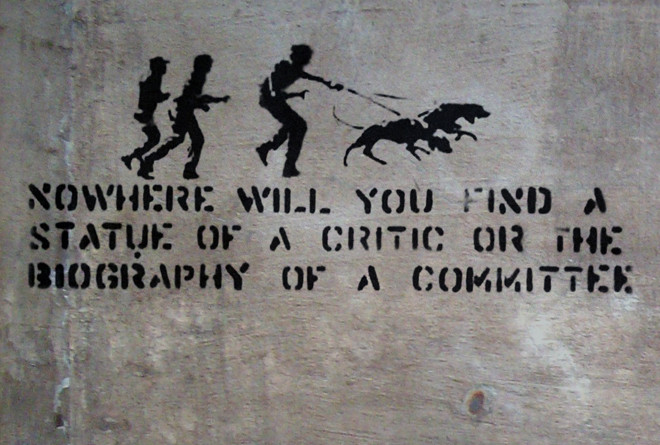
As we discovered in Activity 2 of this unit, defining what makes an object a work of art can be a rather convoluted process. Moreover, who gets to make the judgement is an equally complicated argument. At the heart of this debate is whether “Art” is merely a matter of perspective and a lens of perception.
The Institutional Theory of Art is a theory about the nature of art that holds that an object can only become art in the context of the institution known as "the artworld."
It was Danto who first coined the term, artworld, a term that encompasses the artists, critics, curators, collectors, and art dealers - basically everyone involved in producing, commissioning, presenting, preserving, promoting, chronicling, criticizing, and selling fine art. (Art World_Wikipedia).
Inherent in this definition though, are some obvious issues:
- There is no one universal “artworld.” Instead, there are several overlapping, intersecting “art worlds,” often with their own perception of the world, and subsequently, their own definition as to what qualifies as “Art.”
- A definition that includes the term, “everyone,” does not necessarily mean that every voice is in consensus, or is heard equally. As we have seen in the previous two activities of this unit, historically and currently, some voices and perspectives are ignored or marginalized.
Nevertheless, the concept of an Institutional Theory of Art, first outlined by Danto, has been the theory that all subsequent theories have either supported or rejected, ever since its inception.
For example, George Dickie, in his, Aesthetics: An Introduction, built upon Danto’s idea by stating that a work of art, in the classificatory sense, is:
- an artifact,
- on which some person or persons acting on behalf of a certain social institution (the artworld) has conferred the status of candidate for appreciation.
Note the inclusion of the words, “persons acting on behalf of a certain social institution” here - indicative of a certain isomorphism(definition:The idea that the similarities of one organization to another, be it the processes or structure, are the result of imitation or independent development under similar constraints; a homogenization around the world through institutionalization.) - which is why there are those who confront the institutionalization of the artworld.
This brings us back to the issue with Charity, Perpetuation of Perfection. Not everyone was in agreement as to the worthiness of the statue to be considered “Art;” however, some people’s opinions were considered more worthy than others.
Arthur Danto and the Brillo Box
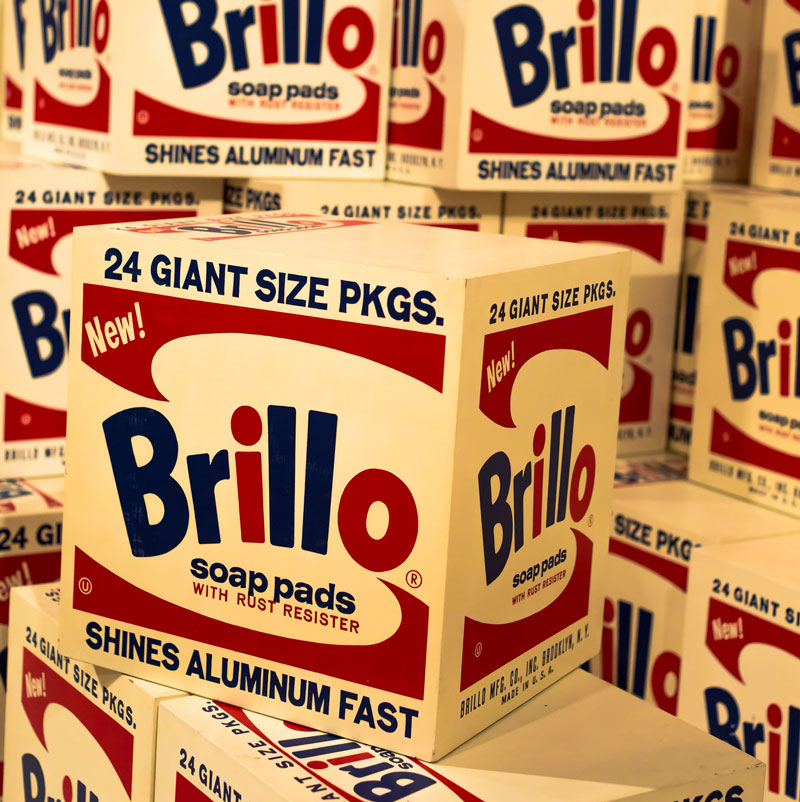
In 1964, art critic Arthur Danto visited the Studio Gallery in New York to see an exhibit of Andy Warhol’s Brillo boxes.
That visit changed his life.
It wasn’t that Danto was unfamiliar with Warhol’s work - he had seen the paintings of soup cans and other items from popular culture that Warhol was already notable for - but it was Warhol’s Brillo box sculptures - silkscreened plywood facsimiles of actual Brillo boxes, virtually indistinguishable from the real thing - that gave Danto reason to pause.
Side by side, who would be able to tell the difference between the real Brillo box and the sculpture? And if this was the case, what made one of the boxes an artwork, and the other an ordinary object?
In his 1964 essay, “The Artworld,” Danto offers an explanation:
In a nutshell, what Danto is saying is that for Warhol’s Brillo boxes to be considered “Art,” there had to exist a specific perspective to allow for its inclusion in the definition - the audience must accept a specific theory of art, a way of seeing, to accept the Brillo boxes into their perception of art.
In your opinion, is Danto correct? To accept an object as “Art,” the audience just needs to find a new way of subjectively perceiving based on the prevailing worldview and changes to art theory? Is defining “Art” based entirely on accepting and conforming to whatever is the currently prevailing ideals of Art and Beauty?
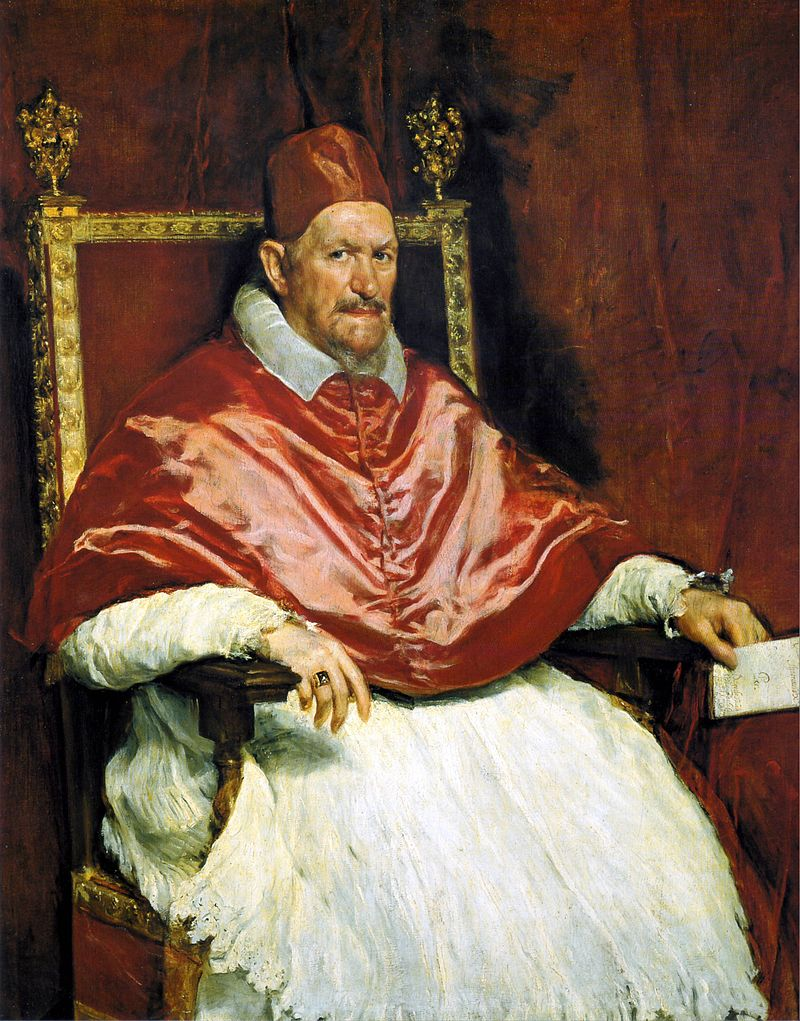
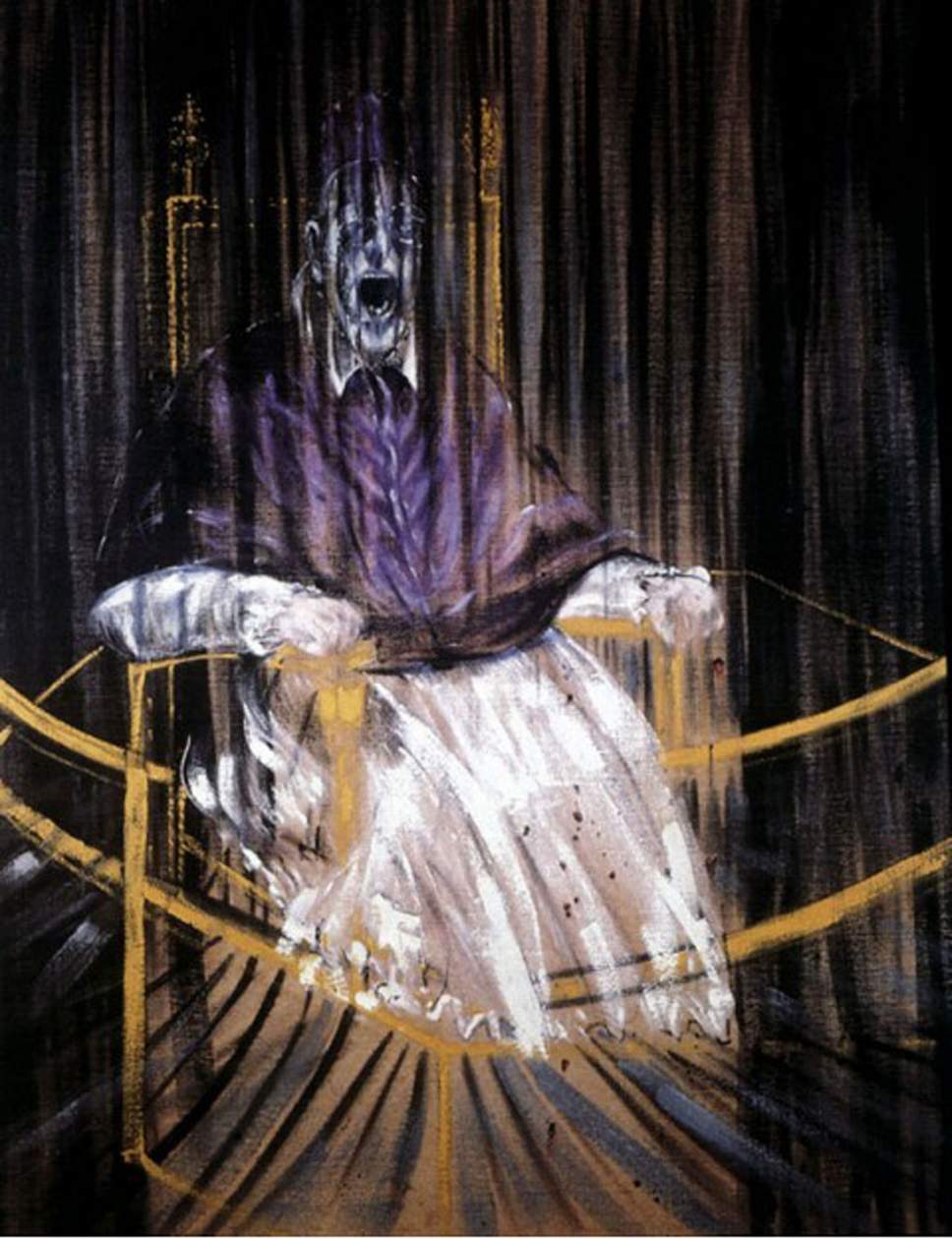
Same subject, different periods - but only one would have been accepted as “Art” in the 1600s. So what do you think changed our sense of aesthetics to make the artwork by Bacon equally acceptable as “Art?”
Art Criticism and The Modern Aesthetic
The role of the art critic is to critique art in the context of the current prevailing aesthetic of the status quo. Assisting in the determination of what is Beauty and what is Art are the theories of art that offer the current perspective, or lens, through which the artworld makes these judgements. This interpretation is part of what we know as the Philosophy of Art.
Now, no one is forced to agree with a critic’s judgement, and it is questionable whether one’s criticism can be truly objective when it is often informed by a specific interpretation and understanding of the theories; it is difficult to transcend the worldview that one exists in and see things from a different perspective.
This means that whatever the current aesthetic is, it is the lens through which an art critic will make a judgement as to whether something is, or is not, art.
While there is some room for debate, the current aesthetic through which we judge Art is the legacy left to us from Danto - that of postmodernism(definition:A philosophical movement beginning in the mid-twentieth century. Postmodernism questions the notion of objective truth and posits that many apparent realities are merely social constructs that are subject to change depending on time and place.).
Disputing the Aesthetic of the Status Quo
But what if your artwork goes against the prevailing aesthetic? What if your artwork is deemed “not art” by the critics to whom the public look to validate an object’s worthiness of this definition?
Art, after all, as John Russell pointed out in the Minds On section, is supposed to connect us with a, “sense of solidarity with our own time.” What if you, the artist, are out of step, or a step ahead of your time?
Is your art, still “Art?”
If you have ever studied art history, you will recognize that the periods or movements in art - the “isms” - are often reactions to the previous generation. For example, the focus on the heightened, almost transcendental emotion of the Romanticism period in art (1800 - 1850), was a direct, oppositional reaction to the stoic Neo-Classicism of the mid 1700s (which, in turn, was a reaction to the frothy excessiveness of the Rococo period before it) ... and so it goes ...
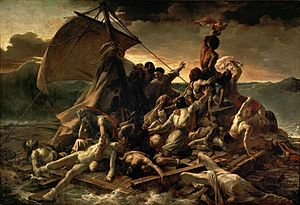
Romanticism
The Raft of the Medusa, 1818-1819. Théodore Géricault.
Emotional, dramatic, passionate, and in the case of this particular painting, a criticism of classicism in the government’s treatment of powerless civilians. The ideals of solidarity and self-sacrifice present in Neo-Classicism are no longer present here.
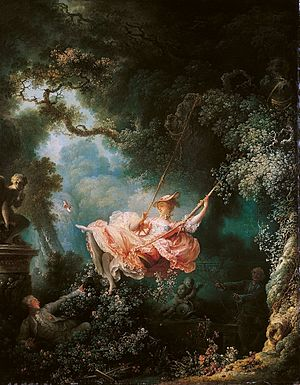
Rococo
The Swing, 1767. Jean-Honoré Fragonard
Frivolous, playful, witty, and decorative - reflective of the excesses of the court of the King Louis the XV of France.
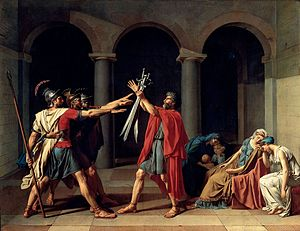
Neo-Classicism
Oath of the Horatii, 1784. Jacques-Louis David
Stoicism, Nationalism, Solidarity - all relevant themes in the period before the French Revolution.


If the philosophical definition of "Art" is based on contemporary values, then the meaning of art is relative to culture and history. Because it is bound up with culture and history, so too is it deeply connected with the dominant institutions of the day - in this case, the "artworld." This would mean that certain people have greater influence over the definition - the art critics, the art dealers, the curators, and committees that decide what is shown in the galleries - they make that determination. Note that in this scenario, the artists themselves play a part in being able to declare their work as “Art,” their voices are not the loudest. In other words, institutions play a large role in determining what is, or is not, valued as art.
Not all artists are willing to let the status quo make that determination.
To illustrate, here are a few examples from the 19th to 20th centuries, where artists disputed the prevailing aesthetic of the time.
PrevailingAesthetics
Confronting the Prevailing Aesthetic: The Artist’s Manifesto
“
What does one prefer? An art that struggles to change the social contract, but fails? Or one that seeks to please and amuse, and succeeds?
~ Robert Hughes, Australian-born art critic and writer.
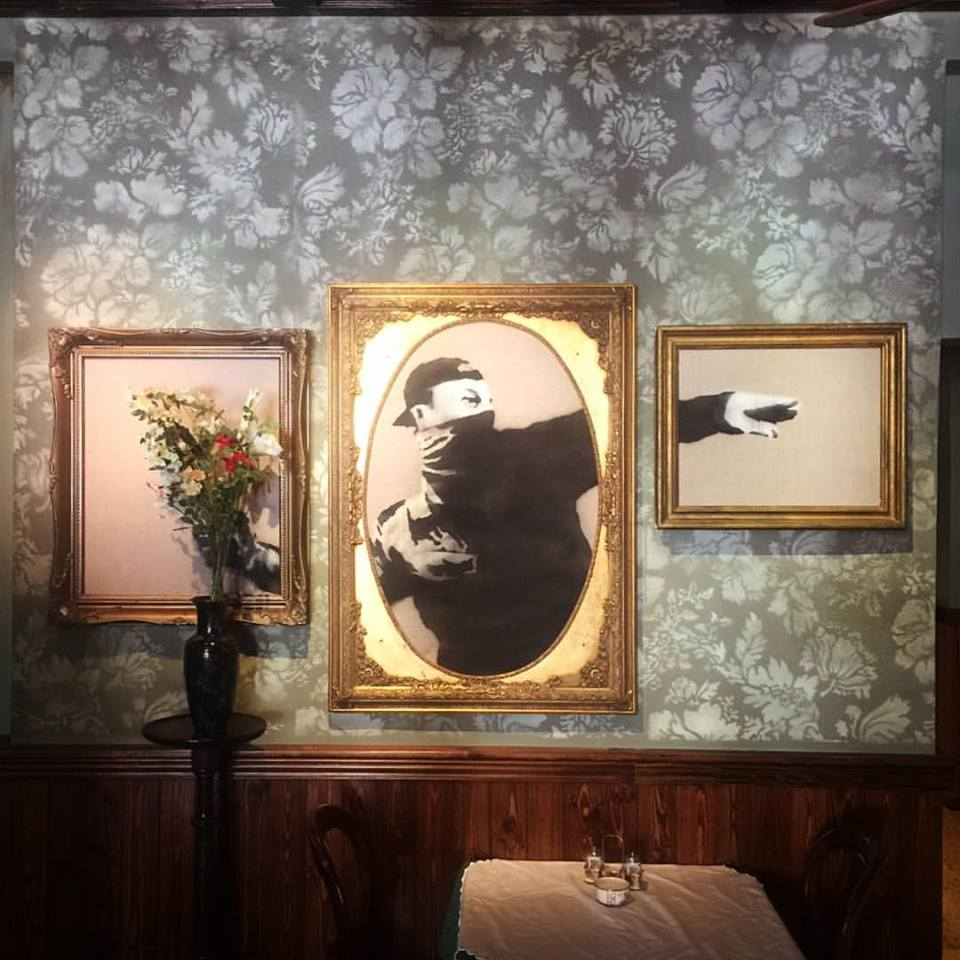
Despite being the ones who create the artworks, artists don’t always have an equal voice when it comes to declaring the worthiness of those works to the artworld. Here’s a case in point: the last time one of Vincent Van Gogh’s “sunflower” paintings went to auction was in 1987. Still Life: Vase With 15 Sunflowers sold at Christie’s for 39.9 million dollars, breaking a record for the most money a single artwork has earned.
Do you know how many paintings Van Gogh sold in his own lifetime?
One. Just one.
The rest of his 900 paintings did not sell or become famous until long after his death. In his lifetime, Van Gogh’s work was not recognized by the artworld, and yet today, he is considered one of the world's most popular painters.
Since the artist is the person who created the artwork, it follows that she or he will take personally any judgement of her or his creation. Therefore, what do you think is more valid, the subjective response of the artist, or the 'informed' perspective of art institutions? Why is the opinion of the institution necessary and/or more valid than the artist?
So artists have been known to fight back, and collectively, make a statement in the form of a “manifesto” in defiance of the institutionalism of art.
A manifesto is a public declaration of the aims, intent, policies, and grievances of a specific group or organization.
Below are a few examples of manifestos created by artists. It is suggested that you read all four examples to be familiar with them, but for the sake of the class discussion, you will need to only focus on one manifesto about which to present your opinions and reasoning.
The Dada Manifesto by Hugo Ball.
Read at the first public Dada soirée, Zurich, July 14, 1916.
Dada is a new tendency in art. One can tell this from the fact that until now nobody knew anything about it, and tomorrow everyone in Zurich will be talking about it. Dada comes from the dictionary. It is terribly simple. In French it means "hobby horse." In German it means "good-bye," "Get off my back," "Be seeing you sometime." In Romanian: "Yes, indeed, you are right, that's it. But of course, yes, definitely, right." And so forth.
An International word. Just a word, and the word a movement. Very easy to understand. Quite terribly simple. To make of it an artistic tendency must mean that one is anticipating complications. Dada psychology, dada Germany cum indigestion and fog paroxysm, dada literature, dada bourgeoisie, and yourselves, honoured poets, who are always writing with words but never writing the word itself, who are always writing around the actual point. Dada world war without end, dada revolution without beginning, dada, you friends and also—poets, esteemed sirs, manufacturers, and evangelists. Dada Tzara, dada Huelsenbeck, dada m'dada, dada m'dada dada mhm, dada dera dada, dada Hue, dada Tza.
How does one achieve eternal bliss? By saying dada. How does one become famous? By saying dada. With a noble gesture and delicate propriety. Till one goes crazy. Till one loses consciousness. How can one get rid of everything that smacks of journalism, worms, everything nice and right, blinkered, moralistic, europeanised, enervated? By saying dada. Dada is the world soul, dada is the pawnshop. Dada is the world's best lily-milk soap. Dada Mr Rubiner, dada Mr Korrodi. Dada Mr Anastasius Lilienstein. In plain language: the hospitality of the Swiss is something to be profoundly appreciated. And in questions of aesthetics the key is quality.
I shall be reading poems that are meant to dispense with conventional language, no less, and to have done with it. Dada Johann Fuchsgang Goethe. Dada Stendhal. Dada Dalai Lama, Buddha, Bible, and Nietzsche. Dada m'dada. Dada mhm dada da. It's a question of connections, and of loosening them up a bit to start with. I don't want words that other people have invented. All the words are other people's inventions. I want my own stuff, my own rhythm, and vowels and consonants too, matching the rhythm and all my own. If this pulsation is seven yards long, I want words for it that are seven yards long. Mr Schulz's words are only two and a half centimetres long.
It will serve to show how articulated language comes into being. I let the vowels fool around. I let the vowels quite simply occur, as a cat meows . . . Words emerge, shoulders of words, legs, arms, hands of words. Au, oi, uh. One shouldn't let too many words out. A line of poetry is a chance to get rid of all the filth that clings to this accursed language, as if put there by stockbrokers' hands, hands worn smooth by coins. I want the word where it ends and begins. Dada is the heart of words.
Each thing has its word, but the word has become a thing by itself. Why shouldn't I find it? Why can't a tree be called Pluplusch, and Pluplubasch when it has been raining? The word, the word, the word outside your domain, your stuffiness, this laughable impotence, your stupendous smugness, outside all the parrotry of your self-evident limitedness. The word, gentlemen, is a public concern of the first importance.
The Culture Jammer’s Manifesto
By Kalle Lasn, founder of Adbusters. Published in Culture Jam: how to reverse America’s suicidal consumer binge - and why we must, 1999, HarperCollins Publishers Inc. New York, NY.
We will take on the archetypal mind polluters and beat them at their own game.
We will uncool their billion-dollar brands with uncommercials on TV, subvertisements in magazines and anti-ads right next to theirs in the urban landscape.
We will seize control of the roles and functions that corporations play in our lives and set new agendas in their industries.
We will jam the pop-culture marketers and bring their image factory to sudden, shuddering halt.
On the rubble of the old culture, we will build a new one with non-commercial heart and soul.
Guerrilla Girls
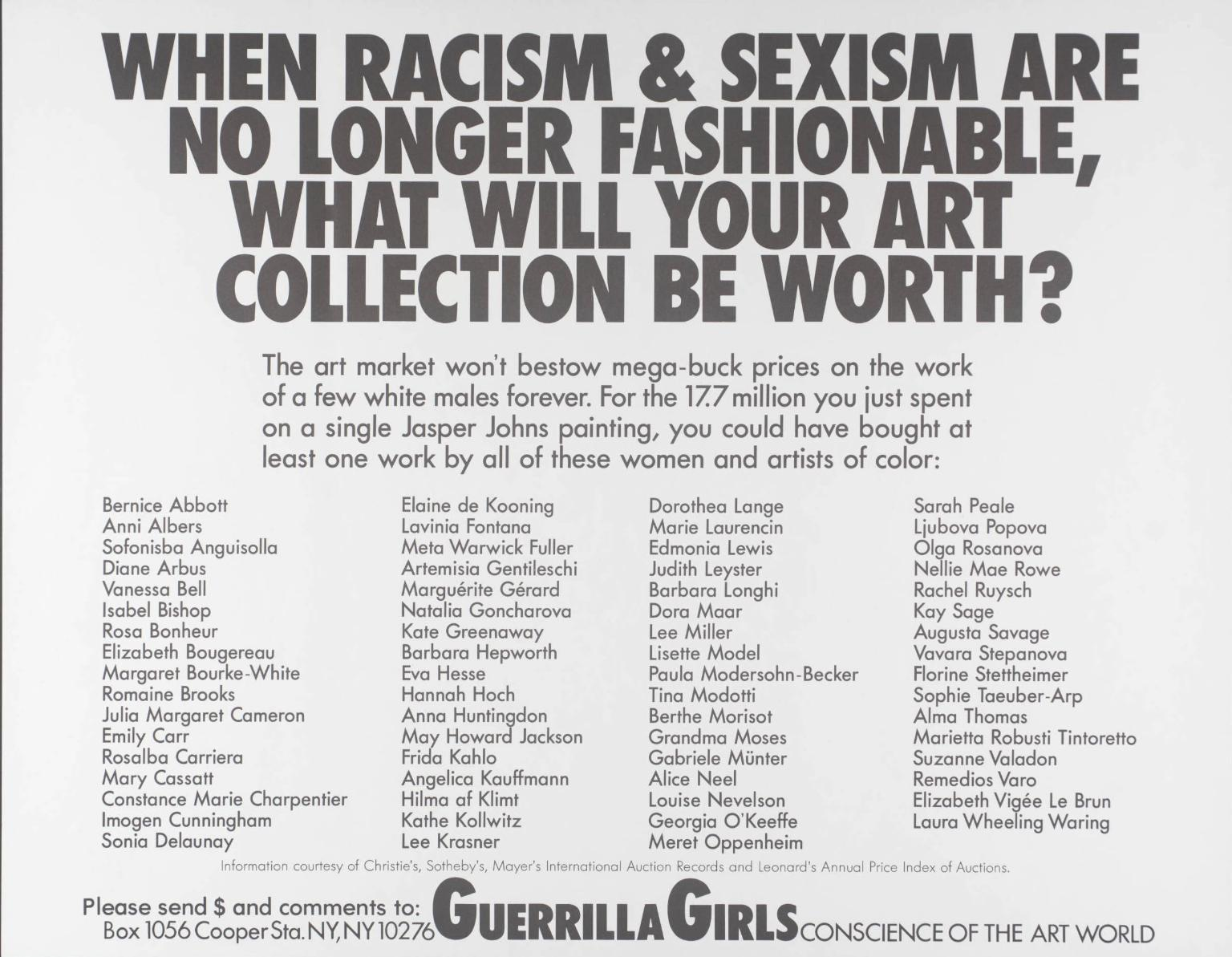
In 1984, a group of anonymous women, wearing gorilla masks, picketed the Museum of Modern Art in New York. MoMA was opening a show which claimed to be a definitive survey of contemporary art. But out of the 169 artists featured in the show, only 13 were female. Since then, the Guerrilla Girls have continued to call out the artworld for the exclusion of female artists in their worldview through a series of posters, stickers, and culture jam tactics.
Red Alan's Manifesto
Created by in 2014 by artist, Grayson Perry for the Royal Academy of London, Perry explored some of the questions we have explored in this activity - namely, what gets to be defined as “art?”

The Artist’s Manifesto: A Discussion
After reading the manifestos above, choose one, and consider the following questions. When you have formulated your responses, share them with the class in a discussion. Remember to clearly indicate the manifesto to which you are responding. If you decided to seek out your own example, please provide context and a link so that others may benefit from your research.
Make sure you respond to the following questions:
- What is the author of the manifesto suggesting about the relationship between art, politics, and individual humanity?
- Who is the intended audience for the manifesto?
- While artists are creating works that respond directly to their lived experience, do you feel that their complaints are warranted? In other words, do you find yourself agreeing with the author(s) or resisting/dismissing their outrage?
- Look carefully at how the artists’ arguments are presented. What reasoning is engaged? Do you detect any logical fallacies here?
- Do these artists propose viable solutions to the issues they are confronting, or is the manifesto intended to provoke a response?
- How is this manifesto, the issue it is confronting, and the issues raised, consistent or inconsistent with your personal worldview?

CONSOLIDATION
 A Mini-Manifesto
You will write a mini-manifesto that is a declaration of your personal philosophy of art. While creating your mini-manifesto, remember to do the following.
- Take a stand and support your position.
- Ensure that you explain and defend your reasoning by using examples to illustrate your points of argument - including those examples that you have used in previous Philosopher Notebook entries that may still, or not, align with your new understanding of what defines art.
- Refer to the material you have explored thus far in this unit as support. What theories of art inform your aesthetic? Whose opinions and perceptions are the most logical to you? Why?
- Use your own personal experiences with art to explain the reasoning behind your aesthetic. For example, those who make art, or participate actively in art, may have a very different connection and experience with artistic criticism than those who view it, appreciate it, or buy it. How does the degree of connection inform one’s philosophy of art?
The following prompts are provided as a starting point for your exploration - something to help you articulate your personal philosophy. Not all prompts will be applicable or of relevance to your manifesto: use the ones that are. Your mini-manifesto is not to be a compilation of responses to these prompts but rather, a clearly supported statement of your philosophy of art.
- When it comes to “art,” where does your taste align?
- What theory of art informs your personal worldview?
- What criteria does something have to fulfill to be judged, defined, and finally accepted as art?
- Or, do you feel that all this defining, judging, and criticising, to be unacceptable, narrow and unnecessarily restrictive?
- What is the purpose of art? Is it merely decorative, or can it also be functional? Does making an artwork functional decrease its value as an object of art?
- Is there a hierarchy in art - are some forms of art more worthy of the definition than others?
- Is something still art if the aesthetic that informs the definition changes?
- Is there such a thing as “good” art and “bad” art? If so, who should make that determination?
- Who should decide if an object or performance is “art” - the artist that creates it, the artworld that values it, or the audience that appreciates it?
- Does art have to be beautiful?
Remember to archive a copy of your mini-manifesto.
 Learning Goals and Success Criteria
 Learning Skills and Work Habits