Read the quotation below, then respond to the questions:
Of the 4.3 million young adults aged 20 to 29 in 2011, 42% (or 1.8 million) lived with their parents. This compared with 27% in 1981.
Reflection
Questions:
This statistic was released in a government report on June 15, 2016. The name of the report is "Diversity of young adults living with their parents." It is part of a series called Insights on Canadian Society.
Why do you think the government collects statistics like this?
Why might a report published in 2016 use data that was collected in 2011?
What do you think has caused the increase in the number of young Canadians living with their parents?
The report from the government has the following graph:
What additional information does the graph give the reader that the statistic doesn’t?
Why might this extra information be useful?
At some time in their life, just about everyone thinks about moving out and getting a place of their own. Some think about renting their own place. Some think about owning their own home.
Some people have a strong desire for one or the other. People even get into arguments about which is better - renting or owning.
There are good reasons to rent and there are good reasons to buy. There are also disadvantages to each.
For the next section, you will be completing a PMI (Plus, Minus, Interesting) chart. If you have never used this type of organizer before, you can click on “Resources” below.
As you read, create and fill in a Plus/Minus/Interesting organizer to make notes about what you read. A Plus/Minus/Interesting chart should resemble the following, where you add notes relates to things that are plusses (these are positive things), minuses (these are negative things), and interesting (these are neither positive or negative, but are worth keeping note of).
PMI Plus, Minus, Interesting
Topic Statement: Moving Out Is Great!
Plus
Minus
Interesting
Words that I do not understand yet:
When you read words or phrases you do not understand yet, add them to the bottom of your chart. After you have finished reading the blog, find out the meaning of the words and phrases that were unfamiliar, then read the blog again. Add the organizer to your course notes.
Independent Living - The Expense Side
Knowing how much it will cost to live on your own is not easy.
There are many different things that you will have to pay for yourself (e.g., living expenses, entertainment expenses, health care expenses).
How much something costs may be different at different times and in different places (e.g., fresh fruits and vegetables tend to be more expensive during the winter months, no matter where you live, but rent is more expensive in Toronto, Ontario than it is in Windsor, Ontario. On average, rent for a one-bedroom apartment in Toronto is around $1600, while in Windsor it is around $750).
Types of expenses you need to cover depend on your personal needs and wants (e.g., if you love seeing blockbuster movies at the theatre, you need to plan for the movie, snacks and transportation; if you like to go to the gym, you will need to pay for your membership, shoes and transportation).
What might your own expenses be?
At GetSmarterAboutMoney.ca, you will find a list of some of the expenses you can expect to be responsible for when you live on your own.
Did you notice that this list has expenses sorted into different categories? Why do you think this might be a good idea?
Using this organizer, start your personal list of expenses by listing, under each category, all the things you can think of that you will need to spend money on to live independently.
The following examples are provided to guide your thinking.
Jo has worked as a nature guide the past two summers and has finally been offered a full-time, year-long position. This is a list of what she determined to be her expenses when living on her own:
Now that you have an idea of your expenses, you can start collecting data about the cost of housing in your area. That information will help you decide what you can afford: Can you afford the mortgage payment on a 2-bedroom condo? Can you afford the rent for a 2-bedroom apartment? How much should you expect to pay for an apartment that is in someone’s house?
Renting - Many Different Types of Accommodations
There are many types of rental accommodations available in Ontario. Not all will be available in every community. Some of the other types of rental properties are:
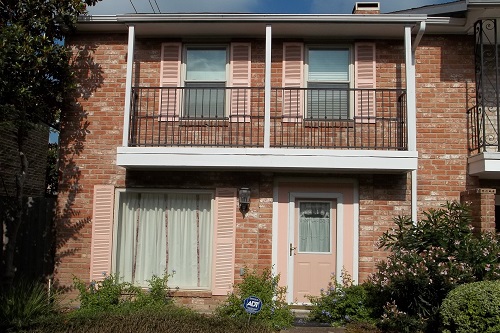
Basement apartment in a house. Some people convert their basements into an apartment and they rent the apartment. This gives them extra income. They usually live upstairs.
Basement apartment in an apartment building. You find these in low-rise apartments - the type that have stairs rather than elevators. They are often listed separately.
Apartment in a low-rise apartment building
High-rise apartment buildings
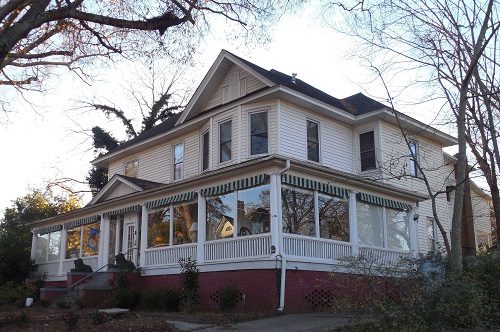
Detached house. Sometimes people own houses as income properties. They do not live there.
Townhouse
Rooming house. These are usually for shorter-term stays. Appliances and bathroom facilities may be shared with other tenants.
Select two different types of rental accommodation from the list above.
You will get information about the amount of the rent in your community for these two different types of accommodation.
If you know of a different type of rental accommodation that is not in this list, check with your teacher to see if you can replace one of the ones from the list with the one you want to look up.
Search for one example of each. Make sure that you are asking for the same number of bedrooms.
The following images show examples of the results you might find when completing your searches. The first example shows a search in Kitchener-Waterloo for a 2-bedroom apartment and townhouse that was found on View It, while the second example shows a search for a 2 bedroom townhouse listed on Kijiji for $1300 per month:
The internet has a number of places to help you search for accommodations. Two good places to start are View It and Kijiji. Each of these provides listings of available rental properties.
Download and complete each of the following documents, which will allow you to organize the information for each of your searches:
Comparing the Additional Monthly Costs - An Investigation
Now, you will look for estimates of the cost of anything that you will need to pay for each month that is not included in the monthly rent.
The two rentals that we found in Kitchener-Waterloo did not include utilities. We know this because the listings said "Plus Utilities".
In order to get an estimate of the average cost of these utilities, you can go to Numbeo and select the appropriate city.
When doing this for Kitchener it suggested that the average cost of utilities for an 85 square metre apartment is $186.01.
If utilities are not included:
Use this site to find out which utility companies provide services to that building.
Contact each company. Ask if they can tell you the average monthly cost for the two rental locations. Of course, the exact amount of heat, electricity, and water you use will affect your actual bill. These estimates will give you a good idea of the extra monthly charges you should expect to have to pay.
If internet is not included:
Find out who the service provider is in that area.
Find out what they charge for the service you would want.
Assignment: Saving Your Rental Information
When you have found all the costs, organize what you found into the chart for each of your two rental choices.
Be sure that each form includes:
A completed chart outlining which costs are included in the rental.
A completed chart outlining all costs.
A screencapture of or image of the rental that you found online.
Buying - How Much Do Homes Really Sell For?
You saw that the rent is only part of the cost of renting a place to live. Now, you will investigate the true cost of buying a place to live.
Buying a home, some would say, is the largest purchase you’ll ever make in your life
Assignment: Selling Price of Homes in My Community
What is the range of purchase prices for different types of homes in your community?
For this investigation, you will search real estate listings for two different types of owned accommodations that are available in your community.
Some possibilities:
Fully detached house
Semi-detached house
Row house or townhouse
Duplex
Condominium/apartment
Mobile home
Visit this residential listing site and select two different types of owned accommodation buildings that are available in your community.
Steps:
Look for listings that are in the same community you used when searching for rental accommodations.
Select the same number of bedrooms and bathrooms as you found for the rental properties.
Find two different types of buildings that are for sale. When you hit the "Go" button the first time, you may be directed to an agreement page. If so, to get the listings, you have to agree.
Look at the results. You may see several different listings. Select the one that you like most from the choices you get. Click on that listing to get more details about the property. If you are satisfied with this property, create a screen capture of the listing or a pdf file.
Now, do steps 1 - 4 again, but this time select a different type of building than you chose to investigate above.


 Reflection

 Assignment: Saving Your Rental Information
 Introduction
 Learning Goals and Success Criteria
 Learning Skills and Work Habits
 Rubric 1