
PPZ3C
Unit 2: Social Factors that Influence My Health
Activity 2: Baby, I Was Born This Way!

Genetic Endowment

Is it a coincidence that all four Staal brothers from Thunder Bay, Ontario, managed to make a team in the National Hockey League? Do they have a genetic advantage for hockey skills?
Conversely, if a mother, sister and aunt all develop diabetes, is there a relationship to the disease and their genetic make-up? Or are both cases simply an end result of lifestyle choices and the environment in which these individuals live?
Having a family that builds a rink and supports a sport year-round, in combination with a tall, athletic build inherited from their parents, might have also been behind the Staal family's success.
This genetic connection is often confused with the Nature versus Nurture argument, especially when considering one’s health and predisposition to disease.
The basic biology and organic make-up of the human body is another one of the social determinants of health. The health status of an individual is sometimes the result of an inherited health trait. Sometimes your genetics will affect your health for life.
 Assignment: Your Own Genetic Code of Behaviours
It is sometimes said that, as humans, we are more alike than different!
Think about your own family. It may include your parents or siblings, or even your extended members such as grandparents, aunts, uncles, or cousins.
You might also live with people who are not biologically related to you. Do you have similar habits or tendencies with anyone else in your family? Do you look similar to another family member? Do you have similar hobbies or participate in similar activities during your spare time? Are your favourite foods the same as others in your family?
Download and fill in the following How We are Alike and Different chart to compare the similarities and differences between you and the other members of your family.

Heredity is the passing of genes from one generation to the next. You inherit your parents' genes. Your genetics help to make you the person you are today - everything from your physical appearance and body type, to the chance that you may inherit a unique eye color.
Can your genes determine whether you'll be a healthy active senior or a person that dies from an inherited disease? Sometimes these inherited traits are also health-related. A person can have changes (or mutations) in a gene that can cause many issues.
If you would like to learn more about diseases and conditions that run in families, visit Teen Health. This site provides information for teens and parents.
Taking a Closer Look
Let’s look a little more closely at the relationship between genetics and our body since it can have such a large impact on our overall health.
Dr. Yoni Freedhoff runs a family obesity clinic in Ottawa, Canada. He spends a significant amount of time outlining nutritional-related disorders within families. Families spend time in counselling as they try to overhaul major changes in their nutritional patterns. Why is this so difficult for people who struggle with weight management?
The following article looks at the genetic relationship between your body size and its ability to lose weight.
The Truth about Genetics and Weight Loss - From BistroMD
Retrieved from BistroMD on June 22, 2017
Tall and short, dark and light, freckled and tanned, we come in myriad packages with myriad features, most of them determined by our genetics before we ever draw breath. Very few of these traits can we control, and we just have to play the hand we're dealt.
But when people are earnestly trying to lose weight and failing again and again, many ultimately get the sneaking suspicion that they really are playing against a stacked deck. They may be right.
If you're one of those who subscribes to the notion that America's growing weight problem is solely a failure of personal restraint or will, it's time to reconsider. Solid research is helping us understand just how truly stacked that deck is, because in addition to anything else, for some people who struggle with their weight, it seems that any given exercise effort will yield far less result than it offers anyone else-because of what's already coded on their DNA.
When it comes to weight management, genetic factors get blamed for a lot of body issues where they may or may not have a role: "She's just big-boned." "He just carries his cargo up front." "The whole family is built that way." You've heard them all, and they might have sounded more like excuses than explanations.
But think about the genetically based elements that we already know are out of our control: People certainly do have different body types, with some of us thicker or thinner than others, and shorter or taller.
Then there's the particular predisposition for distribution, for having our weight in certain places on our bodies, which could be the old apple/pear body-type contrast, or a tendency to carry fat on the arms.
Add to those a predisposition for building muscle easily or not. And if you want to be very specific, throw in that natural love or dislike of athletic pursuits that would certainly come into play with exercise.
From just those few features, you can see how someone with a unfavorable combination of genetic factors is going to be at a disadvantage compared to someone with a better "stack" of factors.
And now there's this: researchers have identified specific combinations of genes that appear to correlate very strongly with fat retention independent of, even in spite of, exercise.
In a very closely controlled, year-long study with post-menopausal women-chosen as subjects because they are more stable, hormonally speaking-researchers divided the participants into an exercise intervention group and a control group.
All the subjects were carefully selected for specific features of their health and lifestyle. Various lab tests were taken, including certain genetic tests. The subjects were all instructed not to change their dietary habits. The control group was assigned a moderate stretching regimen to use over the course of the study, and the intervention group was given a moderate intensity, 45-minute workout for five days a week, initially with supervision. There was detailed tracking, because the researchers were especially interested in identifying distinctions between genetic and environmental factors.
At the end of the study period, the researchers found a distinct variability in the amount of fat lost by some exercisers that could not be explained by their adherence levels.
So the researchers looked to the genetic data, and indeed, there were two specific genes that stood out related to patterns of fat loss and exercise. Participants with certain combinations of those genes and their variants had significantly different fat loss outcomes.
The complex science at this level can be pretty confusing. Genes are named with different alpha-numeric codes and so are their variant alleles. If you're not careful, you can end up in some real alphabet soup just trying to talk about it, but basically two genes are involved here, the CYP19 and the COMT.
They found that having one CYP19 gene and its variants was not consistently associated with percentage fat, total fat, subcutaneous fat or intra-abdominal fat, that dangerous excess that gathers around our vital organs. But having two such genes correlated to a slightly larger decrease in body mass index, and a significantly larger decrease in total fat and percentage of body fat.
And having a particular genotype of the COMT gene, together with at least one copy of the CYP19 gene, also related to a significantly larger decrease in BMI, total fat and percentage of body fat. There were corresponding intermediate combinations and results that bore out the relationships.
Interestingly, in the exercising group, those with a specific variant of the CYP19 gene lost more fat over the year, but in the non-workout group, those with that same variant gained more fat.
Why and how these genes affect the fat/exercise relationship isn't yet understood, but now that these have been identified as significant, they are the subject of much new, focused study. Other research has since showed that women with that specific CYP19 variant have higher concentrations of the hormones estrone and estradiol, which may make them more resistant to fat loss through exercise.
Obviously, everyone can't go for genetic testing before embarking on a weight loss effort. And where the rubber meets the road, it may not even matter what specific genetic makeup you have that could be adding to your difficulty.
The important thing is that this research shows -once again- that the calories-in, calories-out explanations about body weight are just too simplistic and don't account for many very real variables that have nothing to do with will or self-restraint. Many people have always known this at gut level, but it's good to see the science bear that out.
That said, people shouldn't assume that they're genetically precluded from ever being thin and healthy. Remember that natural love of athletic activity we mentioned? You might not be born with it, but you can learn new behaviors and adapt.
Nowadays, we have all sorts of ways to overcome our genetics. We take medications, we dye our hair, we even wear colored contact lenses! The exercise plan that got your sister so svelte may not work for you, but something will.
So if you're one of those with the bad hand, don't give up! A dietary and weight management program could be tailored to address your very specific needs in order to get and keep your weight in check. Because getting dealt a bad hand doesn't doom you to losing the game-it just means you need a different strategy for winning it.
Thick & Thin:
If you've earnestly tried to drop weight, and your results just don't ever seem to stack up very well next to your pals', that can be very discouraging. But it may be that you're subject to certain resistant genetic factors. Sometimes, simply understanding the cards they're holding can alleviate a lot of the frustration for people by enabling them to set more reasonable expectations, and helping them take a fresh start at getting healthy.
Assignment: Playing against a stacked deck?
Time to gather and organize.
What evidence can you find in the article that supports the idea that some people "are playing against a stacked deck" when they are trying to lose weight and fail?
Find three to five quotations in the article .
Assignment: The Big Question - Your Family and Your Health
We have looked at different diseases that are inherited. Recall the chart you created in the Minds On section of this activity and what you have just learned about inherited conditions and diseases. What condition or disease would you like to know more about that might affect you or a family member? Choose one condition or disease that you would like to learn more about. It may be one we have explored in the activity so far, a disease affecting someone you know, or one that you have heard about.
- Use the gathering and organizing skills you learned in Unit 1 to gather the following information about your chosen disease or condition.
- What is the name of the disease?
- Who is most likely to inherit it?
- Where in the world is it most likely to be seen?
- Why is having this disease an issue to a person’s health?
- How will this affect a person’s quality of life?
- What are some other interesting FACTS?
- Use this Big Question graphic organizer to organize your information about your disease or condition.
Inherited Diseases with an Environmental Factor
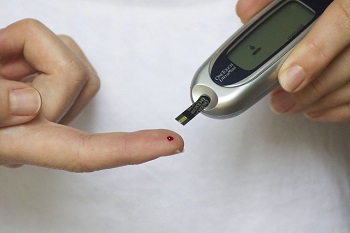
We have just finished discussing different inherited diseases that you cannot control. Diabetes falls into a different category. There are different types of diabetes and heredity does play an important role determining your risk for this disease.
However, your environment, including things like the foods you eat, where you live, the people you know, your activity levels, and your interests also influence whether you develop this disease.
Diabetes is both an inherited disease and one that you can control. Significantly, it is reaching epidemic proportions in Canada. Why is this a problem?
Watch the following video by the Canadian Diabetes Association to learn about the effects of diabetes on a person’s overall health.
There are two different types of diabetes.
Type 1 Diabetes: about five to ten per cent of people with diabetes have this type.
It generally develops in childhood or adolescence, but can develop in adulthood.
In Type 1 diabetes, the cells in the pancreas that produce insulin are attacked by the body's immune system. As these cells die, the body cannot produce enough insulin to counteract the rise in blood sugar levels which is produced when the food we eat is broken down into fuel for our body.
A person with Type 1 diabetes must take insulin to keep their blood sugar down.
Type 2 Diabetes: occurs in about 90 per cent of the people who develop diabetes.
It is sometimes called insulin insensitivity because the body does not make enough insulin. As a result, sugar builds up in the blood instead of being used as energy.
Type 2 diabetes more often develops in adults, but children can also be affected. This type of diabetes can be controlled with diet and exercise.
Symptoms that may indicate diabetes can include the following:
- unusual thirst;
- frequent urination;
- weight change (gain or loss);
- extreme fatigue or lack of energy;
- blurred vision;
- frequent or recurring infections;
- cuts and bruises that are slow to heal; and
- tingling or numbness in the hands or feet.
If you develop these symptoms, it is a good idea to check with your doctor. A person with Type 2 diabetes may not experience these symptoms. This is why it is sometimes considered a silent killer. If undiagnosed, diabetes can cause stroke, heart attack, or a coma.
Lifestyle also influences the development of Type 2 diabetes. Obesity tends to run in families - and families tend to have similar eating and exercise habits. If you have a family history of Type 2 diabetes, it may be difficult to figure out whether your diabetes is due to lifestyle factors or genetic susceptibility. Aboriginal peoples living in Canada are three to five times more likely to live with diabetes. Access to health care, smoking, low physical activity, along with healthy food choices being limited based on geography, are among the reasons for these higher risks.
If you, or someone you know is diagnosed with Type 2 diabetes, it is very important that you learn how to change your lifestyle to manage this disease. Watch this video to learn how this disease can be managed.
 Resources
Coronary Artery Disease
Coronary heart disease occurs when plaque builds up in the arteries of the heart causing a narrowing of the walls of the arteries and reducing the amount of blood that gets to your heart. Coronary artery disease (also called CAD) is the most common type of heart disease. It is also the number one killer of both men and women in Canada and the United States.
There are many risk factors for Coronary Artery Disease. Some factors are under our control, these are known as modifiable risk factors. Some factors, known as non-modifiable risk factors, are genetically linked.
Watch this video to learn about the main risk factors for heart disease.
Assignment: Risk Factors of Coronary Artery Disease
Time to gather and organize.
After watching the video above, and after performing some initial research on the internet, create a list of risk factors related to Coronary Artery Disease
As you create your list, indicate whether for each risk factor whether it is something that an individual can control or not (you can indicate CONTROL or DO NOT CONTROL).
Decreasing Risk

People who are aware of a family history of a certain disease may be able to make changes in their personal habits and make environmental adjustments that will help reduce their chances of getting an inherited disease.
They can also ensure that they are tested regularly for signs of the disease, so that it can be treated at an early stage if it develops.
However, some people, such as those who were adopted or placed in guardianship as small children, may not know their complete genetic history. For these people, as for everyone, the best defence is to make as many healthy choices as possible.
How can individuals who know that they have specific hereditary risks decrease their vulnerability to these risks and maintain good overall health?
 Assignment: Decreasing Risks by Increasing Healthy Choices
Two lifestyle tips to help reduce a person’s risk of being diagnosed with Type 2 diabetes are:
- managing one’s weight;
- exercising regularly.
What other lifestyle changes might a person make to be able to live a healthy life after a diagnosis of diabetes, coronary heart disease, or to reduce other hereditary risks?
- Read this article, How Health and Lifestyle Choices Can Change Your Genetic Make-Up, or watch this video, Our Genes Are Not Our Fate.
- Think about what YOU have learned so far in this activity about heredity factors and how they affect a person’s health. Write down a reflection (about a paragraph long) about how your thoughts/opinions are changing as you learn this new information about how to manage hereditary risks.
- Write down three lifestyle tips would you give someone - and follow, yourself - to help reduce your vulnerability to disease from hereditary risks and maintain good health.
- Explain how the three tips you choose will benefit your personal health.
Genes load the gun, the environment pulls the trigger.
Assignment: A Few Good Questions to Ask Your Doctor
Using the Question Builder Chart from Unit 1, create three questions that you would ask your doctor and/or nurse practitioner at your next checkup.
These questions should be about a hereditary risk factor that might affect your future health, such as your risk of developing diabetes, heart disease, or other conditions.
Check that your question is a good question using the criteria for an effective question below:
An Effective Inquiry Question...
- Is open-ended (will not have a single, final, and correct answer).
- Is thought-provoking and intellectually engaging - (often sparking discussion and debate).
- Calls for higher order thinking (such as analysis, synthesis, inference, prediction. It cannot be effectively answered by recall alone).
- Points toward important, transferrable ideas within (and sometimes across).
- Raises additional questions and sparks further inquiry.
- Requires support and justification, not just the answer.
From McTighe and Wiggins. (2013) Essential Questions- Opening Doors to Student Understanding
 Introduction
 Learning Goals and Success Criteria
 Learning Skills and Work Habits
 Rubric 1