
PPZ3C
Unit 3: Healthy Communities
Activity 3: It’s a Wonderful World
Legislation concerning different aspects of health is made at both the federal (all of Canada) level, and the provincial level. In this activity, we will focus on Ontario legislation. Politics and public policy can have a big influence on factors that affect our health. Political decisions can create public policies and programs that protect our environment, such as our air and water quality, and benefit our personal health. Legislation tells us what we can and cannot do for our benefit and for the health of others in our community.
One example of legislation that has been created to protect all members of a community is the banning of handheld devices while driving. The issue of distracted driving was the source of this legislation since many people were seriously injured or killed because of it. Watch #PutDownThePhone, as an example of an ad created by the Government of Ontario about this issue. This video shows what can happen with just a few seconds of distracted driving. It illustrates how governments also take action in convincing people why they should obey legislation.
 Assignment: #PutDownThePhone
View the video again and then, after watching it, consider...
Write a short opinion paper on why you think people continue to text and drive when it is illegal, dangerous, and injures/kills countless people every year?
Things can happen very quickly when you are not paying attention to the road. This is called distracted driving and it includes: using your phone to talk, text, check maps or choose a playlist. Eating, reading or typing a destination into a GPS is also dangerous when you’re driving. These rules apply if you’re on a highway or stopped at a red light – and distracted driving can cost you dearly. In Ontario (2017), the penalties for distracted driving include:
- a fine of $490, if settled out of court (includes a victim surcharge and the court fee);
- a fine of up to $1,000 if a summons is received or if you fight the ticket in court and receive a loss of three demerit points on your driving record;
- as citizens in a community, we all must do our part to maintain its safety and health.
Use any of these tips to avoid distracted driving and its penalties:
- Turn off your phone or switch it to silent mode before you get in the car.
- Put it in the glove compartment (lock it, if you have to), or in a bag on the back seat.
- Before you leave the house, record an outgoing message that tells callers you’re driving and you’ll get back to them when you’re off the road.
- Some apps can block incoming calls and texts, or send automatic replies to people trying to call or text you.
- Ask a passenger to take a call or respond to a text for you.
- If you must respond, or have to make a call or send a text, carefully pull over to a safe area.
- Silence notifications that tempt you to check your phone.
Of the tips outlined above, which would work best in reducing this behaviour in teens?
Do you think you would choose different tips for adults? Why or why not?
There are several laws and regulations set by the government to try to protect the environment by controlling or banning items that harm the environment and by reducing our consumption of valuable natural resources. The policies that our government makes to protect our water, air, soil, and natural environment, also protect our health. To help citizens follow these policies, our government supports and encourages programs that reduce the stress on the environment. The interactive below lists three examples of how our actions harm the environment and our health and how government regulations are in place to try to protect our environment along with programs that support these regulations.
Assignment: Taking Action in My School and My Community
OPHEA (Ontario Physical Health Education Association), has been offering support and ideas about increasing physical activity. For example, it promotes using the "walking school bus" or "bicycle train" to get to school safely. This program helps schools to do their part to care for the environment by promoting active transportation, and at the same time, increase the wellness of children and youth. Learn more about this healthy idea by reading about Waterloo region’s Walking School Bus initiative.
OPHEA’s Walking School Bus is just one example of legislation at work in a community.
- Look around you to see how your school and community take action to protect the environment and support the wellness of the community.
- Find two programs in your school and/or community that are examples of environmental legislation in action.
- Describe how each program supports the implementation of legislation that protects the environment and how the same program supports community wellness.
"Walkable communities" is a term that has popped up in the past few years. It indicates how close your home is to amenities like banks and grocery stores. Could you walk to them or would you need to drive your car? Real estate agents now list homes with a walk score to increase their appeal. Being in a walkable neighbourhood means short commutes; this can increase community involvement. People who can walk to amenities may weigh six to ten pounds less; walkable places can make individuals happier and healthier.
Take a look at these "walkable" scores from walkscore.com:
From walkscore.com
Assignment: Walk Scores
Go to the walkscore website and type in your address to see your walkable score.
Explain how your community scored and what you think of the result.
Government policies, regulations, and educational programs can also play a big role in protecting the health of our communities. In Unit 2, Activity 5, we learned about some of these policies and educational programs, such as Sabrina’s Law to protect students with severe allergies, and Ryan’s Law to protect children with asthma. In Activity 3 of this unit, we learned about The Accepting Schools Act (Bill 13) to ensure a safe space for all children to learn that is free of bullying behaviour. A law called Rowan’s Law, passed in June, 2016, was aimed, not only at preventing and diagnosing head injuries in youth sport, but managing an athlete’s return to play. You can read more about Rowan's Law at the National Post.
Assignment: Concussions and Rowan's Law
Read the following article that goes in to a little more detail about concussions and Rowan's Law.
Do you think concussion education should be part of school and community health programs? Why or why not?
Do you think concussion education will reduce the number of concussions students sustain? Will it ensure that students report a concussion when they think they have sustained one during practices, games, or recreational activities? Why or why not?
Vaccines
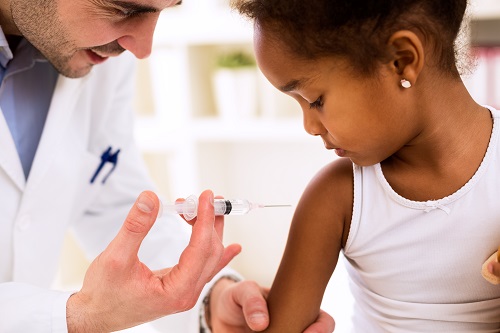
Another piece of legislation that protects students is known as the Immunization of School Pupils Act.
It requires students in Ontario’s public schools to be immunized against diseases such as tetanus, diphtheria, polio, measles, mumps, and rubella. Immunizations help save lives, prevent serious illnesses that may be caused by coming into contact with diseases that are contagious, and are recognized as one of the most effective public health interventions.
There are also government sponsored public health immunization programs such as flu and human papillomavirus (HPV) vaccinations. These are not mandatory vaccines but they are offered to members in a community to support their own health (HPV vaccine) or reduce the outbreak of illness (flu) that can affect many members of a community at the same time.
Vaccines are the tugboats of preventive health.
Many people consider getting the flu shot to avoid influenza, especially in November. It is given free of charge to anyone in Ontario who has a compromised immune system or who works around others who may be sick. Public Health recommends that everyone is vaccinated to stop the spread of this virus in a school or community in order to protect the health of others who may already be sick or may be vulnerable.
Time to formulate questions, gather and organize, interpret and analyse, evaluate and draw conclusions and reflect.
 Assignment: Shot or No Shot
There is a great deal of controversy about vaccines, so you will have to make sure you are making the most informed decision you can when deciding to be vaccinated. Investigate this issue to determine your stance on the following statement:
- The resources below will allow you to become familiar with both sides of this debate. Watch the video and read through the articles.
- Using the information from these resources, complete a summary of your ideas that outline the two sides of the argument. Your summary should include:
- an introduction to the topic;
- at least three reasons why someone would support the above statement;
- at least three reasons why someone would disagree with the above statement;
- a final paragraph that outlines your stance on the issue and an explanation of why you chose this stance.
 Resources
- Centers for Disease Control and Prevention - HPV Vaccines: Vaccinating Your Preteen or Teen
- Government of Ontario - Kids and the flu vaccine
Assignment: Mapping Your Learning
The Learning Goals and Success Criteria for this activity are listed below:
Learning Goals:
We are learning how environmental policies and programs can also benefit community health and the role of government policies and programs in protecting school and community health so we can advocate for a healthy school community.
Success Criteria: I can explain how government policies and programs that protect the environment are also beneficial to community health.
We are learning about personal practices and local programs that are environmentally responsible.
Success Criteria: I can explain how government policies and programs protect school and community health, I can describe practices and programs that are environmentally responsible.
We are learning about the actions individuals can take to contribute to the health of others so our actions support school and community health.
Success Criteria: I can explain actions that people can take to contribute to the health of others.
Create a mind map to demonstrate your understanding of the Learning Goals and Success Criteria of this activity.
A mind map "maps out your ideas" and helps you make connections between a main idea and ideas that relate to the main idea. Each branch off the main idea contains details that relate to that main idea to show connections.
The main idea for your mind map is government policies and programs and how they protect the environment and contribute to community health. Your mind map should also make connections to practices and programs that are environmentally friendly and actions that we all can take to protect the environment and contribute to the health of others.
Assignment: Your Personal Wellness Journey Check In
Since we are approaching the end of this Health for Life course, it is always good to look ahead to your future.
The following video is a TED talk about how to keep optimal health as you live your life. You might be surprised by some of the advice about the best kind of physical activity for you!
- After watching the video, choose two pieces of advice that you find most helpful and how they connect to your life.
- Part of staying healthy for life is to decide if you are going to monitor your health and take preventative measures, like vaccines to protect against disease and illness. Will you do your part to protect the environment for the good of your long term health and the health of others in your community? Select a picture of you showing an action you take to stay healthy or will consider taking to be environmentally responsible. It should support your long term health and the health of your community.
 Introduction
 Learning Goals and Success Criteria
 Learning Skills and Work Habits
 Rubric 1