DESCRIPTION OF INTERACTIVE
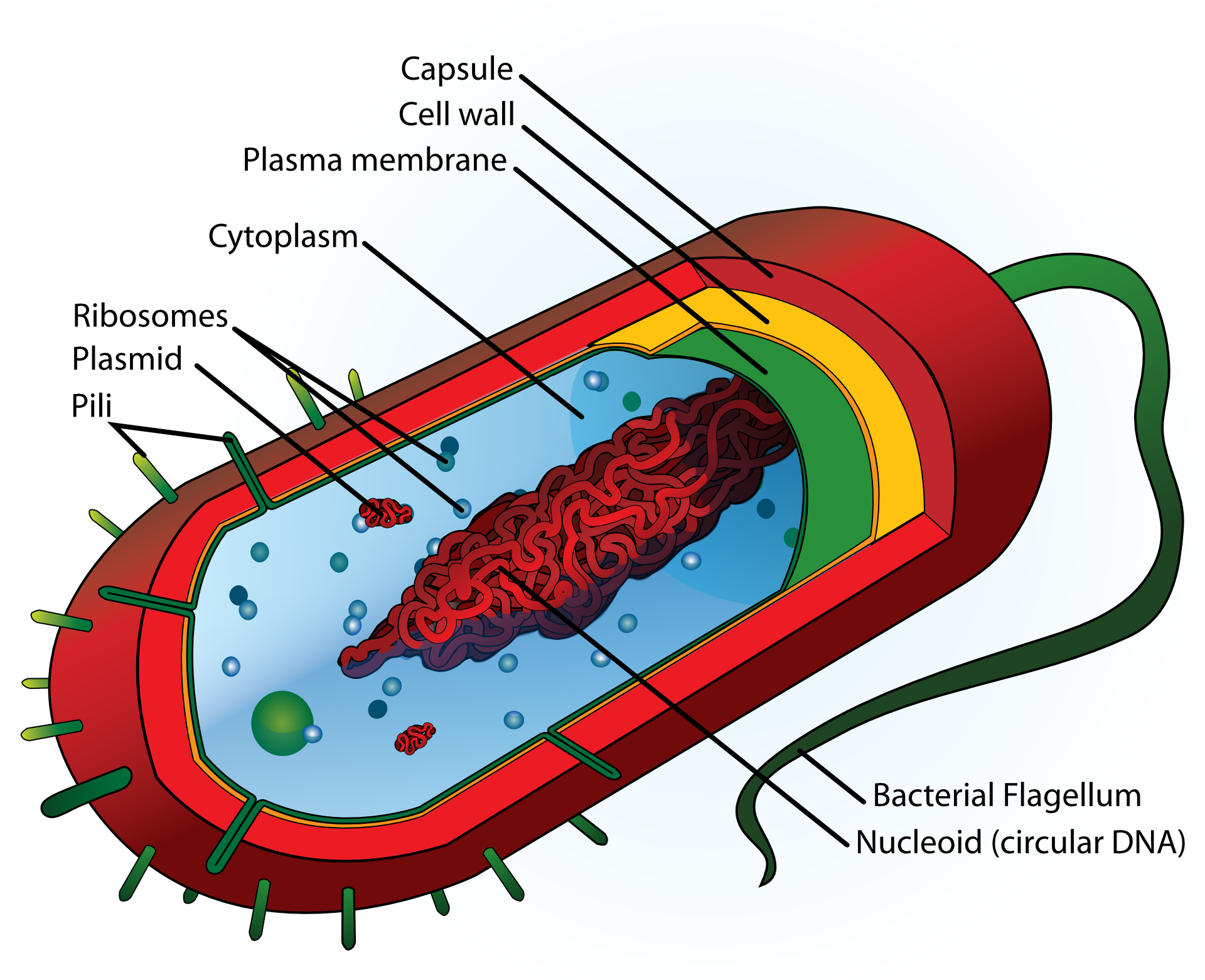
Capsule: An often sticky, protective covering made of polysaccharides. Most disease causing bacteria have this capsule, which protects them from attack by the immune system.
Cell Wall: A tough wall made of peptidoglycan (Eubacteria) that is essential to the survival of the cell.
Plasma Membrane: This is composed of a phospholipid bilayer that has the same general function of permeability control as cell membranes in animal and plant cells.
Cytoplasm: A gel-like matrix composed of water and nutrients.
Ribosomes: They receive and translate genetic material to make proteins needed by the cell.
Plasmid: A genetic structure in cytoplasm separate from the nucleoid. They are small circular pieces of DNA that contain genes that can be transferred from cell to cell. They are often associated with antibiotic resistance.
Pili: Small hair-like structures that allow the bacteria to attach to host cell surfaces and transfer genetic material through conjunction. Singular is Pilus.
Bacterial Flagellum: A long whip-like projection found on some bacterial species to provide locomotion.
Nucleoid: This term means ‘nucleus-like.’ The nucleoid is the region where most of the genetic material is found. It is not surrounded by a nuclear membrane.