
Electricity
In the Footsteps of Nikola Tesla

MINDS ON
Amazing Energy Facts to Blow your Mind!
We often hear the terms energy and electricity used interchangeably, however, each term has a specific meaning.
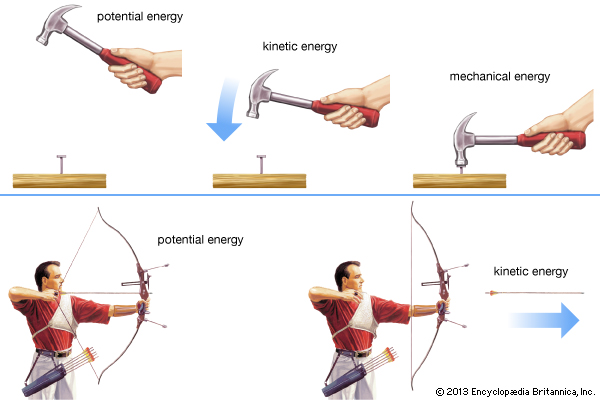
Energy is the ability to do work and can come in different forms: thermal (heat), radiant (light), kinetic (motion), electrical, chemical, nuclear and gravitational.
There are two types of energy:
1) Potential (stored energy)
2) Kinetic (working energy)
Watch the video Amazing Energy Facts to Blow your Mind below by ASAPScience
- While watching the video, consider how the narrator (definition:a person who reads aloud, such as the voiceover in a video, a person who provides information or detail for the audience during viewing) uses scientific vocabulary while describing concepts.
- Consider the following success criterion to meet your learning goal to understand concepts about electricity:
- Ability to use appropriate and specific electrical terminology.
- Ability to show connections between vocabulary and concepts related to electricity.
What Is Electricity?
To further the development of our vocabulary, create a Mindomo mind map that demonstrates your initial understanding of terms (prior to finishing this activity) and your vocabulary growth when you have completed the activities within the Electricity Unit.
 Electric Vocabulary Terms - Mind Map
TASK:
- Use your existing knowledge about Electricity to construct a mind map that defines as many of the terms shown in the list Electric Vocabulary Terms list.
- When formatting your mind map, consider branching each term from the central question: What IS electricity?
- Record a definition for each term, using your own words.
- If you are unsure of a meaning, leave the term in the original list and come back to it again throughout the Unit.
- Your goal at the end of the unit should be to use all of the terms listed in context, by stating their definitions and connections.
- Here is a list of Electric Vocabulary Terms to be used throughout the unit.
 TIP - Save Your Reference
- SAVE the Electric Vocabulary Terms document so that you can make reference to it later (throughout the Unit).
- When saving documents ensure you have named the file with a meaningful title so you can refer back to it easily.
Watch the video: Electric Vocabulary below by TEDEd
- While watching the video, consider how the narrator (definition:a person who reads aloud such as the voice over in a video, a person who provides information or detail for the audience during viewing) uses scientific vocabulary while describing concepts related to electricity.
TIP - ADD to your Electric Vocabulary Mind Map
- After watching the TEDEd Video about Electric Vocabulary, this would be a great time to take the initiative and add to your Mind Map for Electric Vocabulary.
- Consider including the following:
- Definitions of new terms
- Connections between definitions
- Access the Electric Vocabulary Terms document in your Portfolio.

ACTION
The Most Lightning-Struck Place on Earth

connected to the Gulf of Venezuela.
by Waterbodies.org
Lake Maracaibo is a large brackish (definition:mixture of river water and salty seawater) tidal bay in Venezuela and is often referred to as an inlet of the Caribbean Sea.
Lake Maracaibo is the stormiest place on the planet and often provides a great display of lightning and thunder.
Lightning is an example of Static Electricity:
- Static means stationary (definition:not moving; stays in one place except when discharged))
- Recall that all matter (definition:anything that has a mass and takes up space) is made up of atoms (definition:basic unit of a chemical element) that are composed of electrons (definition:negatively charged subatomic particle; orbits the nucleus (middle) of the atom) and protons (definition:positively charged subatomic particle; found in the nucleus (middle) of atom).
- Matter can have a negative charge.
- more electrons (negative charges) than protons (positive charges).
- Matter can have a positive charge.
- fewer electrons (negative charges) than protons (positive charges).
- Matter can have a neutral charge.
- An equal number of electrons (negative charges) and protons (positive charges).
- Matter can have a negative charge.
- Atoms can gain or lose electrons, however, protons do not move from atom to atom.
- Static Electricity is a buildup of electrons on the surface of an object.
Task #1 - What do you KNOW and What do you WANT to Know about Lightning?
- Think about your experiences with lightning.
- Record what you KNOW and what you WANT to know in the KWHLAQ Graphic Organizer
Task #2 - The Most Lightning-Struck Place on Earth:
- Watch the video: The Most Lightning-Struck Place on Earth below from TEDEd
- While watching the video, use the KWHLAQ Graphic Organizer to record your thoughts and ideas using the remaining prompts.
- After watching the video and recording your thoughts and ideas, consider your success criteria by asking yourself:
- Am I able describe how static electricity builds up and discharges?
- Am I able to use basic electrical terminology to discuss the properties of static electricity?
TIP - Save Your Work
- When you have completed the KWHLAQ Graphic Organizer, SAVE the document so that you can make reference to it later.
- When saving documents ensure you have named the file with a meaningful title so you can refer back to it easily.
 Quiz
Quiz
U3A1Quiz
Discovering the Law of Electrostatics by Charging Objects
U3A1StaticElectricity
TIP - Save Your Work
- When you have completed the interactive, SAVE your work so that you can make reference to it later.
- When saving documents ensure you have named the file with a meaningful title so you can refer back to it easily.
Explore a Topic
Use the interactive below to explore a static electricity topic.
U3A1Randomizer

CONSOLIDATION
Electrons on the Move!
Electrical energy is transferred by the movement of electrons through electrical conductors (definition:materials in which electrons can flow easily from atom to atom). Current electricity refers to the steady flow of electrons (definition:negatively charged subatomic particle within an atom; orbits the nucleus (middle) of an atom), whereas static electricity refers to the build-up of electrons on the surface of a material that often undergo a discharge (definition:release or movement of) , resulting in a spark.
When electrons flow through a circuit (definition:a pathway for electrons to flow in such a way that they will return to the original source) in a controlled way, they can power a load to do work. The image below shows examples of various loads.
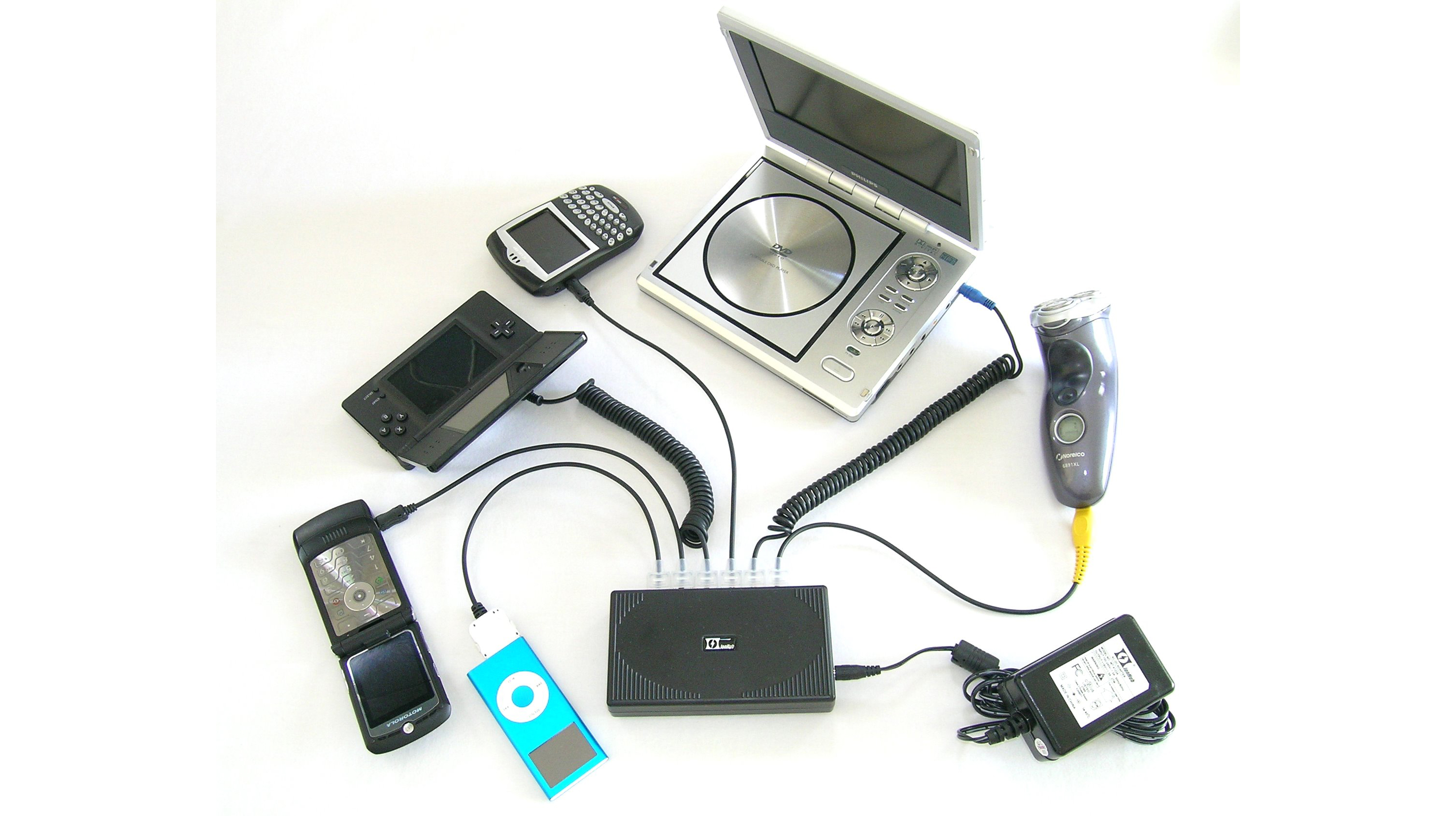
electronic device.
by used under ShareAlike CC BY-SA
The image below shows a simple circuit with a battery, conductive wire, a switch and a light bulb (load). Electrons would travel from the battery, through the circuit, and power the light bulb (when the switch is closed). Loads could be any electrical device: light bulbs, motors, fans, cellular devices, toasters, etc
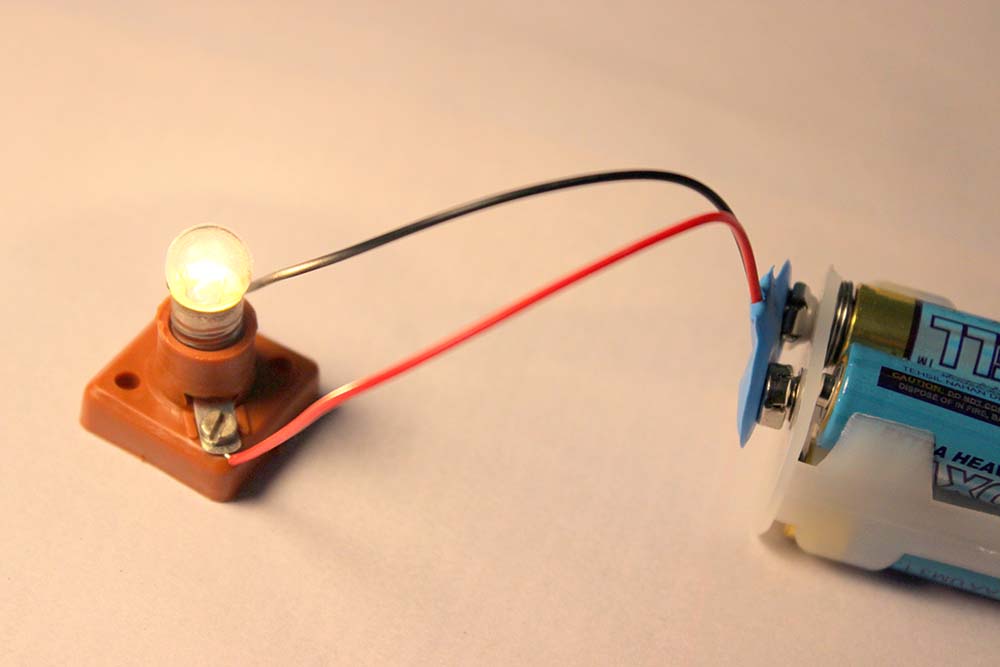
by wikihow.com used under ShareAlike CC BY-SA
Conductors and Insulators
Matter (definition:anything that has a mass and takes up space (volume)) can be classified as a conductor or an insulator.
Conductive material allows electrons to flow and move easily throughout.
- Click here to view an animation that demonstrates how a conductor works.
Insulator materials hold onto their electrons and prevents their flow and movement.
- Click here to view an animation that demonstrates how a insulator works.
What types of materials are conductors vs. insulators? Let’s explore by building circuits and investigating which materials allow electron flow.
 Learning Goals and Success Criteria
 Learning Skills and Work Habits