
Unit 3: My Community
Unit 3, Activity 2: The Playing Field

MINDS ON
Venn Diagram Image Analysis
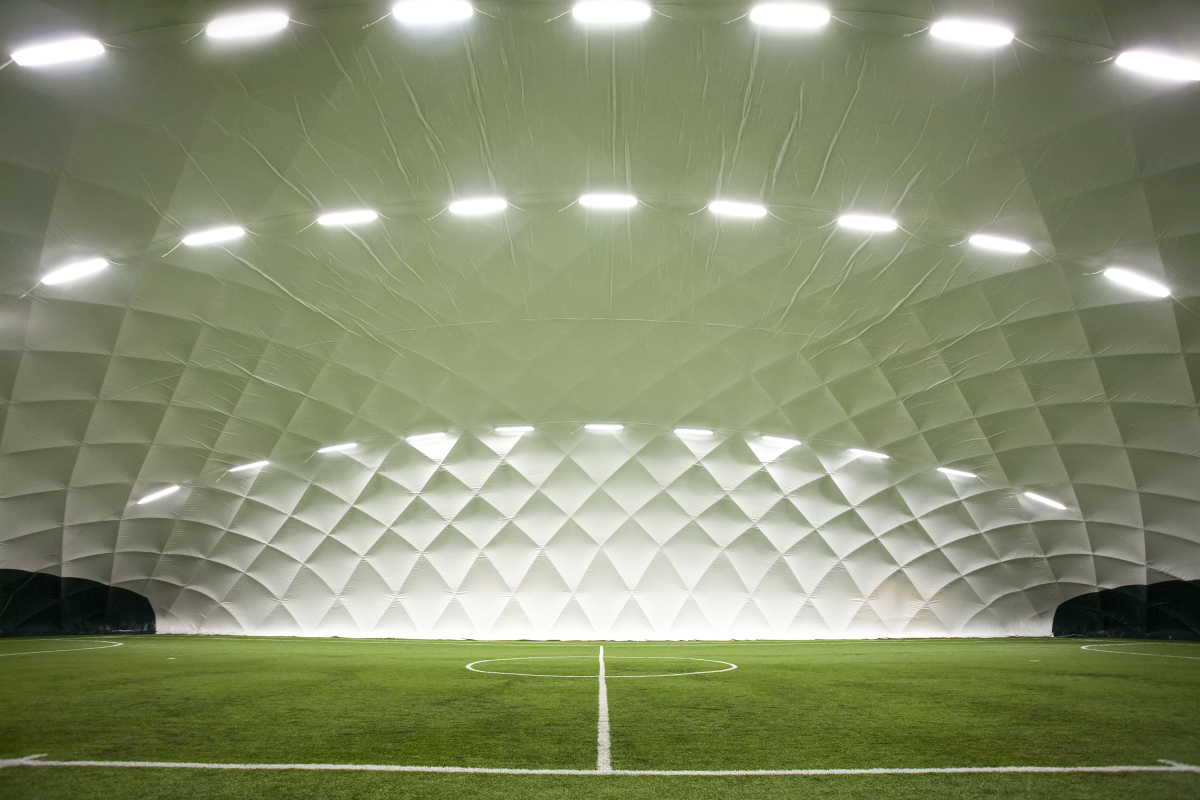
Take a look at the images below.

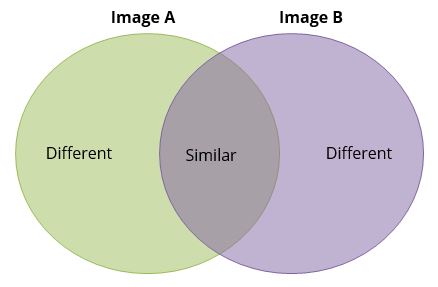
A Venn diagram (as in the example which follows) is a way of showing similarities and differences among two or more things.
Complete your own Venn diagram to show the similarities and differences between the two images, A and B, above. Similarities are placed where the circles overlap. Differences are placed in the non-overlapping areas of each circle.
Some questions or qualities to think about might include:
- What is the purpose of each image?
- When would each be used?
- What do you see in the image?
- Is there something you could do in one image that you could not do in the other?
After completing your Venn diagram, use it to help you reflect on the following questions.
 What Do You Think?
- If you were hosting or attending a sporting event requiring a playing field, which field would you choose? Why?
- What do you think are some positive benefits of each field type? What are some drawbacks? Explain.
- Which field do you think would be most beneficial to your own community? Why?

ACTION
Grass or Turf - Which Is Better?
The images above showed two types of fields. One is made of natural grass and the other of artificial turf(definition:a surface of human-made fibres meant to look like natural grass). It may be difficult to decide which of the two would be better for your own community, since there are so many different factors to weigh.
Let’s explore these before you make your decision.
Crumb Rubber
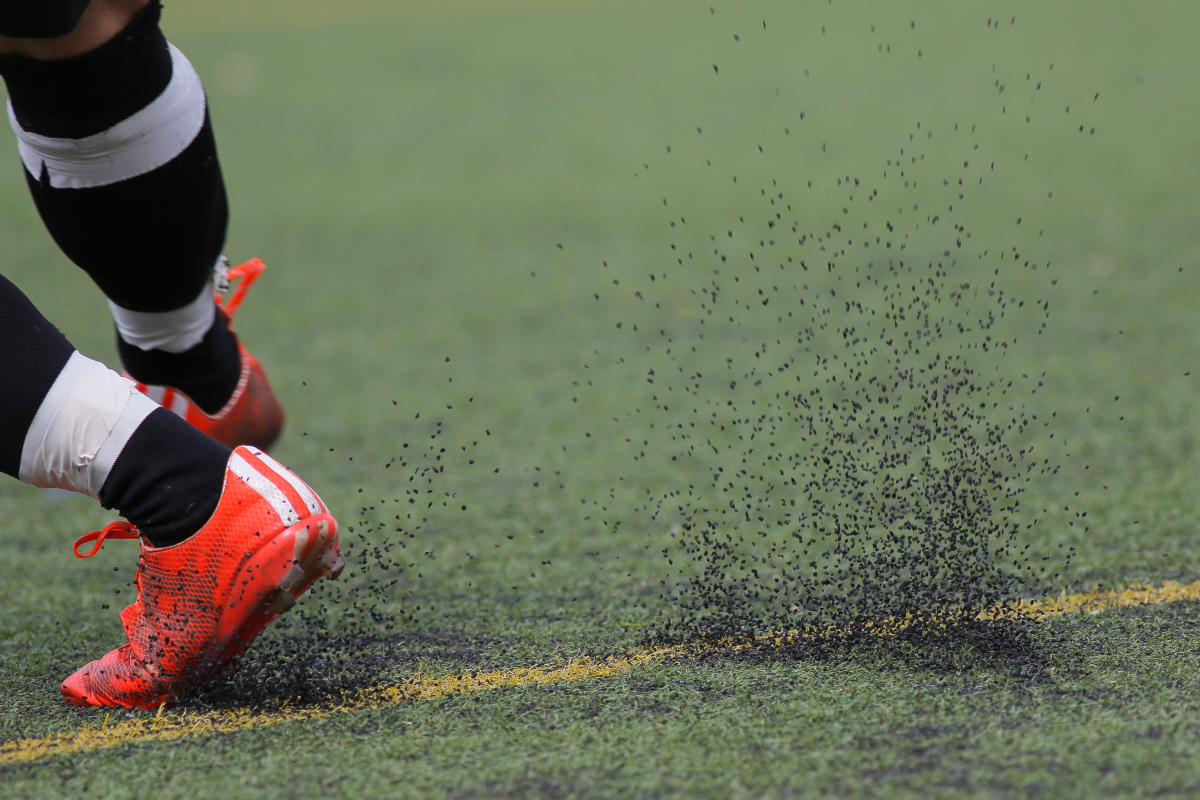
What is that black stuff flying up behind this soccer player, anyway? Those small black particles are called crumb rubber and are frequently found on artificial turf soccer fields. They are often made of discarded and shredded car tires.
While this is a great way to recycle tires, there is also cause for concern with the practice itself. Crumb rubber contains PAH(definition:Polycyclic Aromatic Hydrocarbon) and VOC(definition:Volatile Organic Compound) chemicals, as well as heavy metals such as lead (Pb), zinc (Zn) and manganese (Mn) that can be toxic to humans.
Read this article, Lewis Maguire cancer death prompts 3G pitch review call from BBC. Please note that the article refers to a sports pitch, which is the European way of referring to a playing field. (Original article)
If you want to view any links in this pdf, right click and select "Open Link in New Tab" to avoid leaving this page. (View the original article.)
What Do You Think?
- Is there evidence from the article to support the hypothesis that crumb rubber can cause cancer?
- Developing questions is a great way to help you think more deeply about what you have read. Formulate one good thought-provoking question about this article.
Sports Surfaces - A Climate Change Perspective
When weighing the benefits and drawbacks of certain types of sports surfaces such as artificial turf, one important factor to consider is whether these surfaces might have a negative impact on our environment. Read about some of these considerations below.
Heat Sinks
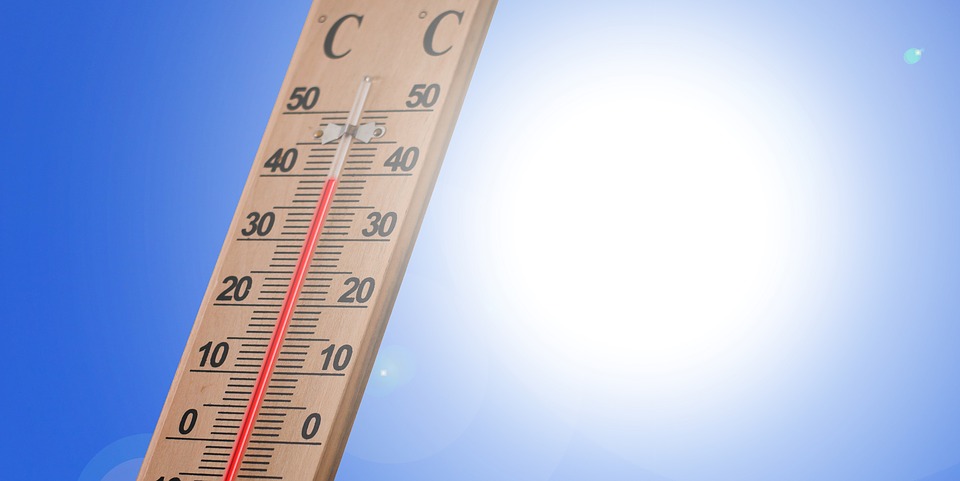
Heat can be stored in different areas of the atmosphere and the hydrosphere(definition:all of the water on the earth's surface and in the atmosphere), as well as in the ground. Artificial turf is often placed over concrete surfaces that absorb, store and ultimately re-emit the heat coming from the sun. This causes artificial turf to be as much as 10 ºC warmer than natural grass fields.
This effect, called the Urban Heat Island effect, is already noticeably heating up urban areas because such a large percentage of their surfaces is paved.
Carbon Sinks
Natural grass produces oxygen and stores carbon dioxide through the process of photosynthesis(definition:the process by which green plants use sunlight to make their own food (glucose)).
Recall the topic of cellular respiration from the My Self Unit. Photosynthesis (as shown below) is the reverse reaction.
Photosynthesis
Cellular Respiration
Plants are natural carbon sinks, which act as a holding tank for carbon. When they create their own food through photosynthesis, they also remove carbon dioxide from the atmosphere, decreasing the amount of CO2 greenhouse gas.
Transportation of Materials
There are some other questions we need to ask regarding artificial turf. For example, do you know where the turf comes from? or how many greenhouse gases are produced throughout the processes involved?
The manufacturing of the turf itself (not to mention its transportation and even its installation) requires energy and machines. Do you think the amount of greenhouse gases created by obtaining, transporting and installing artificial turf is worth the cost to the environment?
Maintenance
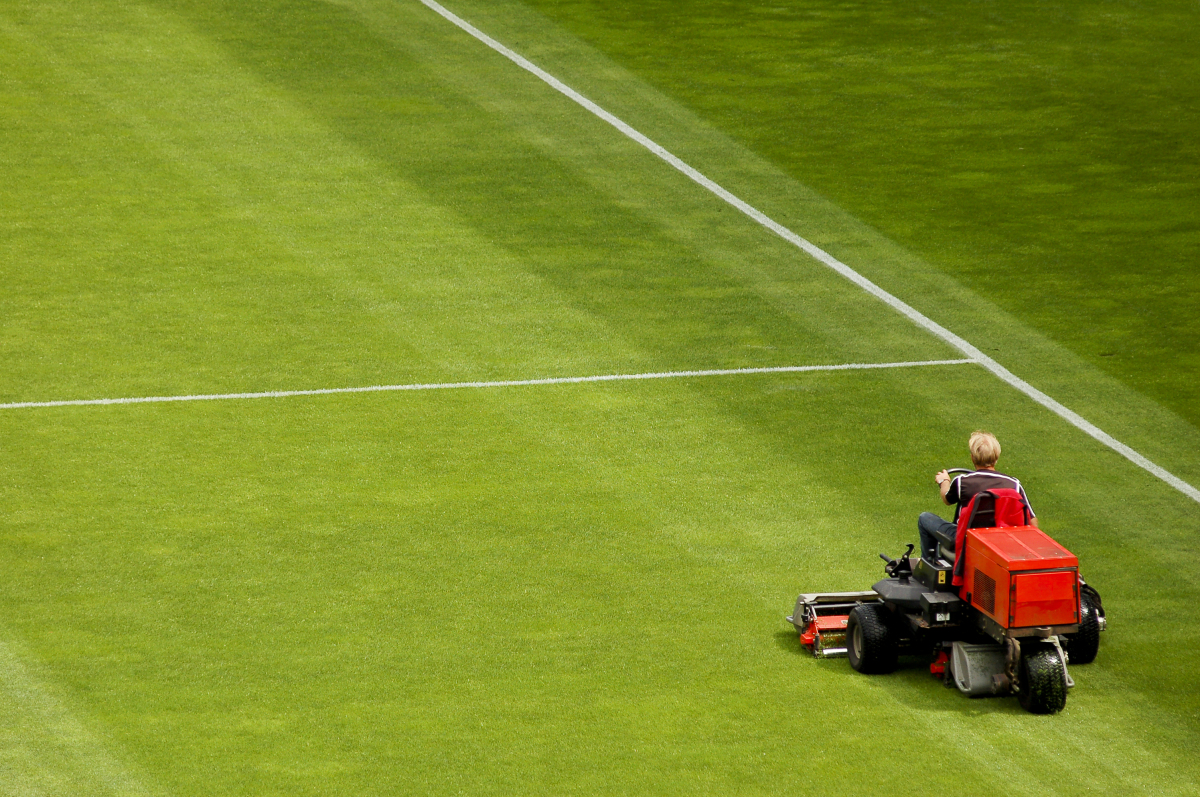
Artificial turf requires a lot of energy to install, but once established, it does not need regular maintenance. Natural grass does require regular maintenance such as cutting, watering or repair due to mud. However, grass naturally allows water to percolate(definition:filter through), while artificial turf requires the installation of an engineered drainage system.
What Do You Think?
- What are some benefits or pros of having an artificial turf sports field in your community?
- What are some drawbacks or cons of having an artificial turf sports field in your community?
- Think back to the Minds On questions posed earlier. Has your opinion changed at all since you first answered those? Why?

CONSOLIDATION
 Artificial Turf Debate Preparation
Debate Statement: My local sports field should be artificial turf.
Agree or disagree.
Now, prepare for your debate by using this interactive.
TurfDebate
Save your preparation to your Portfolio.
 Artificial Turf Debate
Now that you have prepared yourself, it is time for the debate!
1. Begin with one of the following two sentences:
I agree with the statement My local sports field should be artificial turf.
OR
I disagree with the statement My local sports field should be artificial turf.
If needed, revise your position and/or the information you are using to support it.
 Learning Goals and Success Criteria
 Learning Skills and Work Habits