
What do I have to say?
What am I going to write?

MINDS ON
How Do You Feel About Writing?
When you think about having to write for school, which gif best represents how you feel? Why do you feel this way?



Many students struggle with writing in school, but research shows that this generation of students is writing more than any other previous generation. According to the article below, this generation is socializing in an online format called "life writing" - where students are thinking of their audience and changing their tone and language to make sure they are understood.
If you want to view any links in this pdf, right click and select "Open Link in New Tab" to avoid leaving this page. (View the original article.)
 How Do You Feel About Writing?
In a written blog post, respond to the following prompts:
- Explain which gif best represents your feelings on writing for school and why you feel this way.
- Explain which gif best represents your feelings on "life writing" and why you feel this way.
- If you chose the same image for both, give a specific reason to explain why you feel this way.
- If you chose different images, give a specific reason to explain why you feel this way.
- Think about the different types of texts you have been asked to create in previous English classes. What did you like and what did you not like?
- Explain your thinking.
- Do you find writing hard? Why or why not?
- Remember to be specific in explaining your ideas.
- Do you agree with the ideas presented in the article? Why or why not?
- What would you add based on your experiences as a student?
- What other thoughts do you have on the topic of writing?

ACTION
Getting Started
One of the first steps in the writing process is to consider TPA (topic, purpose, audience). Think back to the media unit; in one of the lessons, you considered how to incorporate TPA into your media texts. The skill of considering TPA is the same in writing. Think about it this way:
Topic: This is the subject of your media product.
Purpose: This is the reason behind why you are creating the media product.
Audience: This includes the person/people the media text is created for.
Consider the writing you are likely most familiar with.
In today's modern society, we have more forms of writing than ever before. As you saw in the Minds On activity, more people are engaging in "life writing" that is commonly shared through social media. As with reading, we often do not realize how much we are actually writing throughout our day, as many people do not consider social media posts, texting or comments on posts as writing. Take a look at this infographic to see the statistics on what happens in an "Internet Minute." 18 million texts and 481,000 tweets are sent per minute across the world. All of those messages will have a topic and purpose that the author constructs in order to communicate meaning to their audience. Click on the graphic to see a larger version.

Read through these tweets to see if you can identify the topic, purpose and audience. Also consider what evidence makes you think this way.
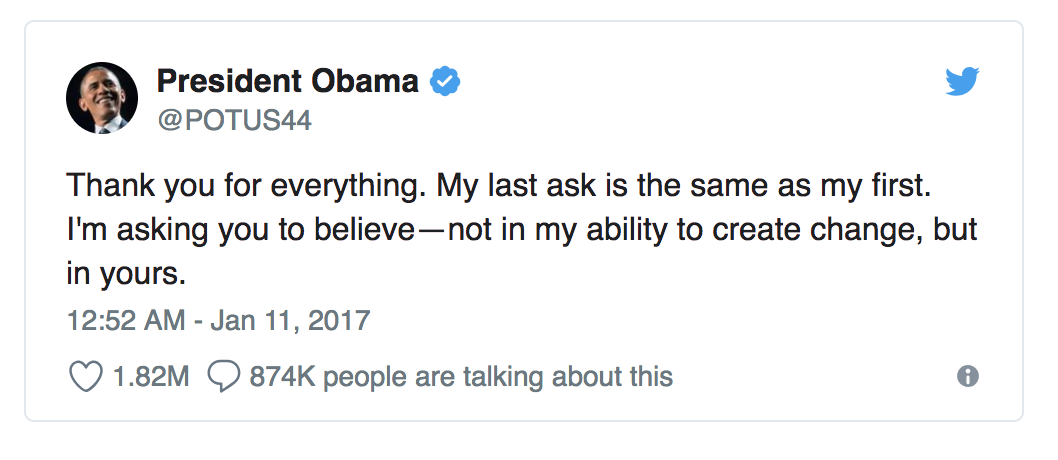
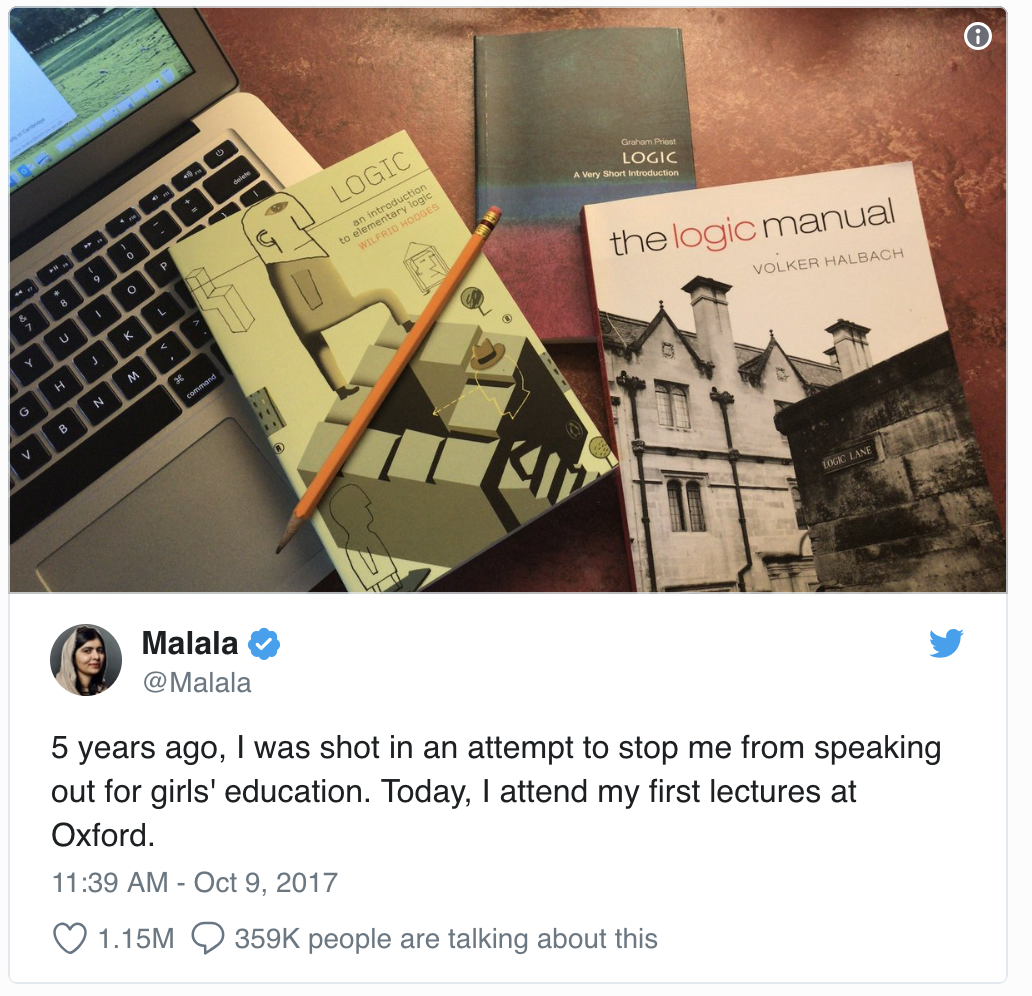
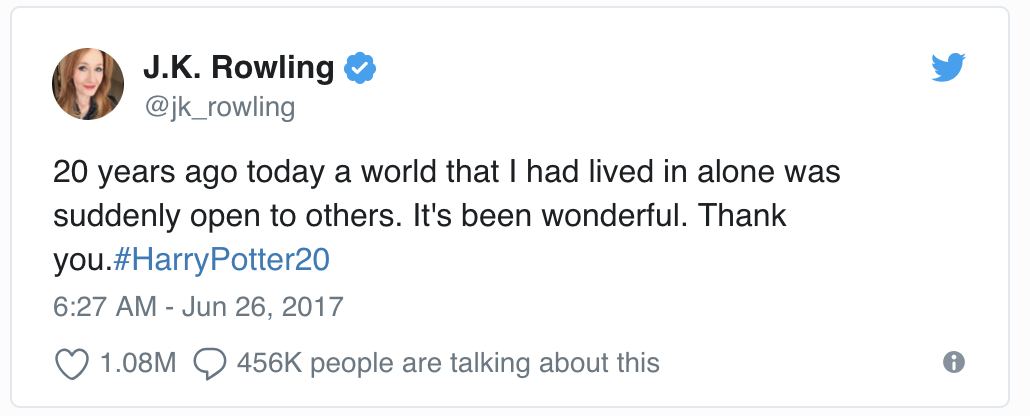
Now, take a few minutes to consider your "life writing." Do you think about TPA when you write your posts, or is it something you do naturally? Most likely the answer is naturally, but for this lesson you will be consciously considering what you are writing about, why you are writing it and who you are writing it for. Before you write for this course, make sure you consider TPA in order to be able to effectively plan your text.
The next step is to plan out what type of writing you will be creating. There are many different forms of written texts, (definition:Written texts include essays, reports, novels, blogs, tweets, articles, diaries, et cetera.) but there are four main types(definition:Types means styles of writing.) that they tend to fit into:
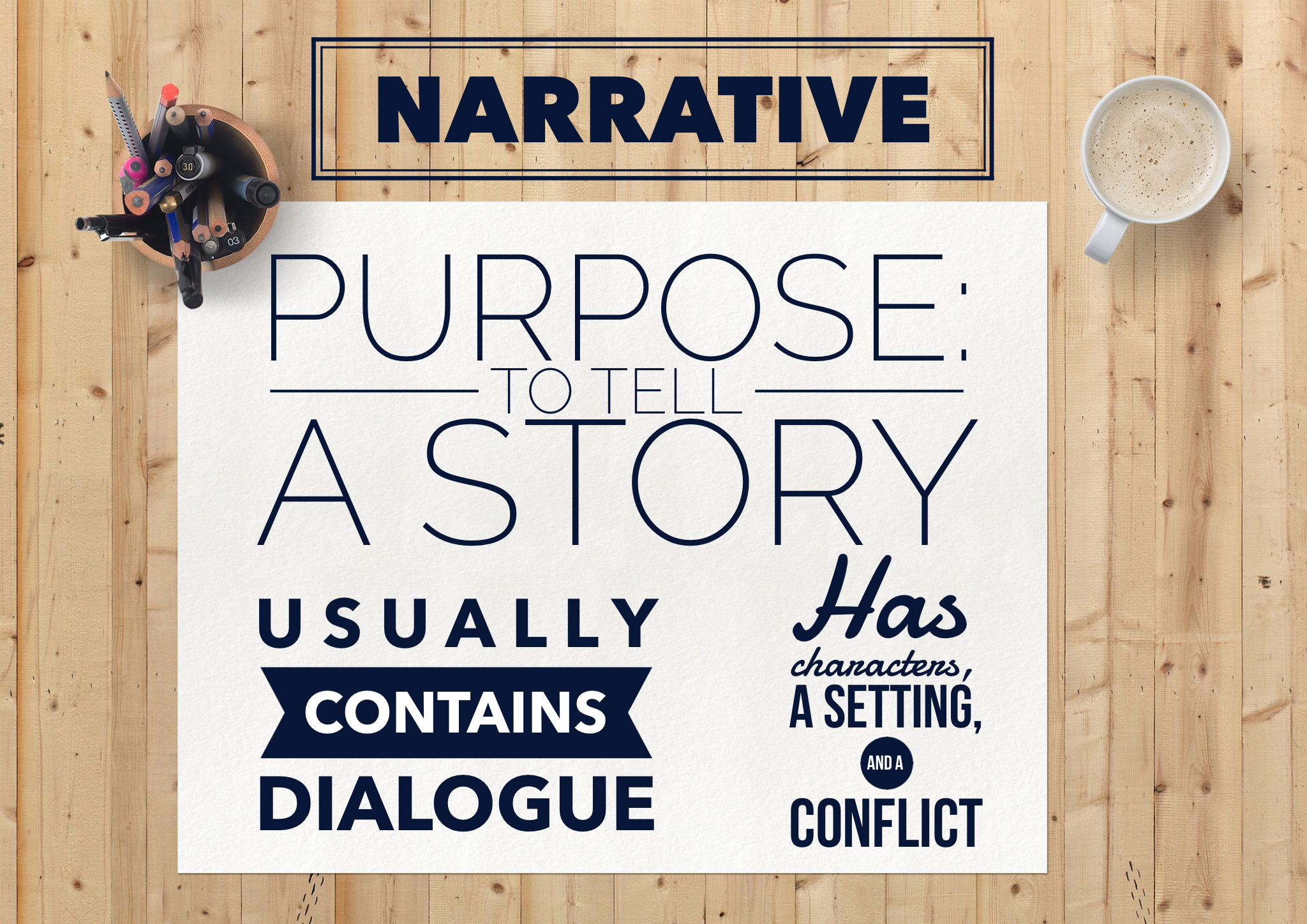
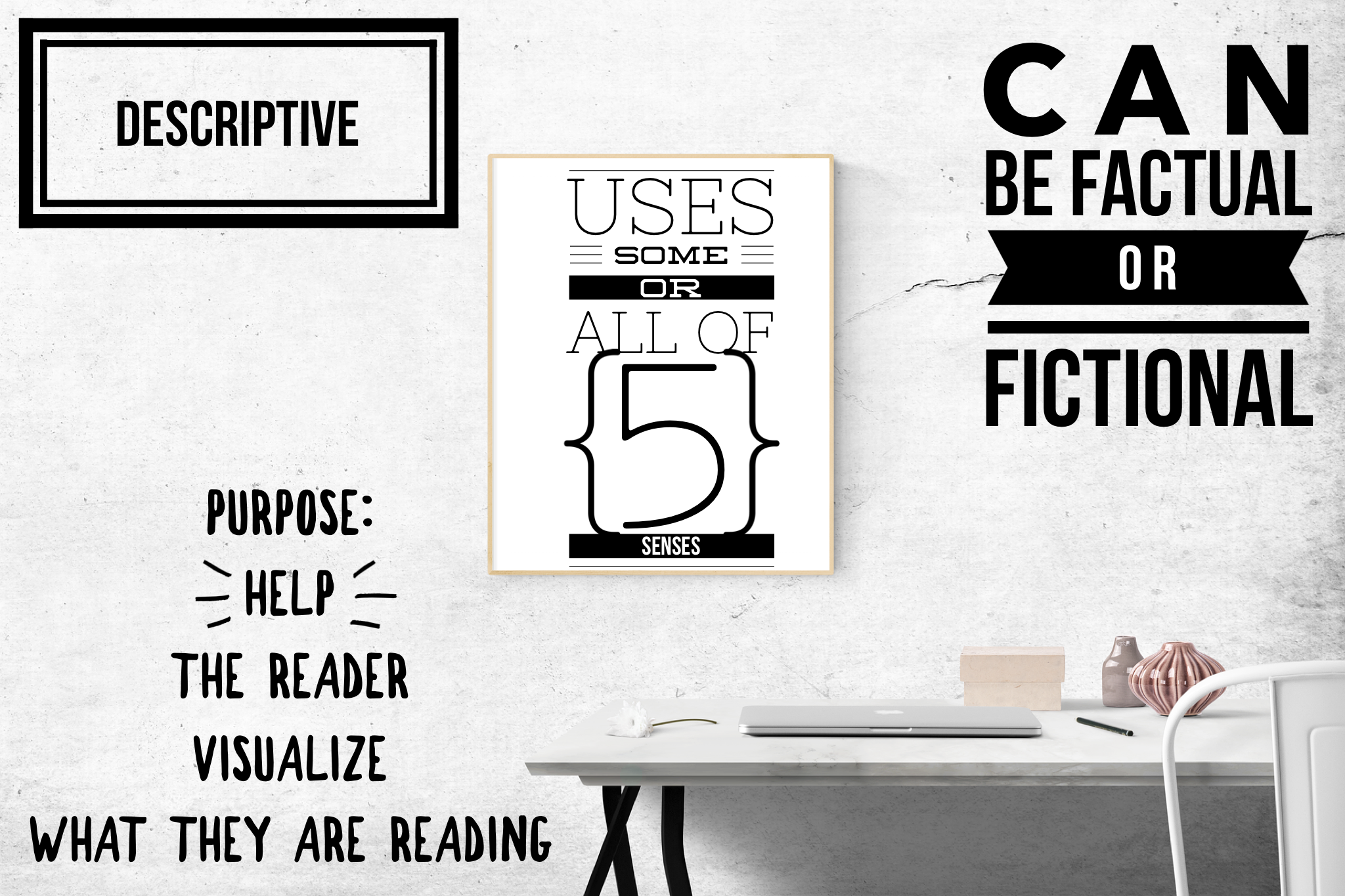
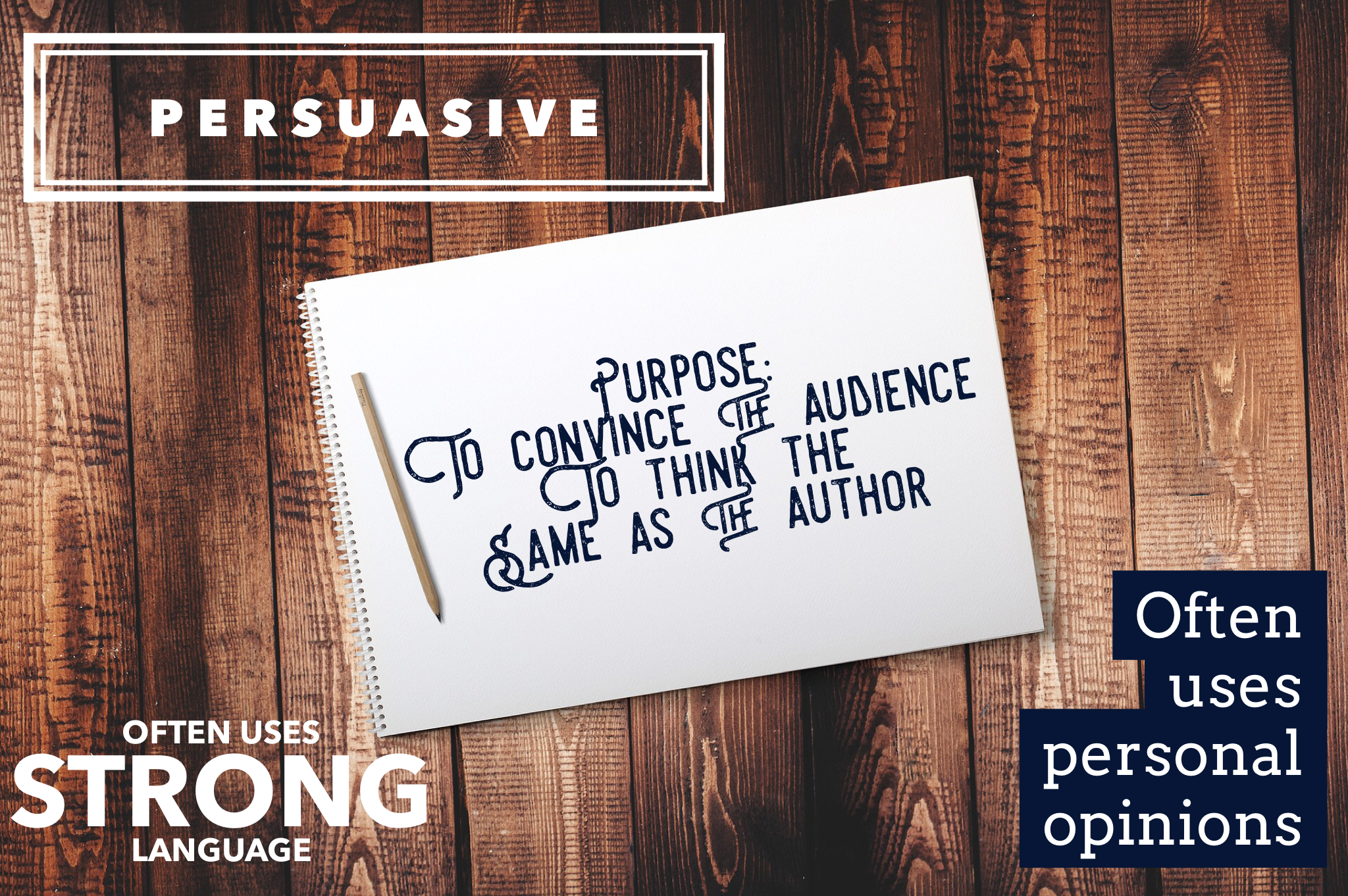
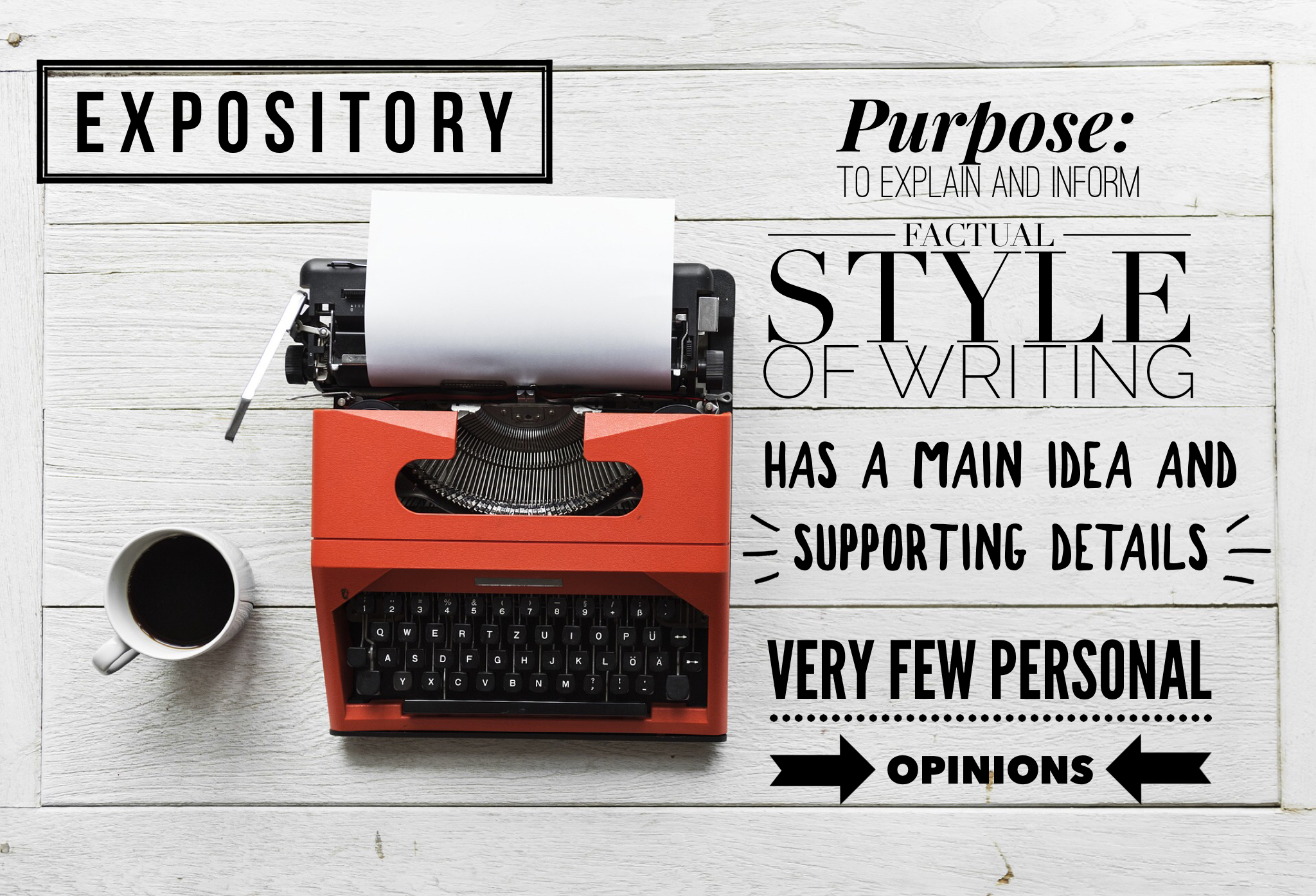


Each style of writing has its own general purpose, but the topics and audiences are decided upon by the writer based on the meaning they are trying to communicate. In this course, you will be writing pieces in all four types. Even though you have the general purpose, you are encouraged to make it more specific and, depending on the task, you may have to decide on the topic and audience.
 What Do I Do Before I Write?
In a method of your choosing, state which type you feel will be easiest for you to communicate your meaning in and which type you feel will be the most difficult. Be sure to explain why you feel this way.
Once you know the TPA and style of writing you will be doing, the next step is to come up with your ideas and organize them in a method that makes sense to you. You may have heard this step referred to as the "brainstorming" phase of the writing process.
The purpose of brainstorming is to come up with a variety of ideas about your topic. It is often easiest to write about a topic that you know about, but this is not always possible depending on the purpose for your writing. There are many ways to brainstorm and there is no right or wrong method; you need to figure out what works for you.
Here are some brainstorming techniques.
Mind Maps: These are diagrams that display ideas visually (can be done using a tool like Mindomo, GoConqr, MindMeister or paper). Click on the graphics to see larger versions.

Here's a mind map explaining how to make a mind map:

Sticky Notes:
If you want to view any links in this pdf, right click and select "Open Link in New Tab" to avoid leaving this page. (View the original article.)
KWHLAQ Method:

Discussions: One of the biggest misconceptions about writing is that it needs to be done in isolation, when it makes a lot of sense to include others in your process. Have some conversations with a friend or adult to help you come up with some other ideas at various points during the writing process.
Once you have a number of ideas, it is time to organize them into some kind of order that makes sense.
- Do you have ideas that go together?
- If so, put them together and remove any that you feel do not work.
- Do you have a chronological (definition: Items are arranged in the order that they happened.) order?
- Do you see a main idea emerging from your brainstorming?
- If so, what are your supporting details?
- Do you have an idea that is catching your attention?
- Do you have enough other details to support your thinking?
- (If not, time to do some more brainstorming.)
- Do you have enough other details to support your thinking?
When you have your ideas organized in a way that makes sense to you, come up with one main idea and use your other ideas to support your thinking.
 Tips
Tips
At this point you should have a main idea and a number of supporting details that work together to express your intended meaning to your audience. Once you are at this point, it is helpful to use a graphic organizer for your writing. This organizer, Basic Writing Outline, can be used to help plan out a persuasive or opinion-based piece of writing. When you are writing in different styles, you will likely want to use one that is specific to that style.
The graphic organizer has two important pieces that students often struggle with when writing:
 How Do I Generate and Organize My Ideas in Writing?
As it is always important to practice when learning a new skill, it is your turn to engage in the prewriting phase. Make a copy of the graphic organizer provided to record each of these:
- Choose a topic, purpose and audience for this writing (appropriate for a classroom of course).
- Brainstorm your thinking on this idea.
- From your brainstorming, create a main idea and supporting details.
- Find proof to support your thinking.
- Explain WHY you think what you think.

CONSOLIDATION
So, What Did You Learn?
In this lesson you learned about the prewriting phase of the writing process.
Reflection #11
In a method of your choosing, share your reflections on what you learned in this lesson. Some ideas to consider are:
- Have you ever used the prewriting process or planned out your writing in such a detailed method before?
- Does this help you streamline your thinking? Why or why not?
- Is there anything you would do differently? Explain your changes and why you would do things differently.
- Were you able to connect the idea of TPA (topic, purpose, audience) in writing to what you learned in the media unit?
- Explain how it is similar and different in writing to how it is used in media texts.
- Explain which method of brainstorming is most helpful to your learning style and why you feel this way.
- Were you able to connect the concept of main ideas and supporting details in writing to what you learned in the reading unit?
- Explain how it is similar and different in writing to how it is used when reading.
Did I Remember To...
| Checklist Items | |
|---|---|
|
write a blog post explaining how I feel about writing? |
|
|
determine my thinking about which writing type will be the easiest and most challenging for me to communicate my meaning? |
|
| read through the prewriting process and complete each step? | |
|
complete the graphic organizer on an idea of my choosing? |
|
| complete Reflection #11? |
 Learning Goals and Success Criteria
 Learning Skills and Work Habits