
How can I best be heard?
How can I improve my listening and speaking?

MINDS ON
The Hook
One of the most important elements of giving an effective presentation is hooking your audience right away so they want to listen to your thinking. If you don't capture the attention of your audience, you will have a more difficult time communicating your meaning. According to Microsoft, the average person has an attention span of just eight seconds (which is even less than a goldfish!), so how do you hook and hold the attention of your audience?
Simon Sinek is a popular researcher, speaker and author who focuses on how to be an effective leader. Watch his video about how to capture the attention of your audience and craft a talk that people will want to hear in its entirety.
 How do I hook and maintain attention from my audience?
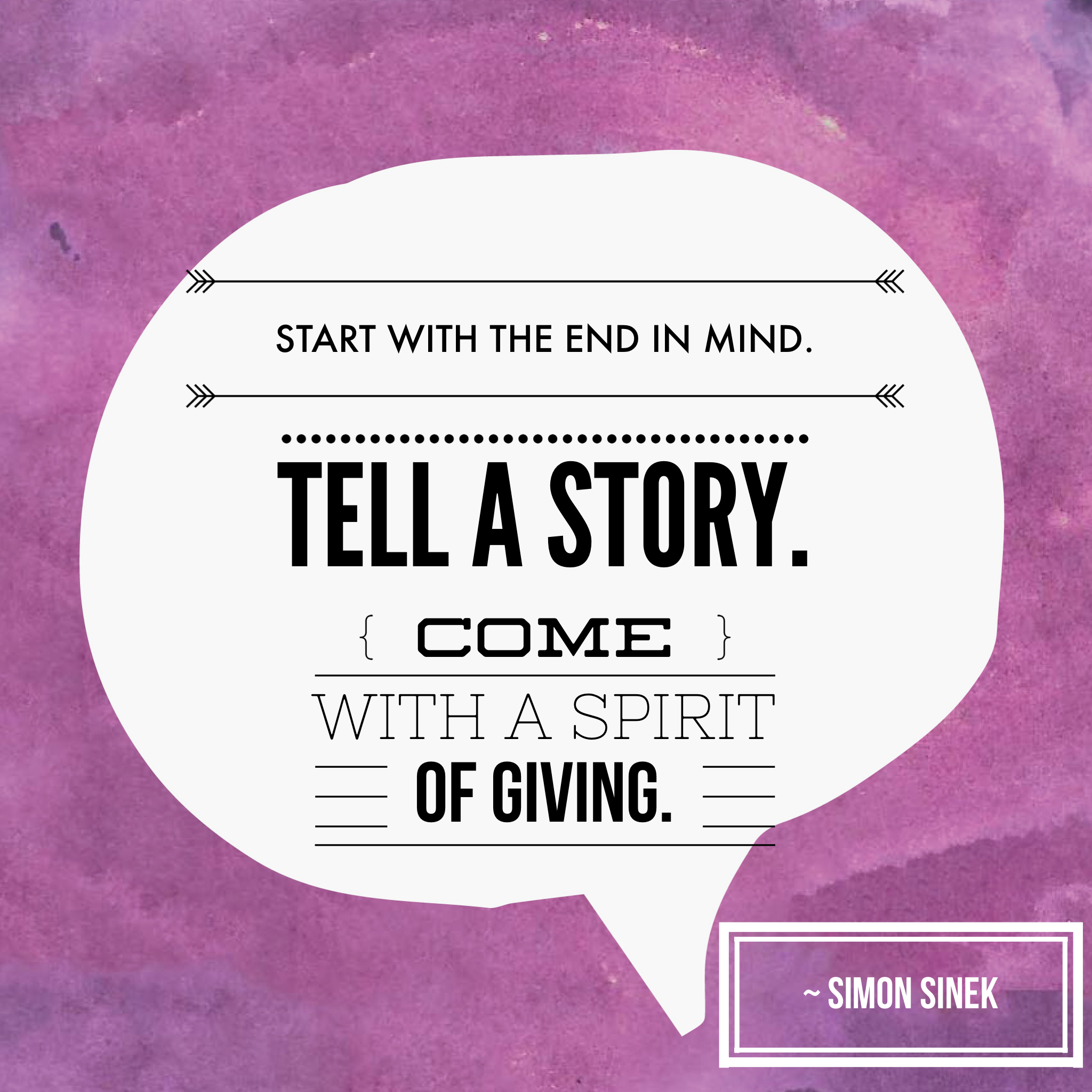
In a style of your choosing, reflect on Simon Sinek's ideas for crafting a talk. Use the following image as a prompt for your reflection.

ACTION
 Oral Communication Summative
At this point in the course you have shared your voice about something meaningful in writing, but now it's time to share your voice in a speech. To accomplish this, complete each of the following steps:
- Think about all the TED Talks and other meaningful voices you have heard in this course. Which one resonates with you? Which one is the most impactful or most powerful or most memorable? Why do you think this talk stuck with you?
- Think about a social justice issue or problem in the world.
- How do you feel about this issue?
- Why is it a problem in the world?
- Why is it something you are thinking about?
- Does it have a special significance to you? If so, why?
- Look at the TED website to see if there is a talk on your social justice issue or problem (or one on a similar topic).
- If there is a talk on the TED website, watch it and deconstruct the talk using the "Oral Communication Summative Organizer."
- If there is not a talk on the TED website, find one on YouTube on your topic.
- Use the "Oral Communication Summative Organizer" to deconstruct the talk.
- The next step involves using your interconnected skills of reading and writing.
- Reading: Think about a connection you can make to this social justice issue or problem in the world (text-to-text, text-to-self, text-to-world) and research this new idea. What is something new you learned? How does this new learning help you with your thinking on this social justice issue or problem? Be sure to look for bias in what you learn online and ensure you research from multiple perspectives so that you have a more complete picture of this issue.
- Writing: Using the persuasive writing organizer below, plan out and write a draft of a talk that shares your opinion on the issue for one audience. You will then make a copy of the talk and change the language to suit another chosen audience. Incorporate the strategies of logic, emotions and credibility in order to persuade your audiences.
 Tips
Tips
Your topic sentence can tell a story if you wish to take Simon Sinek's advice by starting with a story.
If you want to view any links in this pdf, right click and select "Open Link in New Tab" to avoid leaving this page. (View the original article.)
- Topic: a social issue of your choosing.
- Purpose: to share your opinion on a social justice issue.
- Be sure to follow Chris Anderson's advice of having one idea that you are planning to share with the group. This means you need to formulate your opinion and use evidence to support your thinking to help persuade your audience.
- Audience: you will be writing one talk but altering it for two different audiences.
- For example, you can choose potential audiences such as:
- Children under 12 years old;
- Teenagers;
- Adults;
- Your parents or guardians;
- Seniors (over 65 years old).
- For example, you can choose potential audiences such as:
-
Create a visually appealing slide deck that engages and provokes reflection within your audience. Note: You may decide you want to create two slide decks if that is the most effective method in communicating your meaning to the audience.
-
Practice giving the talks out loud. Think about your body language, diction and vocal strategies as you are practicing, so that you are the most effective at sharing with your audience.
-
Using a screencasting tool like Vidyard GoVideo, record yourself giving the talks with the slides on your screen. You may have to record a couple of times to get it to sound and look the way you want it to.

CONSOLIDATION
So, What Did You Learn?
In this lesson you completed the summative task for the oral communication unit.
Reflection #17
In a method of your choosing, share your reflections on what you learned in this unit. Some ideas to consider are:
- How did Simon Sinek's advice help you craft your talk?
- What other advice would you give to someone who is writing a talk?
- What kinds of strategies did the speaker from your chosen video use?
- Were they effective? Why or why not?
- Think about how the task asked you to use interconnected skills.
- Did you find it helpful to think about these skills as working together?
- Did you find any other connections between skills?
- How would you explain this process to a peer?
- Discuss your reflections on writing two talks on the same topic but for different audiences.
- How did getting feedback improve your finished products (both writing and speaking)?
- How do you feel about your slidedeck?
- What did you do well in this task?
- What do you wish to improve next time?
Did I Remember To...
| Checklist Items | |
|---|---|
| complete a reflection on Simon Sinek's video? | |
| deconstruct a TED Talk or other video using the "Oral Communication Summative Organizer"? | |
| do effective research on my topic? | |
| use the persuasive writing organizer to plan out a talk on my topic? | |
| write a draft of my talk then make a copy of it and change the language for a different audience? | |
| complete Reflection #17? |
 Learning Goals and Success Criteria
 Learning Skills and Work Habits