
Biological Molecules
Water: The Importance of Water to Living Things

MINDS ON
Some Key Terms
Look for these terms in this Activity. You should practice using them as you compose your responses to the upcoming tasks. In particular, make sure to incorporate these terms in the Consolidation task.
Realize, though, that this list is not exhaustive so you should look for opportunities to include more relevant terminology related to water molecules.
|
functional group |
polarity |
|
intermolecular forces of attraction |
hydrogen bond |
Pieces Coming Together
A lot of what we will work on in this course will be building on things you’ve seen in past courses. For example, in Grade 10, you learned that organs are made of tissues and specialized cells and that chemicals react in predictable ways.
In Grade 11, you learned that animal systems provide important molecules necessary for life.
This course is like a continuation of Grade 11 Biology where you learned about things that were easier to see and observe as it involved organs and organisms.
Now in Grade 12 we focus on the microscopic layer (zoomed in) and macroscopic layer (zoomed out): biological molecules, cells and populations. This is important to know because a lot of what we will work on in this course will be building off of things you’ve seen in past courses.
Before we get right into the main ideas of this Activity you should know about two important tasks you need to complete as you’re working. You will be asked questions as you go. It is best to keep track of these questions and your answers in your Portfolio. Thinking about and recording the answers to these questions will direct the way you work to complete the main tasks in this course.
 How Does Understanding Change?
Understanding 1. What did you know about the water molecule before you started this activity?
 Tic-Tac-Toe
Now, let’s start by tapping into some important ideas and words. Below is a tic-tac-toe board. Make a straight line (horizontal, vertical or diagonal) by clicking on three words that you can connect in a complete sentence or thought. Write your sentence in the space beside the board. Create three sentences in total.
WordTicTacToe

ACTION
Unique Properties of Water
Water is a chemical that has many unique properties. It can exist as a solid, liquid and a gas in nature. It is universal. Not only is it found almost everywhere on earth, it’s what we look for on other planets. It dissolves many substances allowing them to move towards, into, out of, and away from cells. It also allows substances to combine in a variety of different ways.
Let's look at it:

The shape of a water molecule, and the hydrogen and oxygen atoms connecting it together: that’s enough to make water the amazing substance it is.
In the coming Activities we will look to see how the shape of molecules is important. For now, though, let’s start with the atoms connected together in water: O-H. This group of atoms is called a functional group(definition:A group of atoms responsible for certain properties of a molecule.). The -OH functional group is found in many biological molecules. There are other functional groups as well:
FunctionalGroups
Remember that between non-metals, electrons are usually shared in a covalent bond. Some elements, like carbon and hydrogen share electrons almost equally. We describe this as non-polar. (definition:A molecule or part of a molecule where atoms share electrons equally.)Since water contains hydroxyl functional groups which are polar, (definition:A molecule or part of a molecule where atoms share electrons unequally)we can say that water is polar.
One of the important things about functional groups is that they determine how they interact with each other. Do they attract, or do they repel? Is this a strong attraction or weak attraction? This will determine if a substance is a liquid because it melts easily, or a solid because the molecules are attracted tightly together. Or if it’s hard or soft. Soluble or insoluble.
Watch one of the two videos about the water. In particular, look for different properties of water and how they are explained by and connected to the attractive force between water molecules.
Why is Shape Important in Biology?
Shape 1. Describe the physical property of water that you find the most interesting.
NASA Water Search
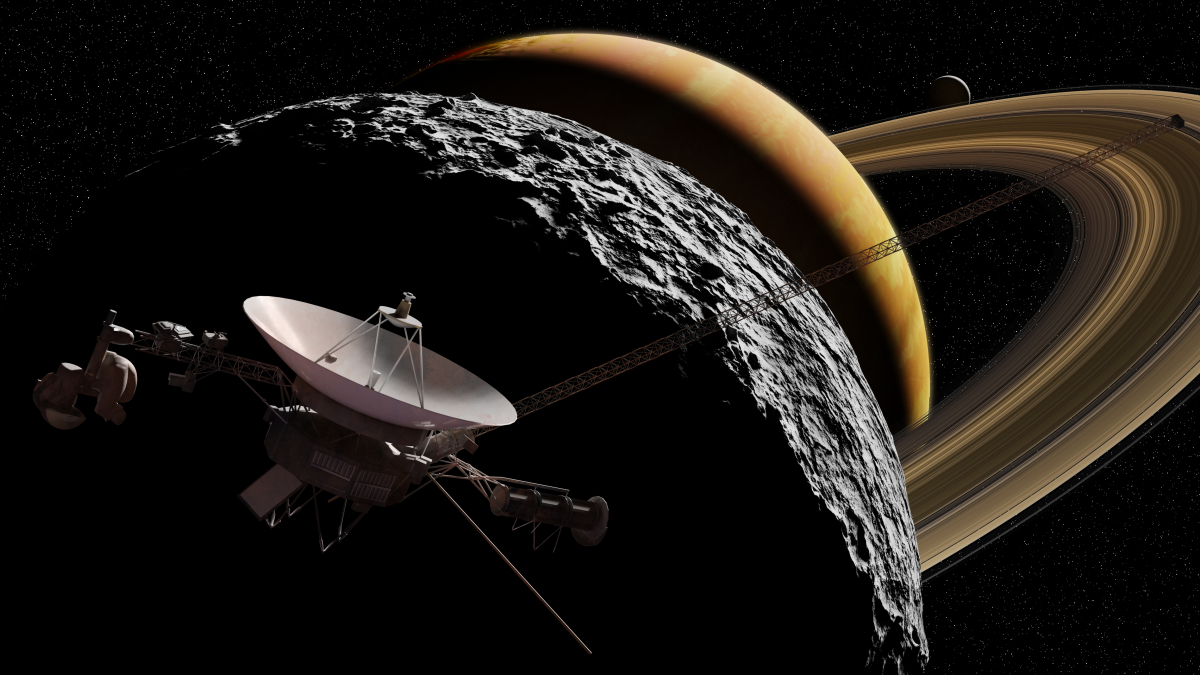
When Scientists attempt to look for life in the universe, the first thing they are looking for is liquid water. In our solar system there is evidence of water on Mars, and liquid water on moons around Saturn and Jupiter, among other places.
Polarity and Intermolecular Forces of Attraction
In addition to hydrogen bonding, there are other intermolecular forces of attraction. (definition:An interaction between two molecules that can either be attractive or repulsive.)These attractive forces can be organized on a scale from weakest to strongest.
Polarity
 Quiz
Quiz
Take the following quiz to check your understanding of functional groups.
FunctionalGroupsQuiz

CONSOLIDATION
Summary
This Activity introduced the big idea that certain molecules are important to biology and their structure affects their function. Specifically,
- water has a functional group that gives it specific properties.
- other functional groups gives molecules different properties depending on the type of intermolecular force of attraction they make.
 Investigating the Properties of Water
Perform a lab using household materials to investigate the properties of water. Look for ways that you can present data and observations clearly and comprehensively. Finally, practice using vocabulary related to biochemistry to describe biological molecules.
Investigation: Properties of Water
Materials Needed:
- two glasses
- dish soap
- a coin (smaller size is best, like 10¢)
- a plate (plastic or ceramic)
- waxed paper
- a coffee filter
- a ruler
- a non-permanent marker
- rubbing alcohol
- two ice cubes
- a ¼ cup measure
- vegetable oil
- sugar
- teaspoon
- tap water
- paper towel
Part 1: How much water will a coin hold?
- Obtain a clean, dry coin and place it on a flat piece of paper towel.
- Fill a glass with water.
- Dip a clean finger in the water and then drop water onto the coin. Continue to add drops (and dipping the same finger in the water as needed), counting the drops until it overflows. The drop that causes the overflow doesn’t count. Record the amount of water.
- Dry the coin.
- Coat the coin with a very thin layer of dish soap. Set it on a dry piece of paper towel.
- How much water does the coin hold now?
- Explain the effect in terms of cohesion (hydrogen bonding between like molecules) and surface tension. You may do this later when you’re completing your write-up.
Part 2: Water Drop Shapes
- Obtain a clean plate and a square of waxed paper. Fill a glass of water.
- Dip a clean finger in the water and then carefully drop one drop onto the plate.
- Repeat Step 2 with the waxed paper.
- Carefully examine and describe the drop shapes.
- Explain the difference in drop shape in terms of adhesion (the formation of hydrogen bonds between molecules of different types) and hydrophobic interactions. You may do this later when you’re completing your write-up.
Part 3: The Climbing Properties of Water
- Take a coffee filter and fold it in half to make a half circle. Fold it again to make a quarter circle. Fold it one last time to make an eighth of a circle.
- Measure 1.5 cm from one end of the point of the folded coffee filter and mark a small dot with a water-soluble marker. Let the dot dry for a minute then re-apply the marker to the same dot. Let the marker dry another minute.
- Add water to a glass to a depth of 0.5 cm.
- Insert the folded coffee filter with the point and ink down. The ink dot should be 1 cm above the water.
- Observe what happens over the next 15-20 minutes.
- Record the distance each colour traveled from the 1.5 cm starting mark.
- What did the water do? How did the ink change? Explain your results using the terms capillary action, adhesion, polar molecules and hydrogen bonding. You may do this later when you’re completing your write-up.
Part 4: Can water float?
- Pour water into a clean glass so that it’s 2 cm deep. Fill another clean glass with rubbing alcohol also 2 cm deep.
- Place an ice cube into each glass. Consider the relative densities of the three substances. Can water float?
- Explain the effect in terms of polarity, density, and the role of hydrogen bonds. You may do this later when you’re completing your write-up.
Part 5: Solubility
- Measure ¼ cup of water into a clean glass.
- Add 1 tsp of sugar. Stir to dissolve completely.
- Repeat Step 2 counting the number of teaspoons until the sugar no longer dissolves. The teaspoon which doesn’t dissolve doesn’t count.
- Empty, wash and dry the glass and teaspoon.
- Measure ¼ cup of vegetable oil into the dry glass.
- How many teaspoons of sugar dissolve this time?
- What is physically happening when we say something is dissolved? Explain your results using the terms hydrophobic interactions, intermolecular force of attraction and hydrogen bonding. You may do this later when you’re completing your write-up.
If you prefer, you can download a copy of this investigation.
How Does Understanding Change?
Understanding 2. How has your thinking of water changed based on what you learned in this activity?
Why is Shape Important in Biology?
Shape 2. Why do you think in Biology it is important to have an understanding of intermolecular forces of attraction?
Shape 3. List and describe two functional groups you believe are most important to living things.
 Learning Goals and Success Criteria
 Learning Skills and Work Habits