
Biological Molecules
Carbohydrates: More than Just Energy

MINDS ON
Some Key Terms
Look for these terms in this Activity. You should practice using them as you compose your responses to the upcoming tasks. In particular, make sure to incorporate these terms in the Consolidation task.
Realize, though, that this list is not exhaustive so use initiative to include other relevant terminology related to carbohydrates.
|
essential nutrient |
carbohydrate |
monosaccharide |
|
isomer |
glycosidic linkage |
monomer |
|
polymer |
disaccharide |
oligosaccharide |
|
polysaccharide |
intermolecular force of attraction |
hydrogen bond |
|
macronutrient |
|
|
Nutrition and Macromolecules
From our perspective as consumers in a food chain, we must ingest all the nutrients we require. These essential nutrients(definition:Nutrients that an organism can only get from their environment.) are found in a variety of different foods that are part of a balanced diet. Our body can convert these essential nutrients into other important biological molecules. The most important nutrients for us are carbohydrates(definition:A type of neutral compound made of carbon, hydrogen, and oxygen mostly formed by green plants and is a major class of animal foods.). They are found in almost every food we eat and without them we would quickly run out of energy. Various foods have distinct flavours and textures because they contain different types of carbohydrates.
The carbohydrate content of 10 different food items is shown below. Drag the name of each food item (not the picture of each food item) and drop it on the sweetness scale according to your taste experience.
CarbContent
 How does understanding change?
Understanding 3. What patterns do you notice in your grouping?
Understanding 4. What similarity did you notice among the names of all the carbohydrates?
How all biological molecules are used by cells and the body depends on the structure of those molecules. The functional groups that make up different biological molecules are related to the types of intermolecular forces of attraction(definition:An interaction between two molecules that can either be attractive or repulsive.) that are made between those molecules. Also, the shape and size of the molecule is important.
There are four main types of nutrients that we require in large amounts. For this reason they are called macronutrients(definition:A chemical element or substance that is essential in relatively large amounts to the growth and health of a living organism.). They are also unique among other nutrients because they are made of smaller molecules, called monomers(definition:Small chemical molecules that can be connected together to make larger molecules.), put together to make larger ones, called polymers(definition:A chemical molecule made from many smaller monomer molecules.).
How does understanding change?
The following video describes the four main macronutrients and their monomers. After watching the video answer the following question.
Understanding 5. Explain which of the 4 macronutrients do you think is most important to the proper functioning of your body?
 How does understanding change?
Making analogies are a good way to see if you understand a concept. For example, polymers are like toy blocks that connect together because they’re made of repeating “monomer” blocks.

Describe another analogy for monomers and polymers. A good analogy uses familiar ideas or concepts.
Monomers and polymers of carbohydrates each have different uses. This video will give you a taste of what’s to come next.

ACTION
Uses of Carbohydrates

There is a wide variety of different carbohydrates so it’s sometimes difficult to describe them as a group with similar characteristics. However, as you have seen, all carbohydrates share a similar chemical composition: molecules composed of carbon, hydrogen and oxygen. The name carbohydrate also reminds us of this composition: when we say something is hydrated we understand that it is full of water. That makes carbohydrates molecules with a simple formula of CH2O, or any other number of those three atoms in a similar ratio: 1 C : 2 H : 1 O.
At the end of this Activity you will explain how the structure of different carbohydrates is related to their function. So let’s first explore some of the different uses of carbohydrates in cells. Look specifically for which carbohydrate molecules are used for different purposes.
 Concept Card Mapping Carbohydrates
- Watch the following video.
- Organize the word cards to show how they are connected to each other. You could use a mind map to represent the connections.
- Before you continue, you may want to take the initiative to re-watch the video to see if the cards are organized in a way that makes sense to you.
- If you are using a mind map, add linking words to describe the connections between your word cards. Your connections should
- be meaningful;
- be well-organized and easy-to-follow;
- show your understanding of the vocabulary.
Why is shape important in Biology?
Shape 4. Why are cellulose strands better as a structural carbohydrate?
Structures of Carbohydrates
 Quiz
Quiz
Check your understanding of the structures of carbohydrates. Visit the Dallas Learning Cloud, scroll down the page to the Functional Groups of Carbohydrates title, then click on the Launch Activity bar.

In some cases, the carbon, hydrogen and oxygen can be arranged differently with the same number of atoms.
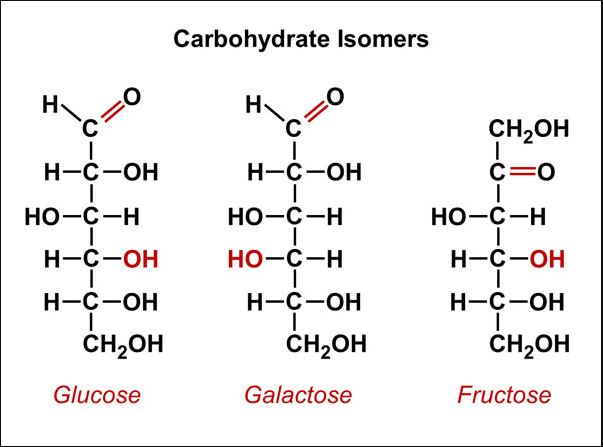
by Dallas County Community College
Notice that each of these carbohydrates has the same number of each element. They can all be summarized as C6H12O6. However, the way the functional groups are organized is different. We describe these three carbohydrates as isomers. (definition:Chemical molecules made from the same number of each type of element but those elements are arranged differently.) Because they have different structures they have different properties.
Modeling Carbohydrates
Using the CheMagic Virtual Molecular Model Kit, build the following four monosaccharides.
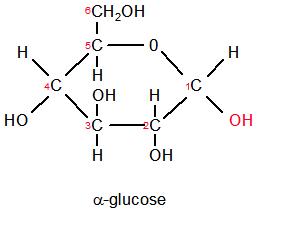

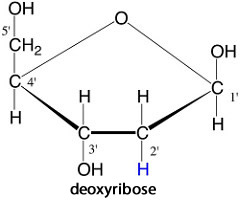
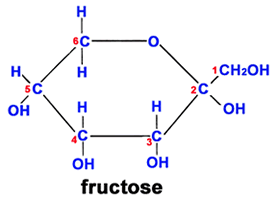
Take a screenshot of each molecule.
Compare the structure of two of these monosaccharides in a Venn diagram
- be meaningful;
- be well-organized and easy-to-follow;
- show your understanding of the vocabulary.
Chitin
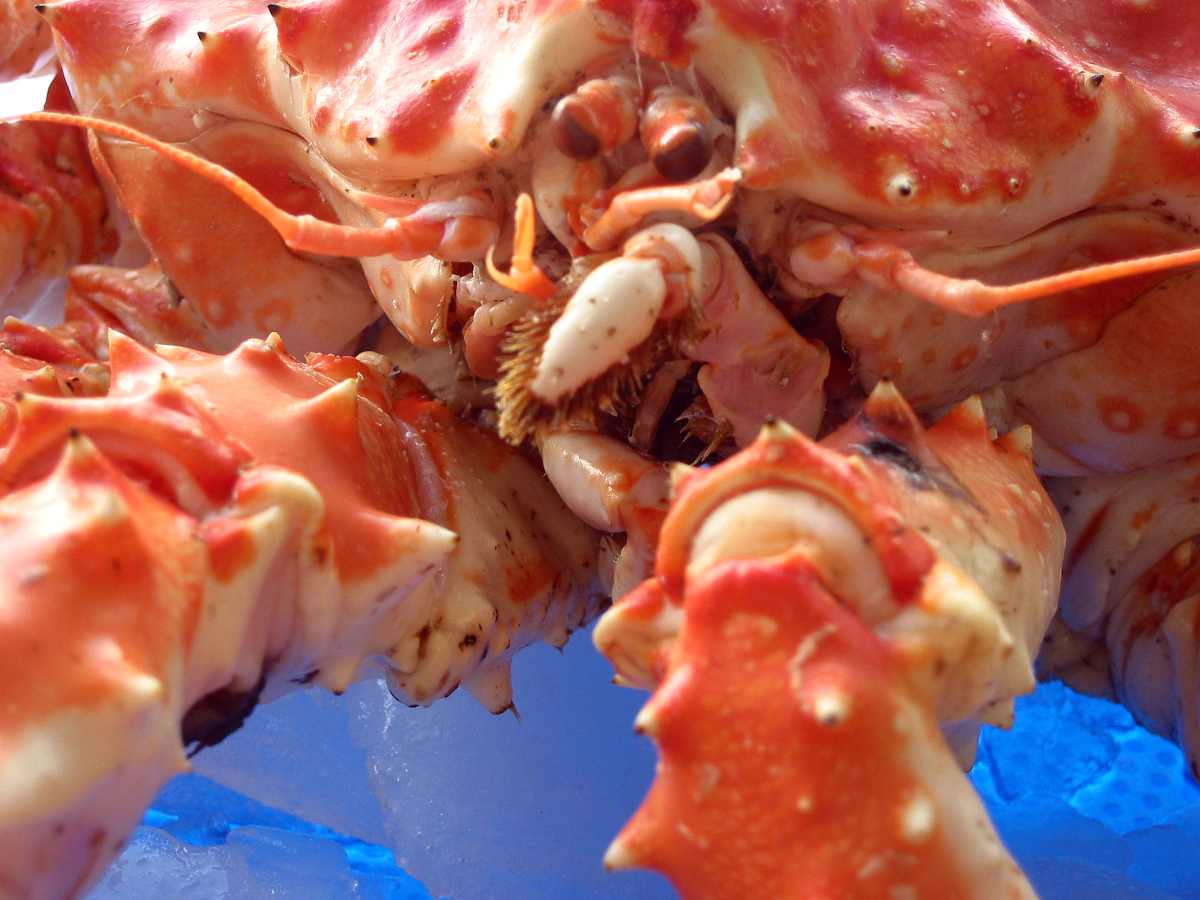
The exoskeleton of arthropods is composed of a polysaccharide called chitin. For these animals, their exoskeleton has to be rigid to provide protection yet flexible enough to allow for the animal to grow.
Why is shape important in Biology?
Chitin is also used in a variety of different applications. Try searching to see how chitin is used in industry, society or agriculture. Explain how the use is related to the structure of the polysaccharide.
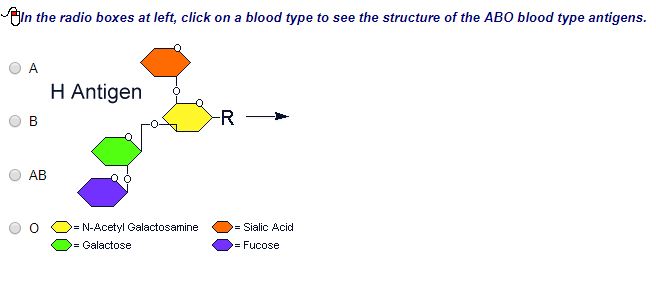
One of the important functions of carbohydrates we have not discussed so far is cell-to-cell communication. Because there is a large possible structural variation in monosaccharides, this allows for specific recognition between cells. For example, human red blood cells come in different “blood types” depending on which oligosaccharide antigen they have on the exterior of the red blood cell membrane.
Why is shape important in Biology?
Explore the Biomolecules: Carbohydrates interactive below to see how different oligosaccharides (definition:A carbohydrate made of up to 20 monosaccharides joined together.) change the blood type of red blood cells. Blood cells that don’t have the same oligosaccharide antigen are detected by the immune system and destroyed.
After your exploration, answer the following question.
Shape 5. Why is it important to know what blood type antigen is on red blood cells when someone receives blood after a surgery?
Now, let’s start by connecting some important ideas and words about carbohydrates.
Connect 2
Choose any two words in the table below, then connect them with a complete idea. Repeat this process three times in total.
|
monomer |
disaccharide |
glucose |
|
cell wall |
energy |
structure |
|
glycosidic bond |
isomer |
cell-to-cell communication |
For example: if the two words are ribosome and protein, then you could write: Ribosomes are connected to proteins because the ribosomes are the protein builders in the cell. Ribosomes are made of two parts or subunits. The larger of the 2 parts is where the ribosome can add on an amino acid to the growing protein chain.

CONSOLIDATION
Summary
This Activity expanded on the big idea that the structure of biological molecules is important to their cellular functions. Specifically,
- macronutrients are made of monomers;
- carbohydrates have a variety of uses in cells;
- the structure of different carbohydrates determines its use.
Carbohydrates Graphic Organizer
You are now ready to summarize the important details from this Activity.
Using good details, show how the function of different carbohydrates is connected to their structure. Choose a graphic organizer that helps you to make the best and most detailed connections. You may find that some of the connections are easier to make than others. Remember that your connections should:
- be meaningful;
- be well-organized and easy-to-follow;
- show your understanding of the vocabulary.
You can find some examples of different graphic organizers in the Resources Room.
Your concept map should include these concepts and details:
- Structure (functional groups, shape);
- Monomer;
- Linkage;
- Properties;
- Functions;
- Key terms from the Partial List of Key Terms from the Minds On section above.
Reflection
Understanding 6. How has your thinking of carbohydrates changed based on what you learned in this activity?
Understanding 7. How could you apply your knowledge of carbohydrates to help you make healthy nutrition choices?
 Learning Goals and Success Criteria
 Learning Skills and Work Habits