
EWC4U
Unit 4: Drama
Activity 1: Casting Call: Reviewing Forms


Theatre, film and television are all modes of storytelling, and many of us are fortunate enough to move freely among them without feeling that we've 'left' or need to 'go back' to one or the other. In fact, if the theatre is to avoid a brain drain, this kind of fluidity is increasingly necessary.
 Did You Know?
According to the Guinness Book of World Records, “[t]he longest marathon theatre performance by an individual lasted 110 hr 46 min and was achieved by Adrian Hilton (UK) when he recited the complete works of Shakespeare in a 'Bardathon' at the Shakespeare Festival, South Bank, London, UK between 16-21 July 1987.”
Canadian professor Marshall McLuhan’s ideas are often summarized in his famous declaration that, “the medium is the message.” However, it’s important to note this concept has to do with expectations the audience has of the medium - that is, ones that are embedded in the medium.
For example, people expect that watching television is a communal experience because it is broadcasted to everyone. However, streaming services such as Netflix have changed people’s viewing expectations and habits. Another example that you might have experienced is when your elementary school teacher flashed the lights on and off rapidly; there was no need to shout, “Pay Attention!” Using the medium of the flashing lights made that message clear.

What message does this CFL light bulb tell you about the owner’s view with regard to the environment?
You can learn more about McLuhan’s groundbreaking ideas by watching The Medium is the Message below:
Throughout this unit, you will write a variety of different scripts for different audiences. These scripts can be designed for plays, television, live performances, online media, and more. However, when writing your scripts it’s important to remember the medium you are using - as well as your intended target audience.
 Audience Expectations
Before beginning the interactive activity below, make a list of different dramatic media (e.g., television, movies, online streaming, plays). You should also make a list of what the audience’s expectations might be for each one. How and why do you believe these expectations might differ? Given this, how would you change the way in which you would craft a script?

Audience Appeal

Who would sit here?

Who would sit here?
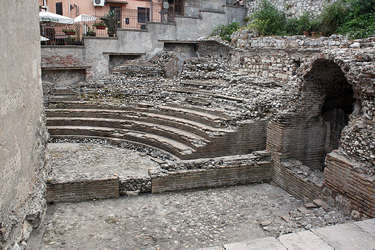
Who would sit here?

Who would sit here?
Knowing who your intended audience will be is essential for script writing. It rarely matters how innovative or exciting an idea is if the audience doesn’t like it. In rare cases, a flop can achieve success later on as a cult classic but, for the most part, scripts that do not reach an audience are more likely to be recycled than remade. Additionally, sometimes writers will (whether lazily or arrogantly - it is up to you) declare that they are writing for ‘everybody,’ but can that even be true? Part of writer’s role is to ensure that her or his choices of text forms and stylistic elements are appropriate to the purpose and audience. Given that, remember to justify your choices of form and style by the nature of your audience.
 Writer’s Notebook
Nor is it hard to understand why audience appeal matters. Take a moment to answer this thought experiment in your Writer’s Notebook. Think about your favourite movie. What do you love about it? What makes you want to spend your time watching it over again? Who do you know does or would hate it and why do you think that is? After answering these questions, take a moment to brainstorm who you believe the ideal audience(s) might be. In addition to its basic demographics, you might want to consider aspects such as lifestyle, experiences, interests, hobbies, background knowledge, and more.
data relating to the population and particular groups within it, such as age, gender, nationality, and education.
Standard Scripts

Every genre has its own foundational formatting rules.
Similar to the specific elements that make up narrative and poetic forms, scripts utilize their own specialized structure. While adhering to the proper form is essential for consistency and coherence, it’s also important from a career standpoint (after all, how likely is it that you’d be hired if your résumé was a short story?).
 Standard Scripts
Take a moment to research script writing requirements (there are some resources below to get you started) and develop a top ten list.
Resources
- Screenplay Format Guide provides detailed, step-by-step instructions for how to format a script properly.
- Script Tip: Your First 10 Pages - Five Essential Elements is a video that identifies some genre specific strategies for writing engaging scripts.
- How To Format A Screenplay - 5 Basic Elements is a video that provides clear examples of proper script formatting.
- What is standard screenplay format? provides specific, technical specifications for script formatting.
Rehearsal Recall
Similar to other genres, script writing has its own lexicon of important terms.
Writer’s Notebook
To help you understand these terms better, research the terms in the Managing Mediums document. The first one is done for you. Make sure you save the document in your Writer’s Notebook for use later on.
Resources
- Drama Terms: 15 Brief Definitions identifies key terms and allows you to test your knowledge with a short self-grading quiz.
- Glossary of Drama Terms provides a comprehensive list of key terms, definitions, and examples.
the vocabulary of a person, language, or branch of knowledge.
‘I’ of the Beholder
When writing scripts, it’s important to remember that not all performances will take place on stage. If you opt to write scripts for film, video, or television you will need to be familiar with the various camera angles that are used to emphasize and establish plots, characters, settings, and more.
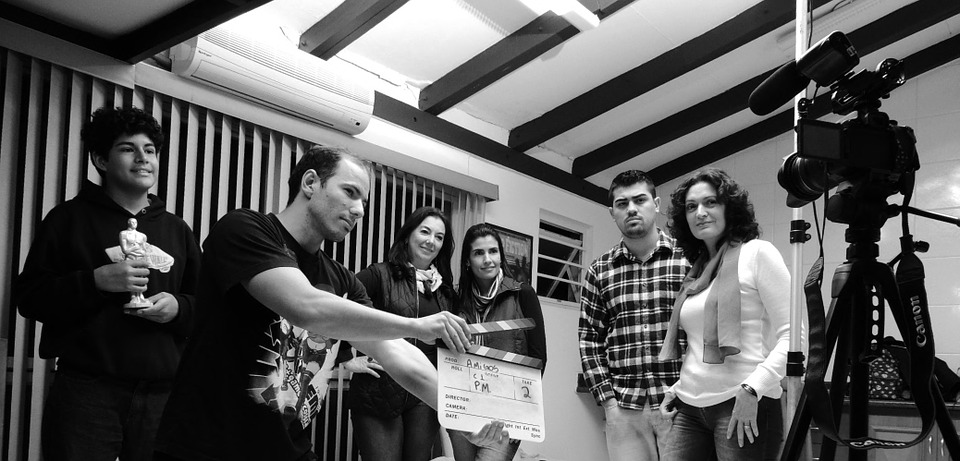
How you show something can be as important as what you show.
While you might not always be writing these specific shots into your scripts, you’ll likely want to have them in mind as you visualize your text.
Writing Up?
In movie terms, as Wikipedia notes, a pitch, “is a concise verbal (and sometimes visual) presentation of an idea for a film or TV series generally made by a screenwriter or film director to a film producer or studio executive in the hope of attracting development finance to pay for the writing of a screenplay.”

Where will your ideas take you?
However, pitches are also an excellent technique for generating ideas. In particular, the elevator pitch (also known as a sixty-second pitch) is a short, persuasive account of the story.
Take a moment to learn more about the art of writing a pitch by watching How to Pitch a Screenplay below.

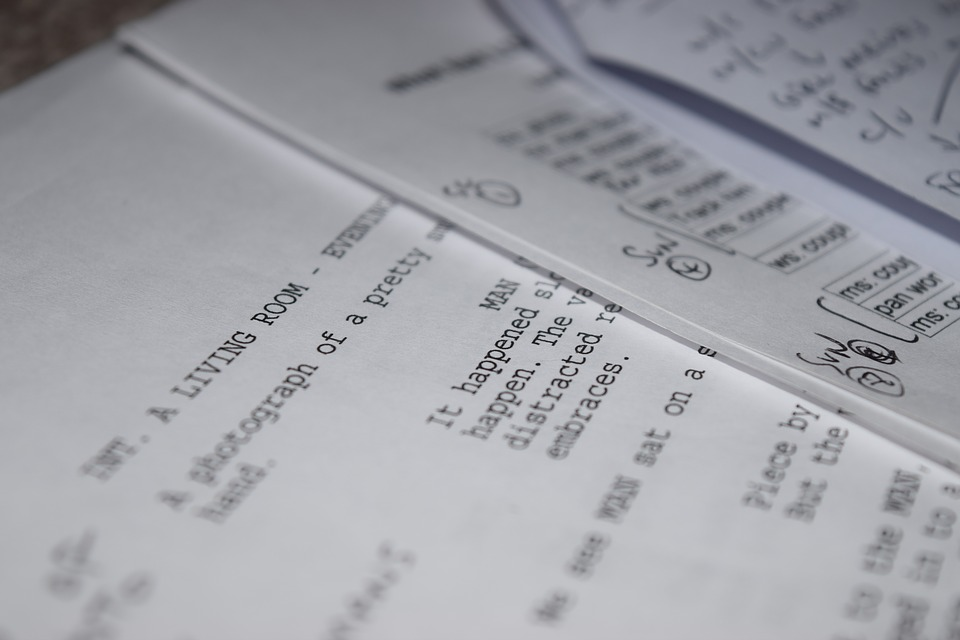
It’s time to sculpt your script!
Now that you’ve reviewed the main elements that comprise a script, your task will be to showcase your understanding by developing a short script of your own. Throughout this activity you’ve learned about script formatting, camera angles, audience adaptation and dramatic text terminology.
Putting it all Together
To write this script, you can either use the Rolling Randomizer and then use the four items to craft your one to two-page script or you can develop your previous pitch further. At the end of your script, include a brief 200 word reflection explaining how you integrated medium, audience, and at least five key terms, as well as how your own beliefs and experiences shaped your script.
Ask yourself the following questions to check if you’ve met the criteria for this task:
- Do your sentences build upon the script in a logical way?
- Does your reflection specifically explain how you incorporated the script writing elements required?
- Does your reflection explore how your own experiences and beliefs contributed to your script?
- Does your script and reflection fit within the assigned word limits? Did you find it challenging or helpful? Why?
- What are your next steps and goals to focus on with regard to developing your script writing skills?
Review the Assessing Dramatic Texts checklist to support your script’s development.
 Introduction
 Learning Goals and Success Criteria
 Learning Skills and Work Habits
 Rubric 1