
EWC4U
Unit 5: Creative Non-Fiction
Activity 2: Convince Me: Structured Persuasion Using Rhetoric


Rhetoric may be defined as the faculty of observing in any given case the available means of persuasion. This is not a function of any other art.
 Did You Know?
Did you know that the prompting precursor ‘did you know?’ is a rhetorical device?
Ethos, Logos and Pathos Revisited
 Writer’s Notebook

While words can change the world, the proper use of rhetoric can increase the likelihood that they will.
Earlier in the course, you were briefly introduced to rhetoric. What comes to mind when you think of the term rhetoric? Take a moment to list your impressions in your Writer’s Notebook. Now, review what you wrote. Is it generally positive, neutral, or negative? Why do you think that is the case?
Unfortunately, often when people consider rhetoric they perceive it through their exposure to the concept, such as critiques of politics, legal systems, and marketing. However, rhetoric is neither positive nor negative; rather, it’s a linguistic tool whose purpose is determined by how, why, where, and when it is used.
Writer’s Notebook
To learn a bit more about rhetoric, you can choose to either read the Reviewing Rhetoric handout and/or watch the video "How to use Rhetoric... to get what you want." After that, research what you believe would be ten effective rhetorical devices for use in your own writing. Make sure you include definitions and your own crafted examples for each one in your Writer’s Notebook. Below are some resources to assist you.
Resources
- A Handbook of Rhetorical Devices is a good site to visit.
- 50 Rhetorical Devices for Rational Writing lists many rhetorical devices as a subsection of their use as literary devices.
Now it’s time to determine your ability to detect ethos, pathos, and logos by completing the Bias Detective interactive. If you're working on a tablet, click here to open the following interactive in its own window instead of using the embedded version below.
 Reviewing Rhetoric
After you’ve researched your ten rhetorical devices, create your list and examples. For each device, write a brief rationale explaining how and why you could see yourself using it in your own writing.
Rick’s Rants
Canadian comedian and commentator Rick Mercer uses rants as a medium to express and explore a variety of issues and ideas. While some rants (like some writing) can be unfocused, unbalanced, or unfair, a well-constructed rant uses rhetoric purposefully to establish and encourage its call to action.
You can find many examples by searching YouTube for ‘Rick Mercer Rants.’ Watch a few rants and, in your Writer’s Notebook, identify examples of ethos, pathos, and logos, as well as the rhetorical devices he uses. Are they effective? Why or why not? You might use the criteria in the Assessing Analysing Skills checklist to guide you.

You can love your country and still critique it.
to speak or write in an angry or emotionally charged manner.
 Enrichment
Now that you’ve had a chance to review some of Rick Mercer’s rants, why not write and (better yet!) record one of your own?

“I Have a Dream”
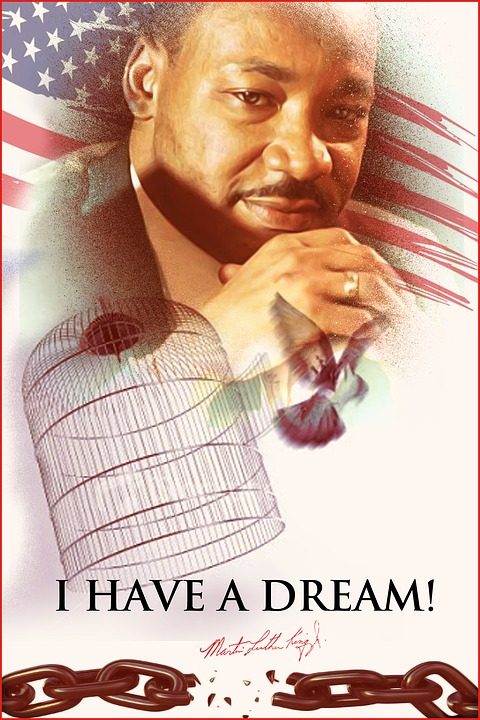
What does this portrayal show and imply?
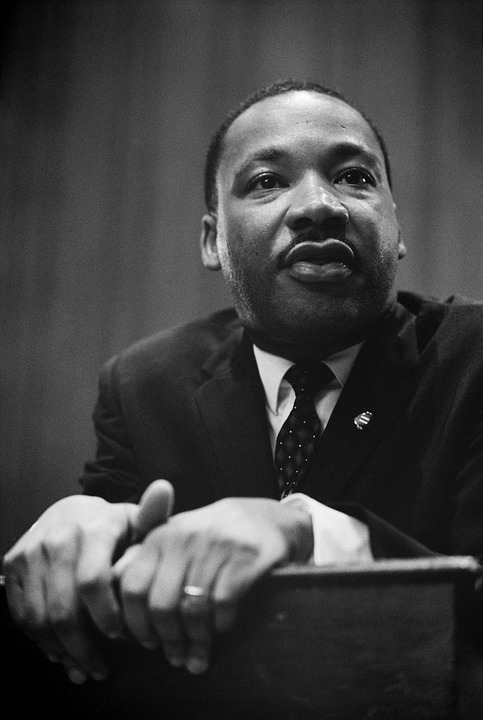
What does this portrayal show and imply?

What does this portrayal show and imply?

What does this portrayal show and imply?

What does this portrayal show and imply?
One of the most iconic speeches of the twentieth century is Martin Luther King Jr.’s I Have a Dream speech. As a cultural artifact, it showcases the power that words can have to change both an individual’s and society’s views.
Prior to completing this activity, make sure you are familiar with the following terms:
- Metaphor
- Allusion
- Anaphora
- Parallelism
To apply your knowledge of rhetoric, complete the following interactive activity I Have a Dream. If you're working on a tablet, click here to open the following interactive in its own window instead of using the embedded version below.
widely known and acknowledged especially for distinctive excellence.
 Delivering a Dream
The effective application of rhetoric relies on more than just writing that embeds appropriate ethos, pathos, and logos; it must also consider the audience and medium/media it will be delivered to and through.
To help you gain a greater understanding of this idea, review one media version of Martin Luther King Jr.’s, I Have a Dream speech. Then answer the following questions.
- State King’s thesis in your own words.
- Identify two arguments King gives to support his thesis. Are they effective? If so, why? If not, why not?
- Explain, concisely, how the introduction and conclusion is, or is not, effective.
- Make two comments about the overall tone of this essay. Provide direct evidence for each comment.
- Discuss the benefits and drawbacks of the medium’s delivery model in expressing King’s ideas.
Video Version: Martin Luther King | "I Have A Dream" Speech
Written Version: 'I Have a Dream'
Audio Version: I Have a Dream
Orwell’s Rules for Writing
To captivate an audience, it’s worthwhile to consider the advice of twentieth century writer and social critic, George Orwell. While his central thesis argues that, “[m]odern English, especially written English, is full of bad habits which spread by imitation and which can be avoided if one is willing to take the necessary trouble,” he goes on to suggest that such improvements would lead to a society that thinks more clearly, questions more critically, and communicates more honestly.
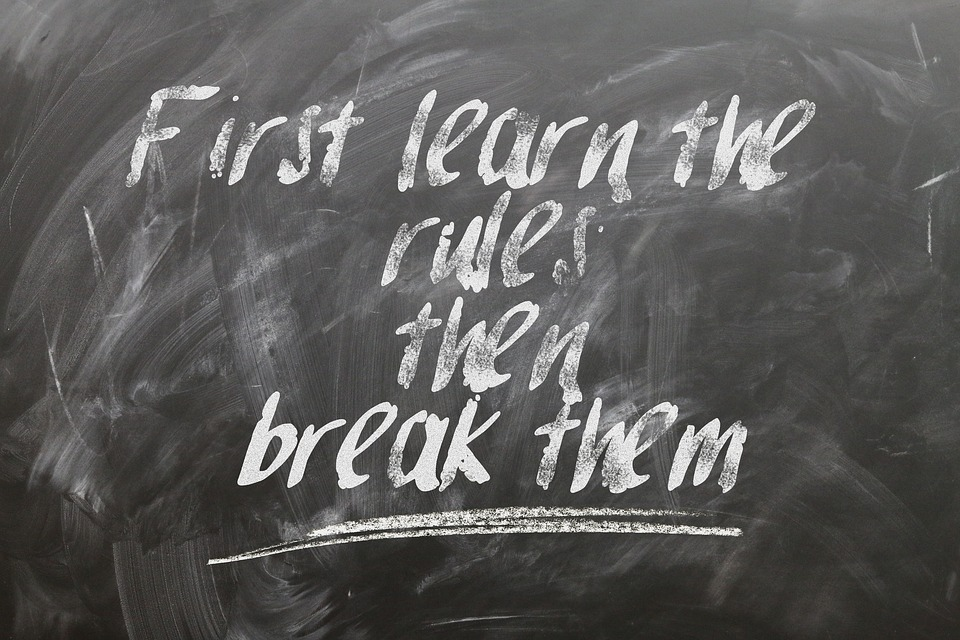
Rule #6 matters most; why do you think that is?
Writer’s Notebook
He gave the following advice in his 1946 essay, "Politics and the English Language". Copy it into your Writer’s Notebook.
- Never use a metaphor, simile, or other figure of speech which you are used to seeing in print.
- Never use a long word where a short one will do.
- If it is possible to cut a word out, always cut it out.
- Never use the passive where you can use the active.
- Never use a foreign phrase, a scientific word, or a jargon word if you can think of an everyday English equivalent.
- Break any of these rules sooner than say anything outright barbarous.
Enrichment
Would you like to learn more about Orwell’s fascinating life and controversial ideas? Then why not watch George Orwell: A Life in Pictures Full Documentary.
Before you begin writing your own creative non-fiction structured persuasive pieces, it’s important to ensure that you use the best word or phrase to express your ideas. Complete the following interactive activity, Diction Doctor, for a quick checkup. There are three selections to complete. After completing each one, take a screenshot of your paragraph as it’s compared to the original paragraph. If you're working on a tablet, click here to open the following interactive in its own window instead of using the embedded version below.
Now that you’ve had a chance to review the works of some creative non-fiction structured persuasive pieces, it’s time to write your own.
Read Me! Read Me!
To complete this assignment, you need to do the following:
- Select a topic. If you would like assistance in generating ideas, you may want to check out This I Believe for ideas and examples.
- Choose your form. You need to choose a relevant form (such as a speech transcript, podcast transcript, pitch, letter to the editor).
- Embed your rhetoric. To make your piece as persuasive as possible, you need to ensure you aptly and accurately utilize the rhetorical devices learned throughout this activity.
- Write your drafts. Use your topic and form to write your drafts. Use the criteria in the Creative Non-Fiction checklist to guide you as you write.
- Edit and revise your drafts. Make necessary revisions. You may want to refer to past supports, including success criteria in the assessment tool, Assessing Editing Skills, Assessing Revising Skills, or your Writer’s Notebook.
 Metacognitive Moment
Now that you’ve researched and written a personal narrative, take a moment to reflect on your experiences of writing creative non-fiction. In your Writer’s Notebook, answer the following questions.
- Did you find generating ideas for your structured persuasive piece easy or difficult? Why might that be the case?
- Which form did you chose? Why?
- Explain how your beliefs, values, and experiences are revealed in your writing, and how they influence your perspectives and biases.
- After revising your feedback, identify your strengths and areas for improvement.
Enrichment
Now that you’ve written a transcript for a structured persuasive piece, why not finish the process and generate a podcast, video, or blog to share your thoughts?
 Introduction
 Learning Goals and Success Criteria
 Learning Skills and Work Habits
 Rubric 1