
Biological Processes and Interactions
Putting it Together: Comparing Mitochondria and Chloroplasts

MINDS ON
Revisiting Biological Changes
This Unit has examined many changes important to cells and living things. In all cases, the changes can be described based on chemical structure, shape or location in a cell. Small steps combine together to make bigger changes.
Extracting Enzymes
In the last unit you extracted DNA from plant tissue. The procedure allowed you to break and separate different cellular components. Other biological molecules can be similarly extracted with slight variations in the materials and steps used depending on the properties of the biological molecule.
German scientist, Eduard Büchner, was one of the first scientists to extract the enzymes from yeast. His work on fermentation was revolutionary at the time because it was believed that fermentation was a cellular process and therefore required living cells to happen. The steps in Büchner’s experiment are outlined here:
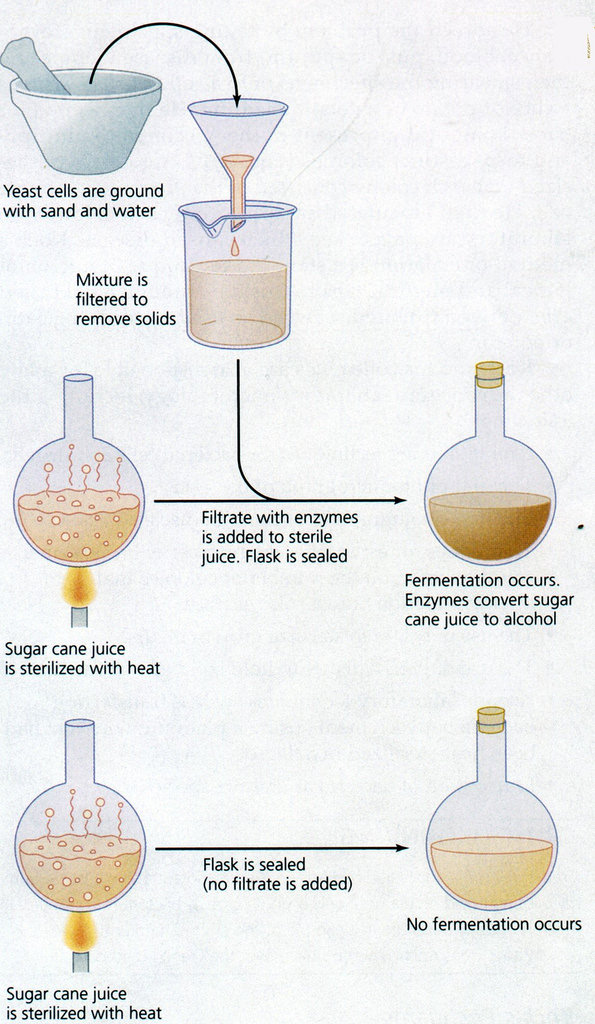
by Static Flickr
Using our modern understanding, we can explain Büchner’s results in that the enzymes for glycolysis and alcoholic fermentation found in the cytoplasm were released when the yeast cell membranes were ruptured by the sand grains. Only cytoplasmic enzymes are required for anaerobic respiration.
Enzymes can also be extracted in large quantities. This is especially useful in large-scale operations, like cleaning up an oil spill or producing biofuels. The steps in industrial-scale enzyme extraction are outlined here:
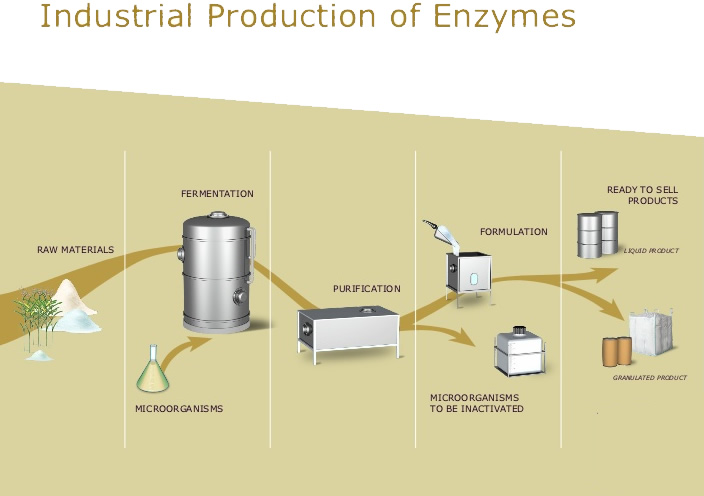
 How do small steps lead to changes?
Changes 11. Compare Büchner’s method of extracting enzymes with the industrial-scale process of enzyme extraction. Your comparison should include at least 3 similarities and/or differences.
Experiments like Büchner’s led to innovations in biotechnology as well as furthered scientific understanding of the metabolic processes in cellular respiration. As understanding grew, scientists shifted their attention to mitochondria. In this Activity we will see how understanding and innovation go hand in hand as enzymatic processes in organelles and microorganisms are used in industrial processes.

ACTION
Comparing Mitochondria with Chloroplasts
Evolutionary Biologists believe that the ancestors of modern mitochondria and chloroplasts were once separate cells. Indeed, both of these organelles include many of the features of prokaryotic cells: an outer membrane, a fluid-like gel in the middle containing DNA. Even the structure of their DNA is often organized into a circular chromosome. (definition:a cellular structure composed of a single DNA double helix bonded to various proteins.) Many prokaryotic chromosomes are similarly circular. Finally, chloroplasts and mitochondria can each self-replicate: as athletes train longer this stimulates the mitochondria in their muscle cells to increase in number. With more mitochondria comes more energy for the athlete to use.
Over time, though, the relationship between the ancestral mitochondria and chloroplasts with their ancestral prokaryotic host cells changed. There is evidence that genes (definition:a single segment of DNA that is responsible for a heritable trait, or phenotype.) from mitochondria and chloroplasts moved to the host cell genome (definition:the total genetic material of an organism.) and vice-versa. The ancestral species interacted with each other in a mutualistic (definition:a relationship between two species in which both benefit from the interaction.) way: valuable metabolic processes are exchanged for protection from predation. (definition:a relationship between two species in which one captures and feeds off the other.) Over time, though, neither modern cells, nor the mitochondria and chloroplasts they host can survive independently. The nature of this relationship is called symbiosis. (definition:a relationship between two species in which neither can survive without the other.) This theory is summarized in this video:
This video is a good review of the interconnectedness of metabolic processes in an ecosystem. Note that the light-dependent reactions here are called the light reactions while the light-independent reactions here are called the dark reactions. Chloroplasts and mitochondria share many similarities despite their important roles in two different metabolic processes.
 Comparing Chloroplasts with Mitochondria
At this time, look back at your flowcharts for photosynthesis and cellular respiration. Compare (definition:show both similarities and differences.) structures and cellular processes of chloroplasts with the structures and cellular processes of mitochondria.
Summarize the differences and similarities between chloroplasts and mitochondria. A comprehensive comparison should include the following details:
- structures,
- electrons,
- transport,
- locations,
- membranes,
- reactions,
- roles of O2 and H2O,
- regulation and other ways to change the rate of the metabolic process.
Think about how you want to present your comparison. Ask yourself, is a graphic organizer more effective, or a flow chart? Perhaps a new format might be more effective, like a double bubble. Whichever format you choose, you can complete this task on paper or electronically.
How does understanding change?
Understanding 24. So far in this unit you have explored a lot of details about the importance of biological reactions and interactions among biological molecules. What unanswered questions do you still have about these reactions and interactions? Think about specific questions and concepts that you studied in this Unit. Choose a specific example or two.
Industrial Processes
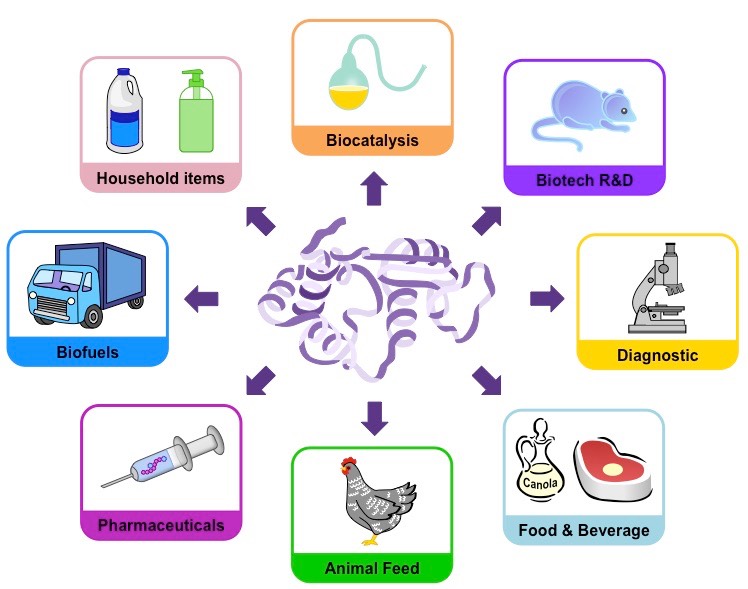
Enzymes are specialized proteins that perform or speed up reactions in biological systems. Their uses, however, have also been used in different industrial applications to make manufacturing reactions more efficient.

 Learning Goals and Success Criteria
 Learning Skills and Work Habits